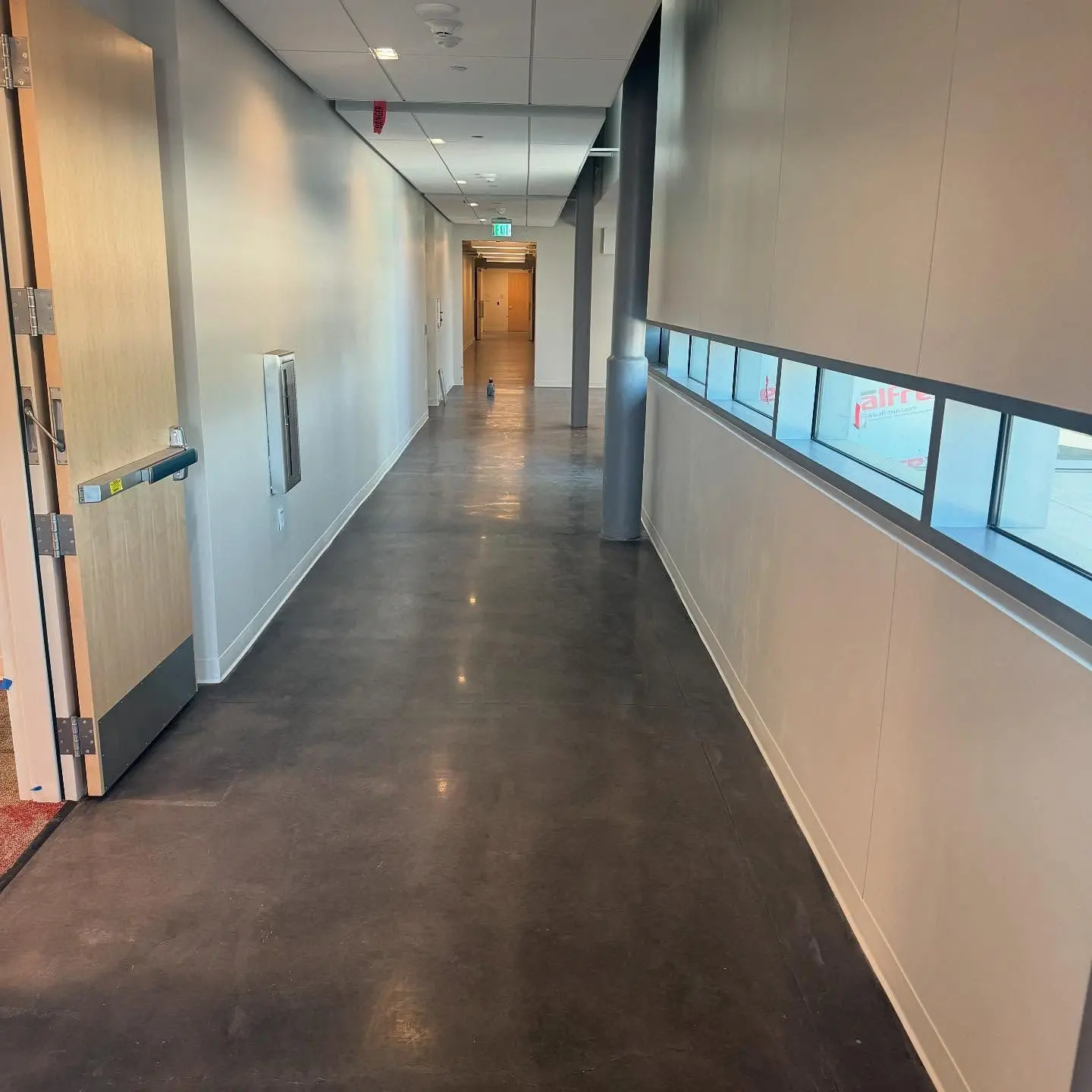

Commercial floor coating systems
Every floor has a job to do. Compare the systems side by side, then dig into the one that fits your space.
The right system depends on what the floor faces each day: traffic, water, heat, chemicals, sunlight and how long the space can close. This table gives a quick comparison, and each system page explains how it is installed, where it works best and when another option is a better fit.
Compare the systems
| System | Best for | Look | Downtime to plan for | Key strengths |
|---|---|---|---|---|
| Solid epoxy | Warehouses, shops, back-of-house | Uniform solid color | Short to moderate | Tough, chemical-resistant, cleanable |
| Polyaspartic | Spaces that must reopen fast | Clear or color, high gloss | Short | Fast cure, UV-stable |
| Flake coatings | Staff areas, service bays, restrooms | Multi-color chips | Short to moderate | Hides wear, adds texture |
| Quartz coatings | Wet, busy public areas | Speckled, granite-like | Moderate | Hard, grippy, wet-area ready |
| Metallic epoxy | Showrooms, lobbies, offices | Marbled high gloss | Moderate | One-of-a-kind design floor |
| Urethane cement | Kitchens, food and beverage plants | Matte, textured | Moderate | Handles heat, steam, washdown |
| Polished concrete | Retail, offices, large dry floors | Glossy natural slab | Moderate | No coating to peel, low upkeep |
| Sealed concrete | Storage and back-of-house slabs | Natural concrete | Short | Dust-proofing on a budget |
| Concrete staining | Dining rooms, retail, offices | Mottled natural color | Moderate | Warm, varied decorative color |
| Joint fill | Forklift aisles and docks | Flush filled joints | Short | Protects joint edges and wheels |
| Moisture vapor barrier | New or damp slabs | Hidden under the floor | Adds to the install | Keeps coatings from lifting |
| Parking deck coatings | Parking decks and ramps | Textured traffic surface | Phased by section | Waterproofing, traction, salt resistance |
| Waterproof deck coatings | Balconies, walkways, plaza decks | Textured walking surface | Phased by section | Keeps water out of rooms below |
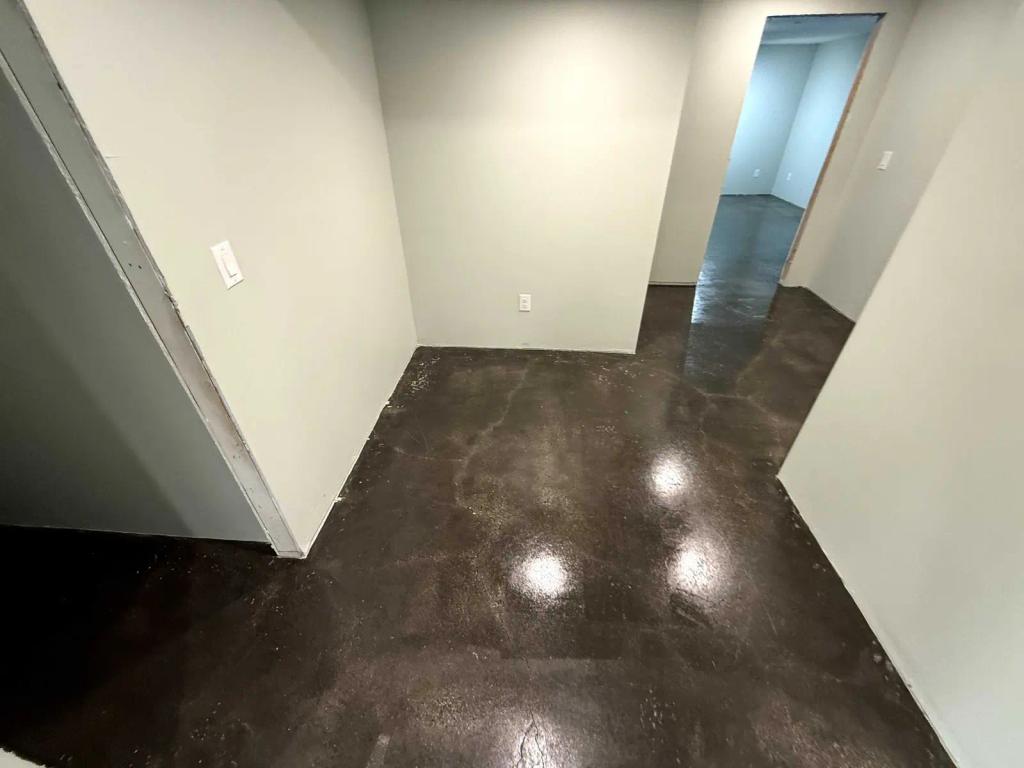
Concrete staining
Stains color the concrete itself, giving a varied, natural-looking floor that is sealed for protection.
- Best for
- Dining rooms, retail, offices
- Not for
- Heavy-wear industrial floors; badly patched or damaged slabs
- Key properties
- Warm, varied decorative color
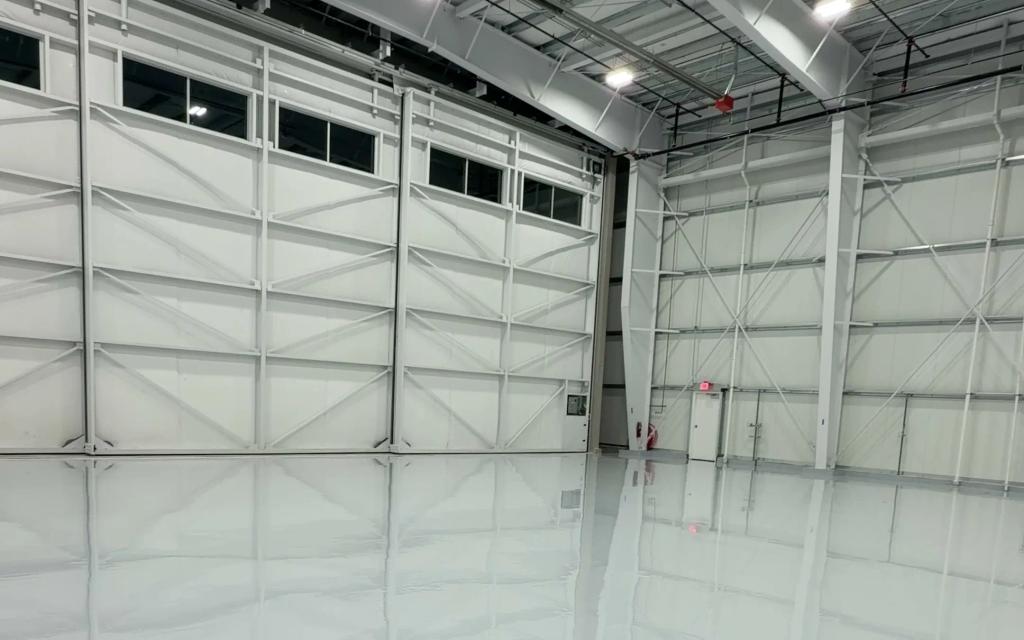
ESD epoxy
Static-control epoxy floors carry static charges safely to ground, protecting sensitive electronics and equipment.
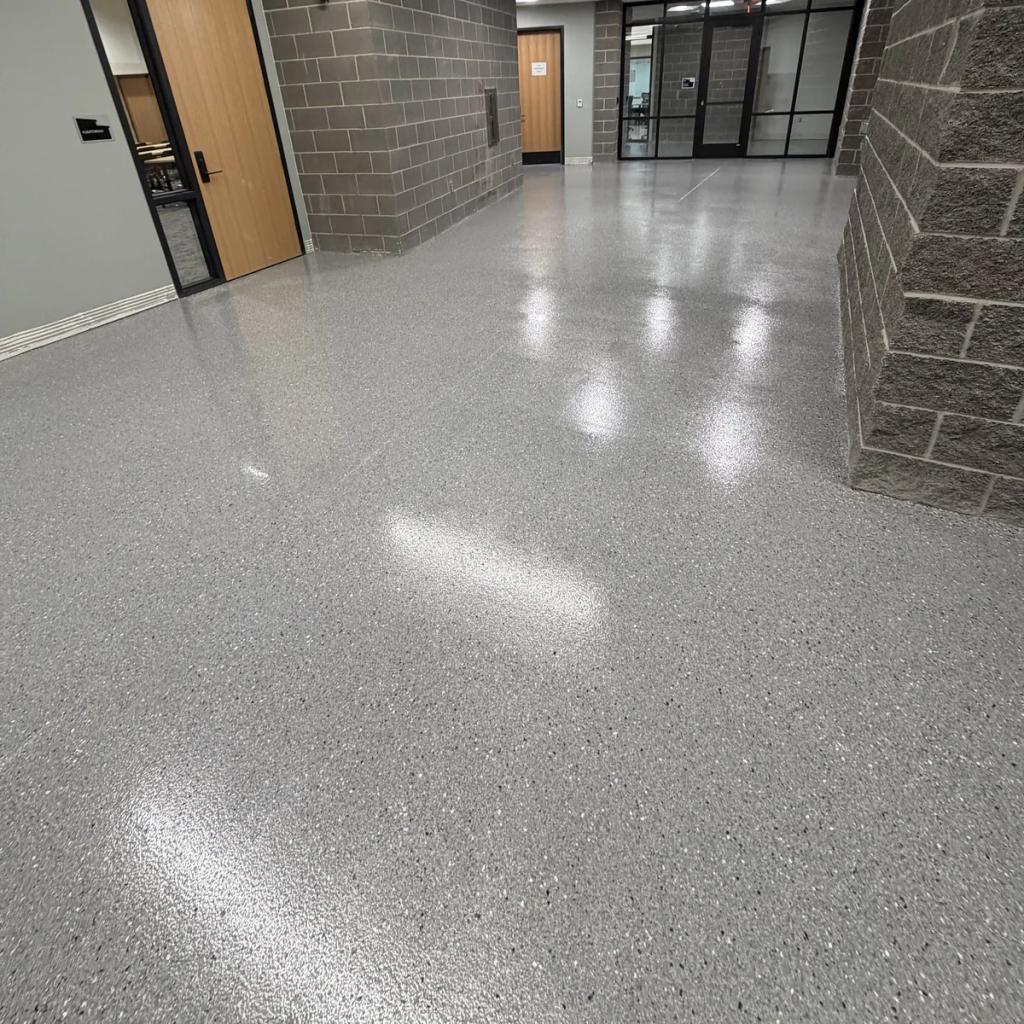
Flake coatings
A flake system broadcasts colored vinyl chips into a base coat and seals them under a clear topcoat, giving a textured floor that hides everyday wear.
- Best for
- Staff areas, service bays, restrooms
- Not for
- Hot washdown or steam; spaces that want a sleek, smooth look
- Key properties
- Hides wear, adds texture
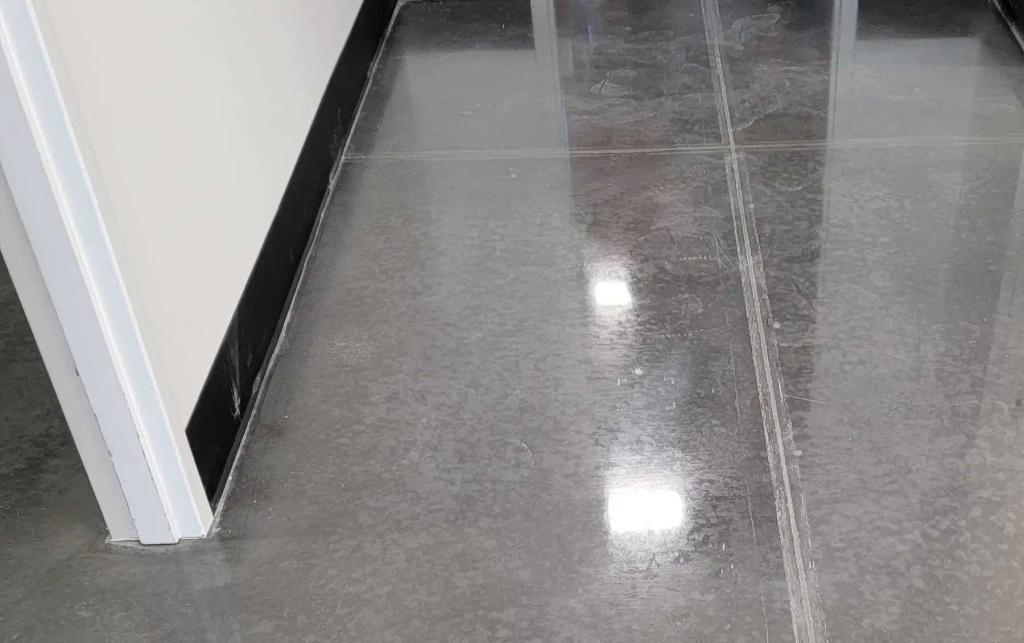
Joint fill
Filling control and construction joints supports their edges so forklift and cart wheels roll over smoothly instead of chipping them apart.
- Best for
- Forklift aisles and docks
- Not for
- Expansion or isolation joints, and slabs with wider cracking
- Key properties
- Protects joint edges and wheels
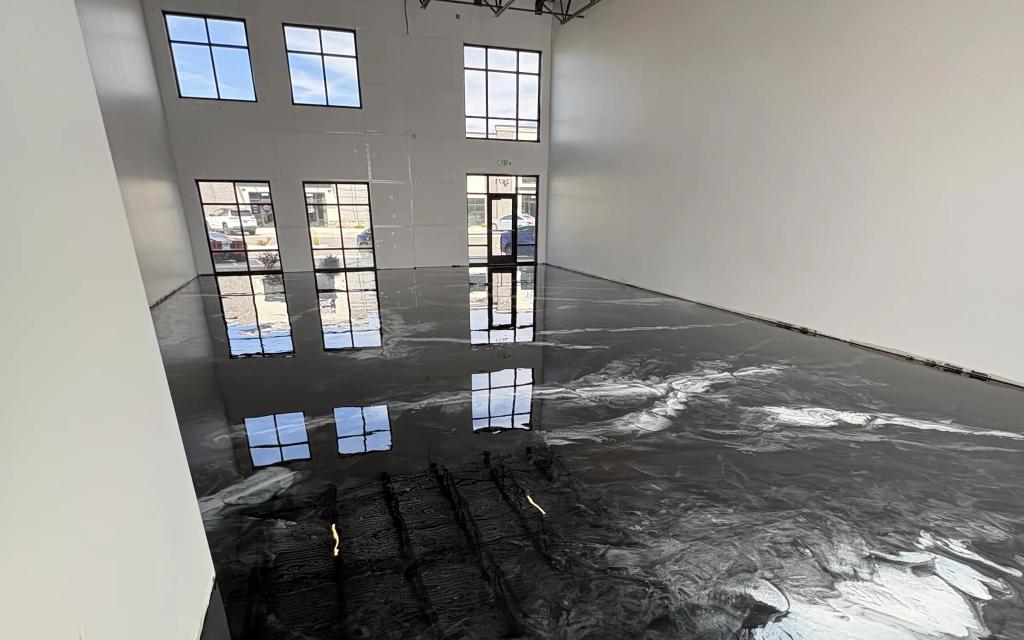
Metallic epoxy
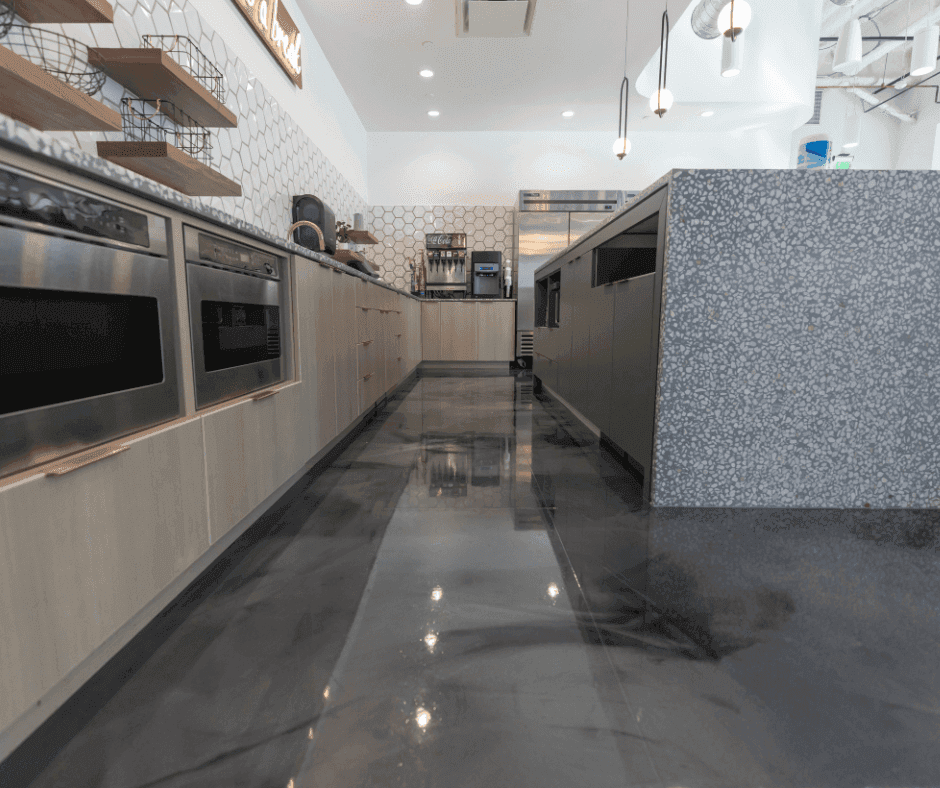
Metallic epoxy uses pigments that move in the wet resin to create a marbled, high-gloss floor, so the floor becomes part of the space's design.
- Best for
- Showrooms, lobbies, offices
- Not for
- Heavy forklift lanes, constant grit, wet or sloped areas
- Key properties
- One-of-a-kind design floor
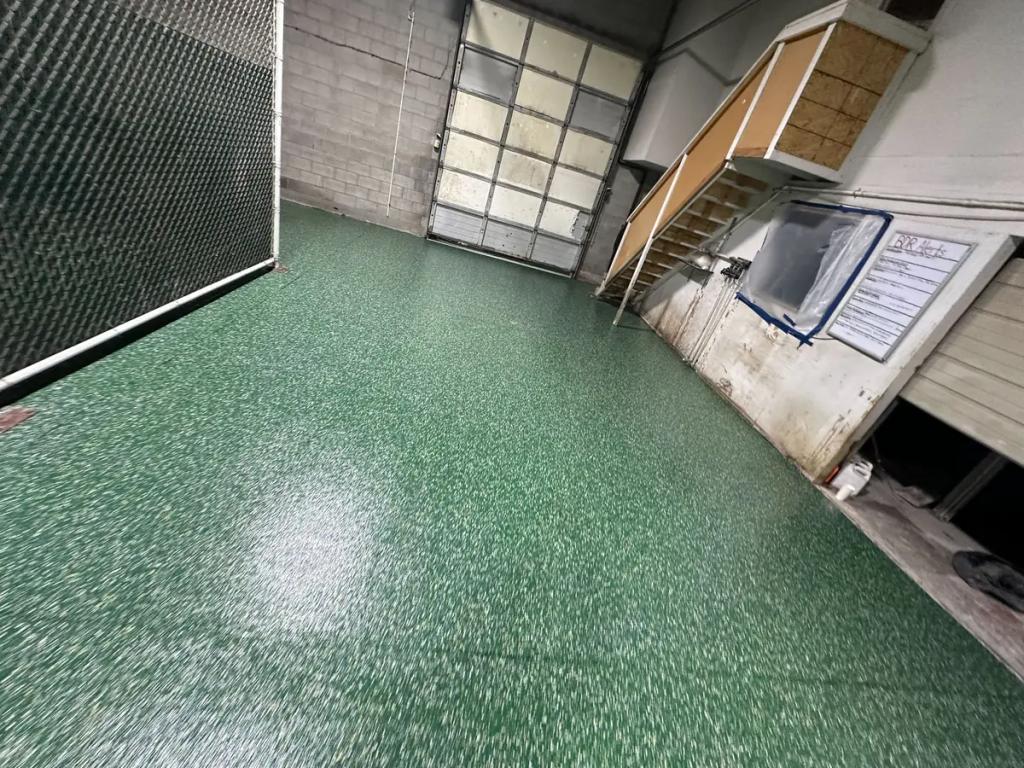
Moisture vapor barrier
A vapor barrier coating is a primer layer that limits moisture moving up through the slab, so the floor above can stay bonded.
- Best for
- New or damp slabs
- Not for
- Active leaks, standing water or drainage problems
- Key properties
- Keeps coatings from lifting

Parking deck coatings
Parking deck coatings are layered traffic systems that waterproof the slab and add grip for vehicles and pedestrians.
- Best for
- Parking decks and ramps
- Not for
- Interior garages out of the weather; pedestrian-only balconies
- Key properties
- Waterproofing, traction, salt resistance
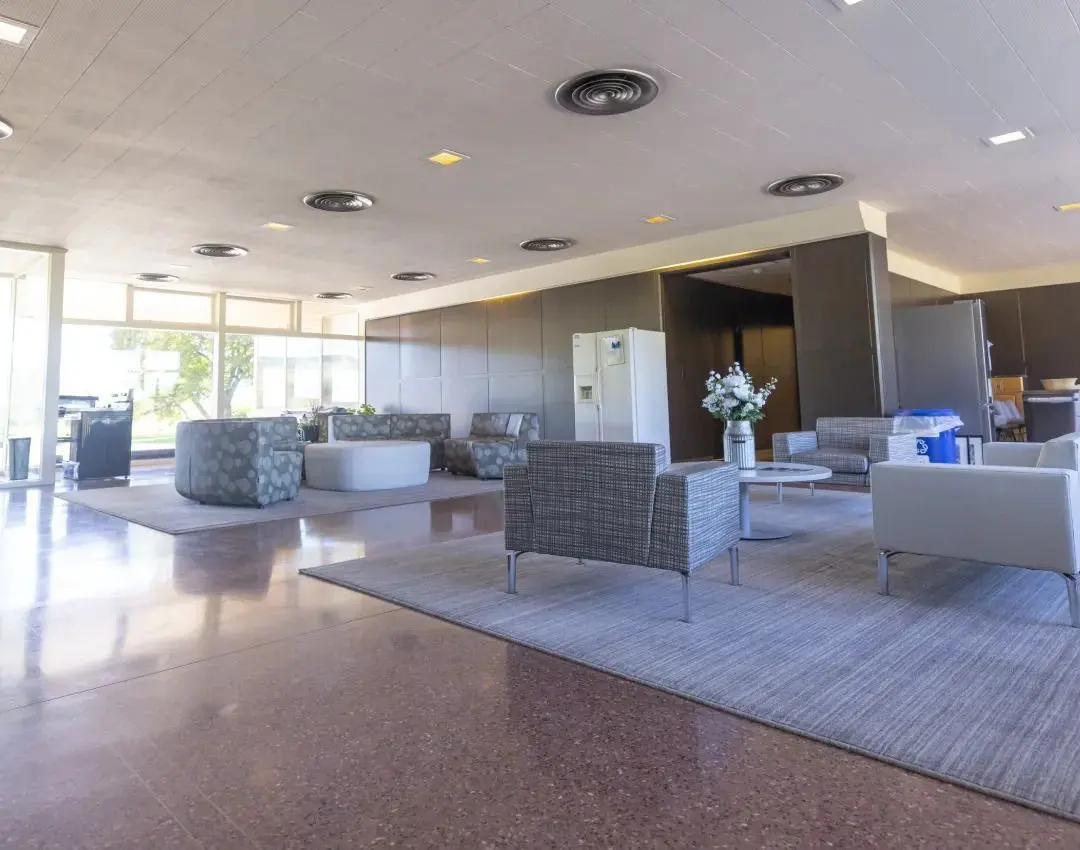
Polished concrete
Polishing grinds and densifies the slab itself into a smooth, reflective floor, so there is no coating to peel.
- Best for
- Retail, offices, large dry floors
- Not for
- Standing oil, harsh chemicals, shops, kitchens and production floors
- Key properties
- No coating to peel, low upkeep
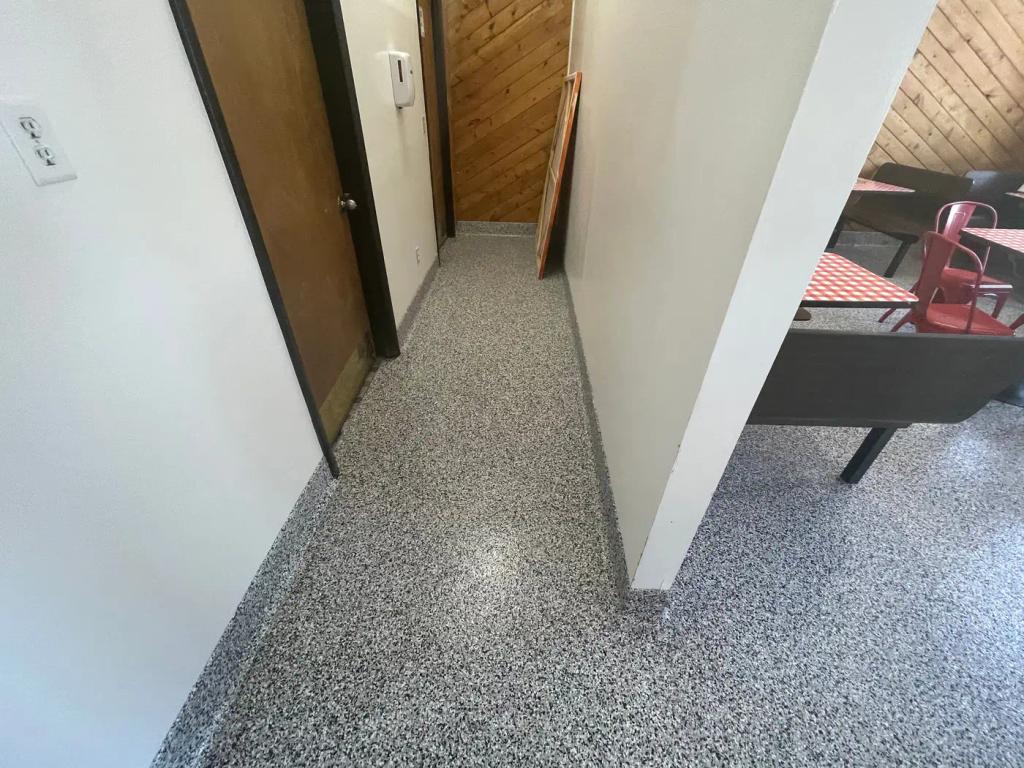
Polyaspartic
Polyaspartic coatings cure quickly and hold their color in sunlight, which makes them a strong fit when a business cannot close for long.
- Best for
- Spaces that must reopen fast
- Not for
- Hot washdown, steam or heavy thermal shock
- Key properties
- Fast cure, UV-stable
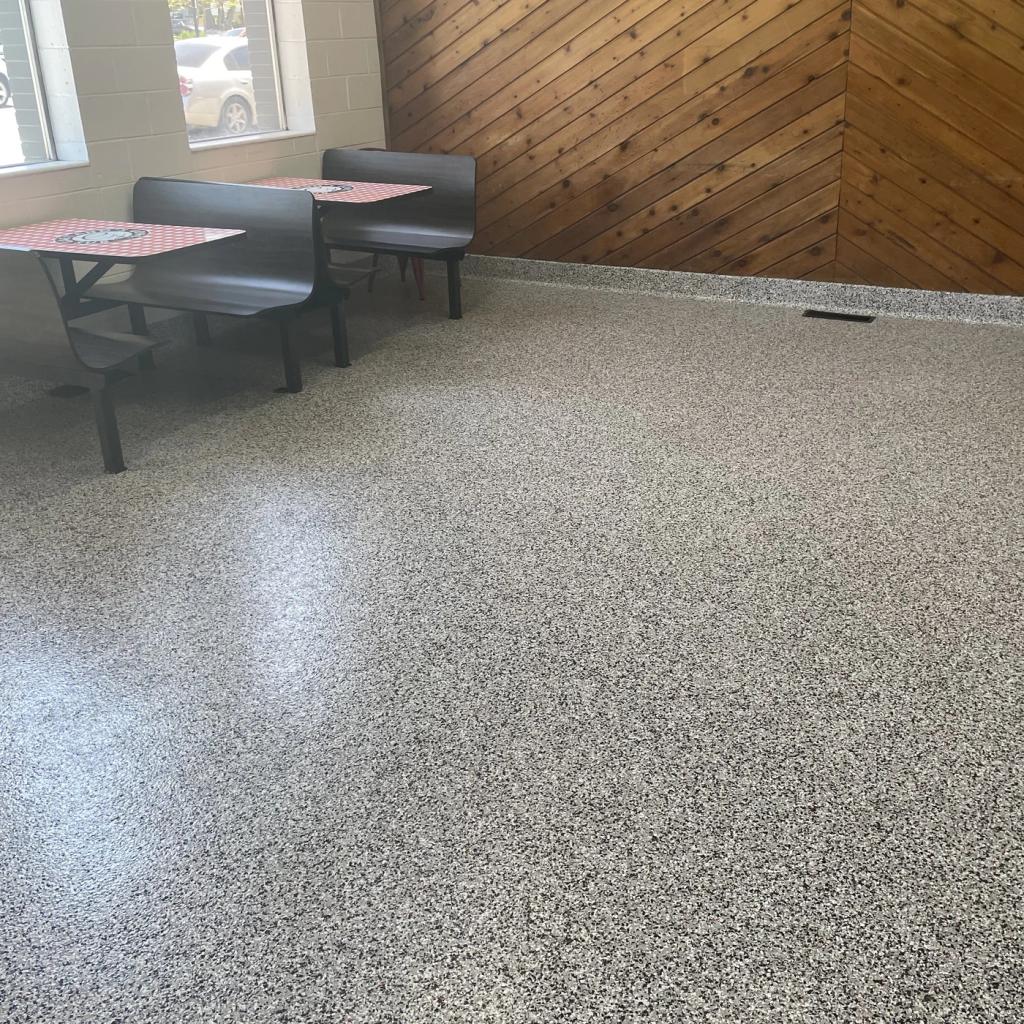
Quartz coatings
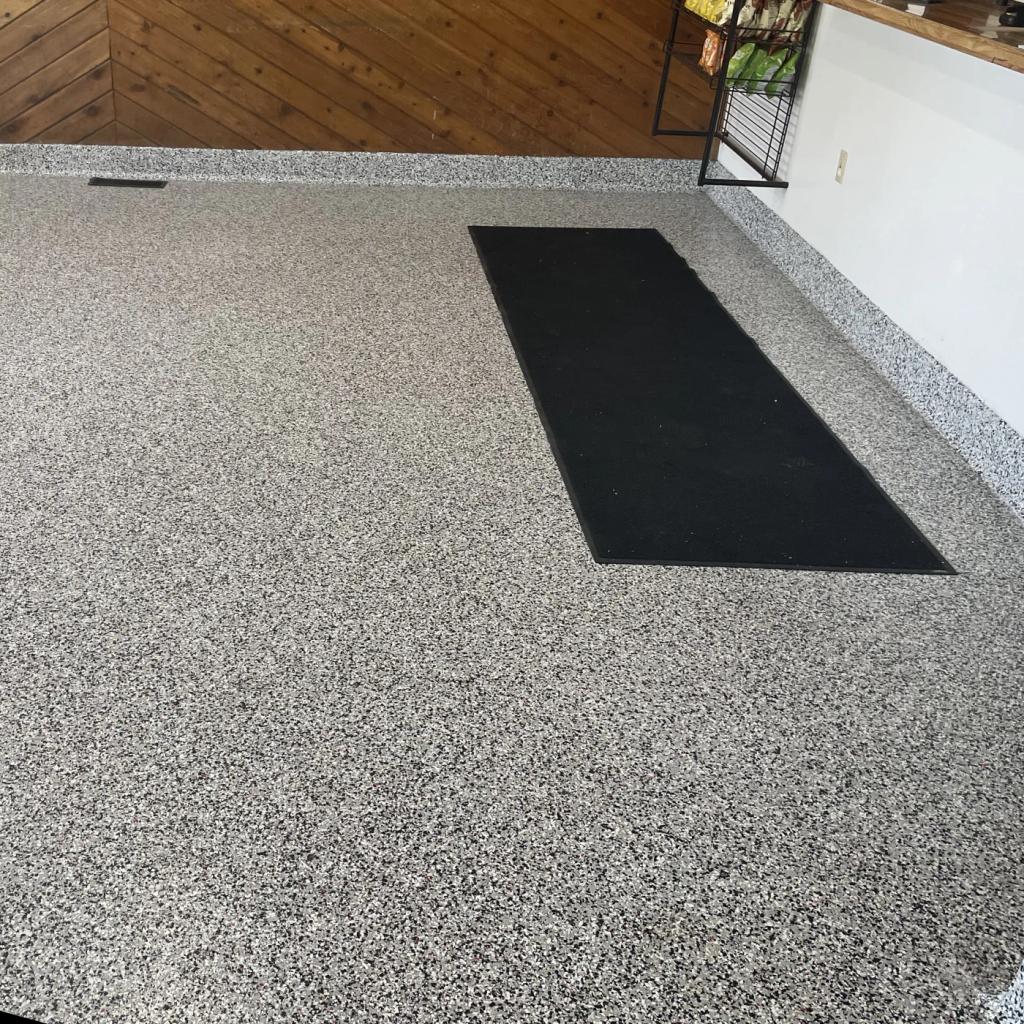
Quartz systems embed colored quartz sand in resin, building a hard, textured floor that holds up in wet, high-traffic areas.
- Best for
- Wet, busy public areas
- Not for
- Constant hot water or steam; floors cleaned with a mop alone
- Key properties
- Hard, grippy, wet-area ready
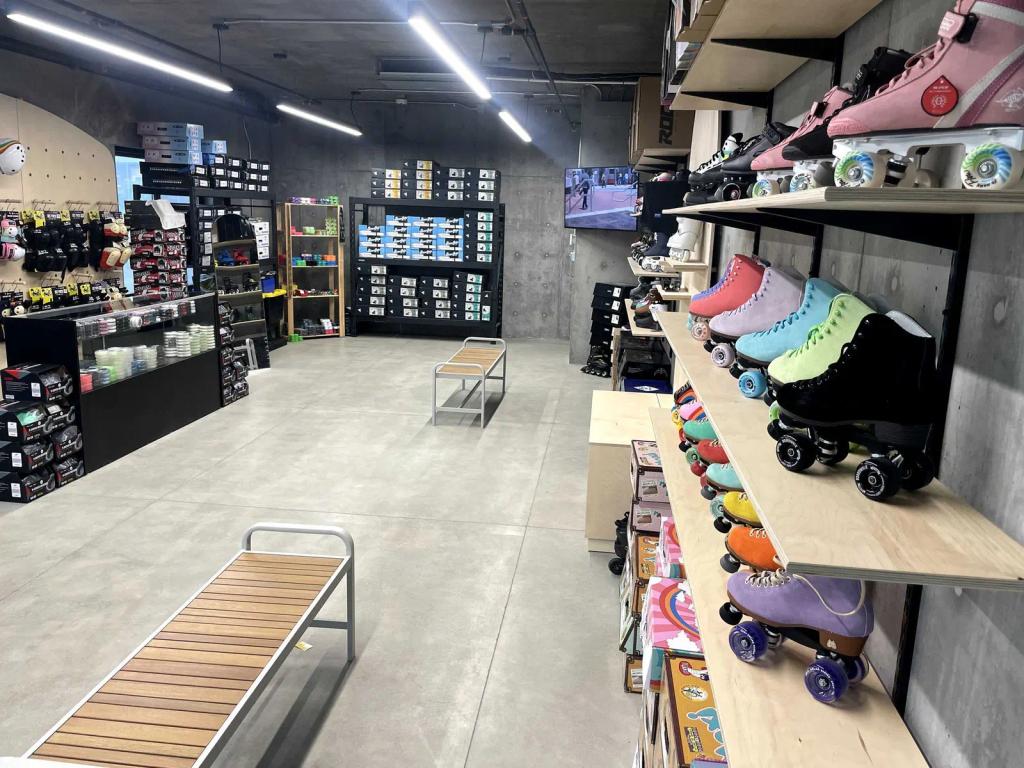
Sealed concrete
A sealer soaks into or lightly coats the slab to stop dusting and slow down staining, at a lower cost than a full coating.
- Best for
- Storage and back-of-house slabs
- Not for
- Forklift lanes, chemical areas and heavy-traffic floors
- Key properties
- Dust-proofing on a budget
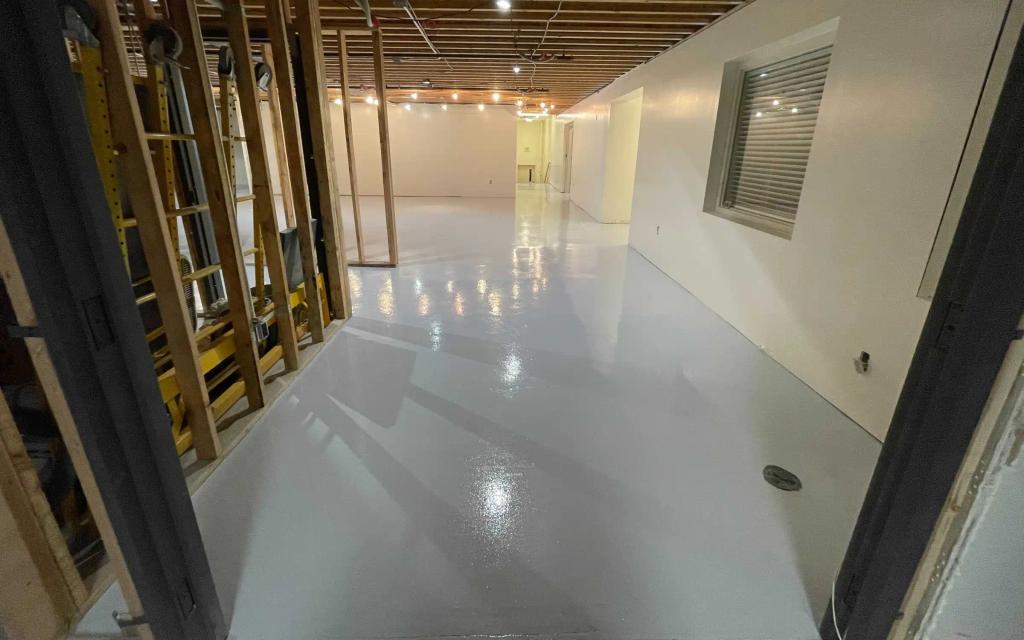
Solid epoxy
A solid-color epoxy system turns bare concrete into a seamless, sealed floor that is easy to clean and stands up to steady work traffic.
- Best for
- Warehouses, shops, back-of-house
- Not for
- Hot washdown, steam or sharp temperature swings; floors that must reopen fastest
- Key properties
- Tough, chemical-resistant, cleanable
Urethane cement
Urethane cement is a heavy-duty, cement-filled resin system built for hot water, steam cleaning and sudden temperature changes.
- Best for
- Kitchens, food and beverage plants
- Not for
- Dry storage, offices and showrooms, where it costs more than it needs to
- Key properties
- Handles heat, steam, washdown
Waterproof deck coatings
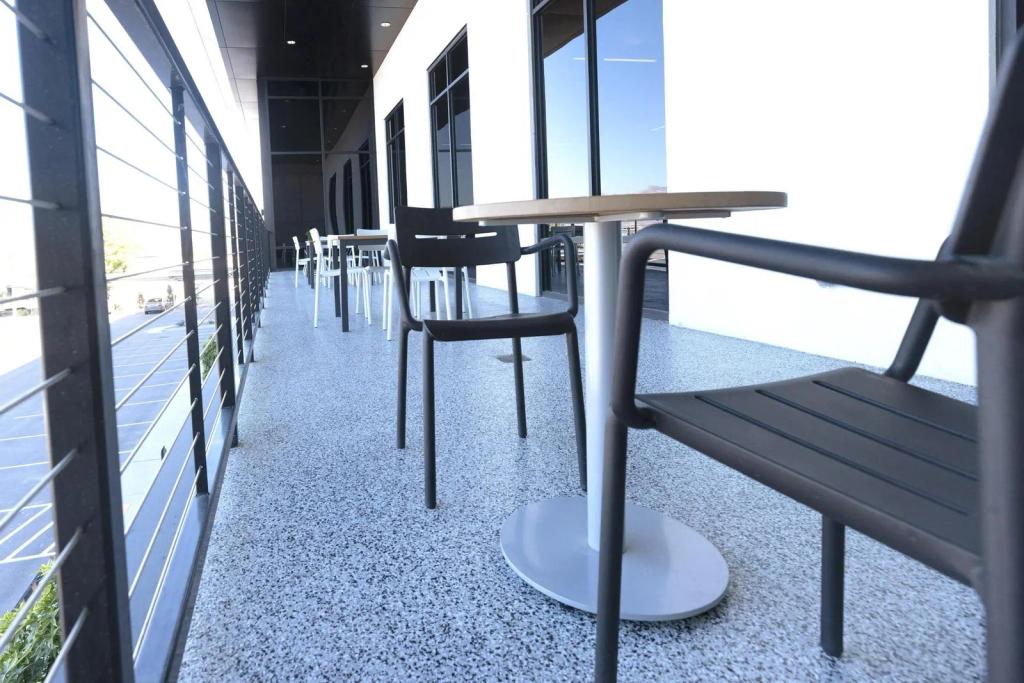
Walkable waterproof membranes protect balconies, breezeways and plaza decks, including decks over occupied space.
- Best for
- Balconies, walkways, plaza decks
- Not for
- Vehicle areas; wood-framed decks and deck boards
- Key properties
- Keeps water out of rooms below
FAQ
Floor systems: questions
Straight answers to the questions we hear most.
How do I know which coating system my floor needs?
Start with what the floor faces: forklift traffic, hot water, chemicals, sunlight or mostly foot traffic. A site visit and a look at the slab narrow it down, and many buildings end up with different systems in different rooms.
Can different systems be used in one building?
Yes, and it is common. A restaurant might use urethane cement on the cook line, quartz in the restrooms and stained or polished concrete in the dining room.
Which system gets a business back open fastest?
Polyaspartic and sealed concrete typically have the shortest return to service. Actual timing depends on the slab, the temperature and the size of the space, and work can be phased around business hours.
Why does the condition of the slab matter so much?
Every system relies on sound, clean, properly prepared concrete. Moisture, old coatings, oil and cracks all affect which system will hold and what prep it needs.
What is included in a commercial bid?
Every bid comes in writing with the scope, and most include a site visit; some are bid from plans or an RFQ. The scope spells out the system, the prep and any moisture testing for the specific floor.
Not sure which system?
Tell us how the floor is used and we will recommend one in the bid.

Request a bid
Ready for a bid?
Send your project details or plans. We reply within 1 business day.