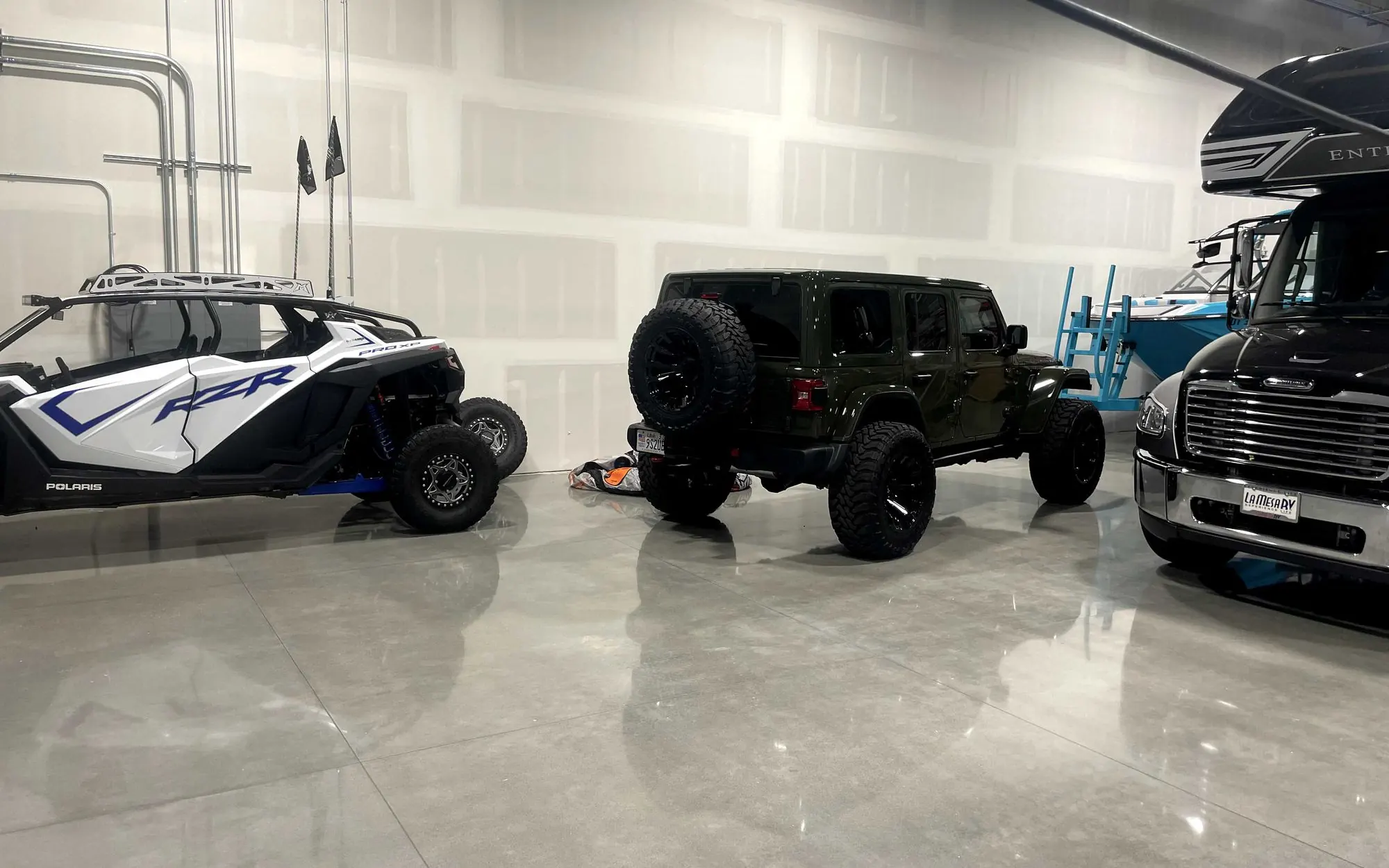

Auto Shop, Dealership & Service Bay Floors in Utah
Service bays that shrug off hot tires and fluids, and showroom floors that sell the cars on them.
Rating
4.9 on Google
From 198+ Google reviews
Experience
10+ years
In Utah since 2016
Coverage
Licensed & insured
Installers
Same crew
Installed by the same crew that's been with Elevated since day one
What a shop floor has to handle
Service bays take hot tires, dropped tools, rolling jacks and a steady mix of oil, coolant, brake fluid and cleaners. Tires coming off the road can soften a weak coating, and as they cool they can pull the film off the slab.
On bare concrete, fluids soak in and leave dark stains that never fully clean out. Showroom floors face a different test: they have to look sharp under bright lights and clean up in minutes.
- Hot tire pickup in bays and at doors
- Oil, coolant, transmission and brake fluid
- Impact from dropped tools and floor jacks
- Road salt and slush tracked in through winter
What we recommend and why
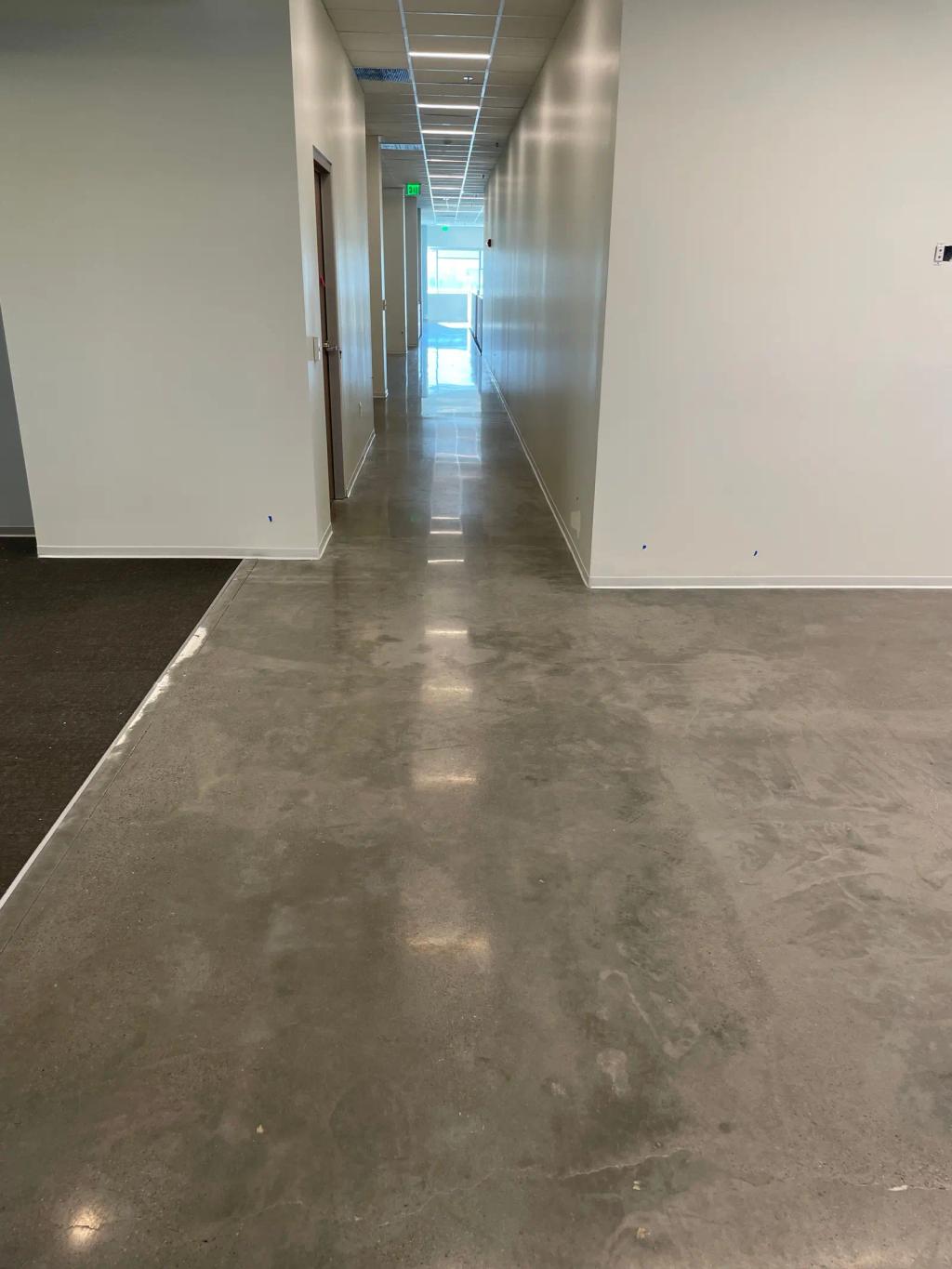
Epoxy or polyaspartic flake suits busy service bays and customer write-up areas, since its textured, multi-color surface hides tire marks and wear. Solid epoxy gives back-of-house bays, parts rooms and detail areas a bright, easy-to-clean floor.
For the showroom, metallic marble epoxy gives a high-end look that sets off the vehicles on display. Around lifts and work benches, a higher-build system spreads impact and holds up better than a thin coat.
Flake floor coatings →Solid epoxy floors →Metallic epoxy floors →
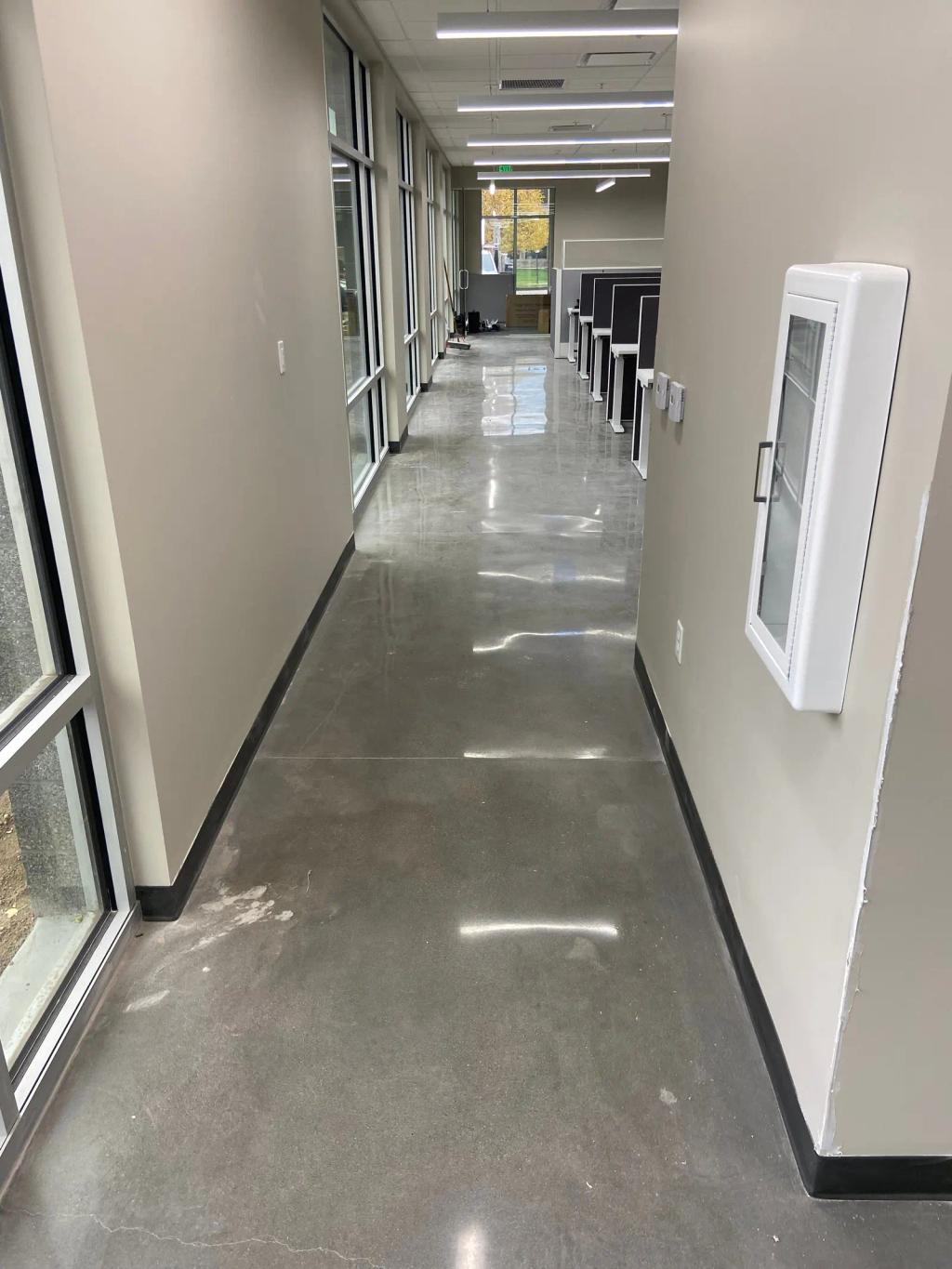
How the install works around the service schedule
Shops usually phase the work bay by bay or over a weekend so some lifts stay in use.
Showrooms are often done after hours, with vehicles moved out in stages.
The coating is detailed around lift posts, trench drains and pits so liquids cannot get underneath. How soon cars can drive on the floor depends on the system, the building temperature and how heavy the traffic is.
Prep and concrete testing
Shop slabs often carry years of oil soaked deep into the concrete, so contaminated areas may need degreasing or extra grinding before a coating will bond.
Diamond grinding opens the surface to a profile the coating can grip, which is what keeps hot tires from lifting it.
Cracks, spalls around lift posts and joints are repaired first. Moisture is tested because vapor rising through the slab can push a coating off from underneath.
Safety, spills and cleaning
Water, soap and oil on a smooth floor make walking around lifts and pits risky.
Broadcast aggregate or flake adds grip where technicians work, while smoother finishes can stay in showrooms and offices.
A sealed surface keeps fluids on top, where they can be wiped or squeegeed up and disposed of properly instead of soaking into the slab. A coating-safe degreaser cleans the floor without softening the finish.
Maintenance and lifespan
A well-bonded bay floor lasts longest when spills are cleaned soon and grit is kept off the surface.
Prep quality, the system and the amount of traffic each bay sees decide how long it goes before it needs a recoat.
Lift post areas, drains and bay entrances wear first and are the best places to check.
- Wipe up oil, brake fluid and coolant soon
- Use a pH-neutral or coating-safe degreaser and avoid unapproved solvents
- Put walk-off mats at bay doors to catch grit and road salt
- Inspect lift post areas, drains and bay entrances regularly
Process
How a bid works
Request
Send the building type, size and timing, and any plans or photos.
Site visit
For most bids, we look at the slab and agree the work window; moisture is tested when the slab needs it and listed in the bid. Some are bid from plans or an RFQ.
Written bid
Every bid comes in writing with the scope: the system, the prep and the areas covered.
Install
Planned around your hours. Before you reopen, we go over the cure schedule: when you can walk, load and drive on it.
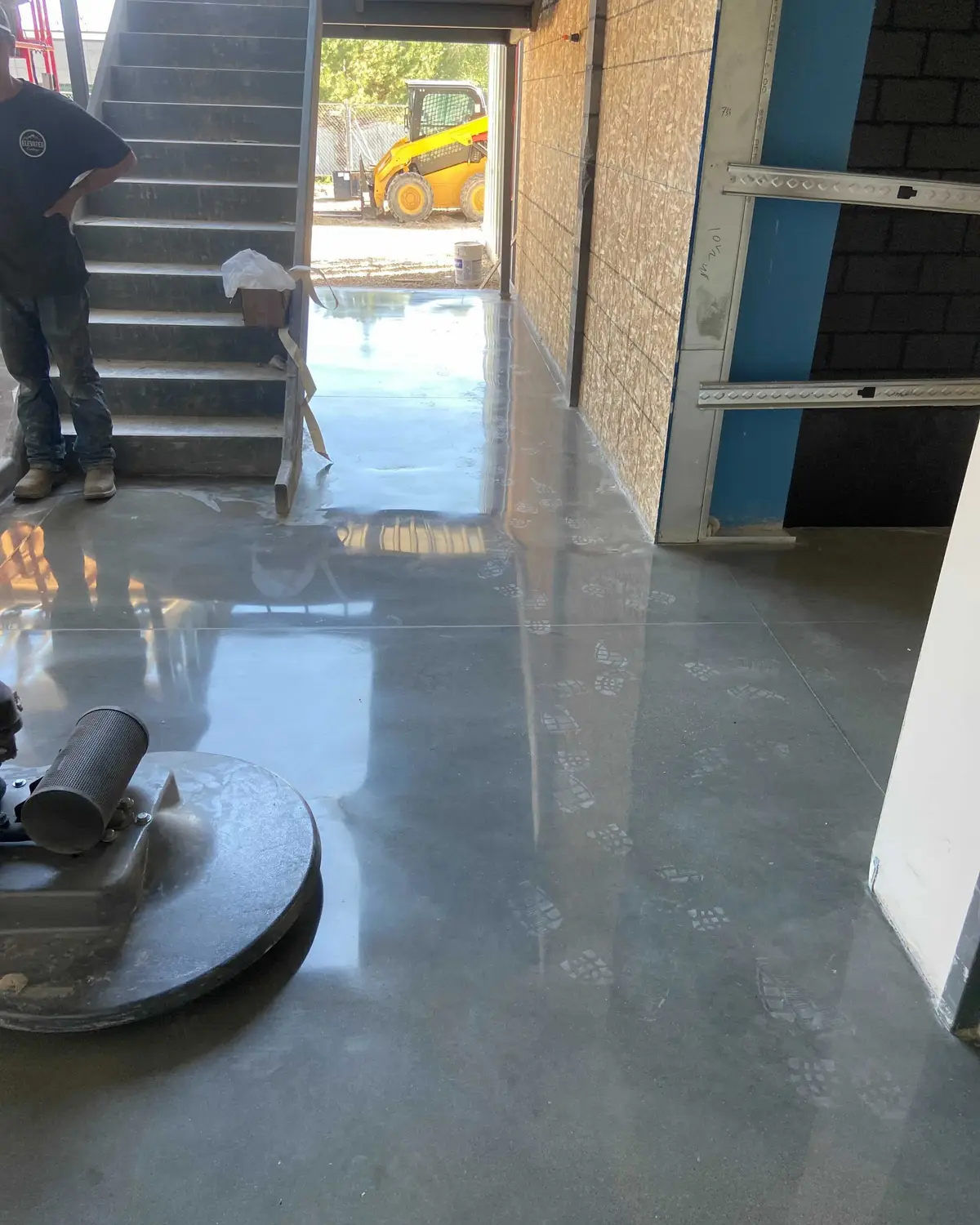
Who installs your floor
Installed by the same crew that's been with Elevated since day one
Every bid comes in writing with the scope: the system, the prep and the areas covered.
Most bids start with a look at the slab; some are bid from plans or an RFQ.
Every bid comes in writing with the scope.
Planned around your hours.
Keep reading
Systems, problems and guides for this work
- Problems we fixPeeling floor coatingCoating that flakes, lifts or delaminates, what usually caused it and how it is redone right.Read more →
- Problems we fixChemical-damaged floorsEtched, softened or stained floors from spills and cleaners, and how resistant systems fix them.Read more →
- ComparisonsPolyaspartic vs epoxyFast-curing polyaspartic and build-friendly epoxy compared on downtime, UV and wear.Read more →
- IndustriesFleet & Municipal GaragesHeavy-duty floors for fleet shops, public works garages and truck bays that face salt and fluids.Read more →
- IndustriesCar washesTextured, chemical-resistant floors for wash bays and tunnels that face water, salt and grit.Read more →
- BlogBenefits of Concrete Coatings for Commercial FloorsWhy businesses coat high-traffic concrete: durability, chemical resistance and easy cleaning. Which coatings suit busy commercial floors and why.Read more →
- BlogSlip-Resistant Flooring Solutions for Commercial SpacesHow slip-resistant coatings improve safety in busy commercial spaces: textures, where grip matters most and how to balance traction with cleaning.Read more →
- BlogFloor Coatings That Protect from Chemicals & SpillsHow floor coatings protect commercial concrete from chemical spills, stains and surface damage, and which systems handle which chemicals.Read more →
Industries
Other industries we serve
- IndustriesRestaurants & kitchensSeamless, cleanable, slip-resistant floors for restaurants, quick-service kitchens and ice cream, soda and dessert shops — installed overnight or on your closed day.Read more →
- IndustriesBuild-outs & tenant improvementsMoving into a new space or remodeling one? Floors bid to your budget and scheduled around your build-out.Read more →
- IndustriesFranchise & multi-locationThe same floor in every store: we can install one spec across all your locations.Read more →
- IndustriesRetail, showrooms & officesPolished, metallic and flake floors for stores, showrooms, lobbies and offices, installed after hours.Read more →
- IndustriesFood & beverage processingSeamless floors for washdown, steam and thermal shock in food plants and breweries.Read more →
- IndustriesAll industriesEvery type of facility we coat floors for, in one list.Read more →
FAQ
Auto shops & dealerships: questions
Straight answers to the questions we hear most.
Will hot tires lift the coating?
Hot tires can lift a weak coating, but not a system built for it over a properly prepared slab. We specify both.
When can cars drive on it?
See the downtime schedule on this page; the exact times depend on your system, temperature and traffic.
Can you install over a weekend?
We can work in sections or over a weekend so the shop keeps running. A weekend suits a standard flake system on a floor without much damage; bigger jobs or heavier prep take longer.
Can a coating go around existing lifts and pits?
Yes, coatings are usually installed around lift posts, trench drains and pits, with the edges detailed so liquids cannot get underneath. Equipment that must be removed or protected is worked out during the site visit.
Can an oil-soaked slab still be coated?
Often, yes, once the contaminated concrete is degreased and ground back to a clean surface. Very deep contamination may need extra prep, which the site visit identifies.
Will brake cleaner damage the floor?
Many coatings resist brief contact with common shop chemicals, but strong solvents left to sit can soften or dull some finishes. Wiping spills up quickly and checking the coating maker's resistance chart is the safest approach.
Can jack stands dent the coating?
Jack stands and floor jacks put a lot of weight on a small spot. A higher-build system on a well-prepared slab handles them better, and plywood pads under stands spread the load.

Request a bid
Ready for a bid?
Send your project details or plans. We reply within 1 business day.