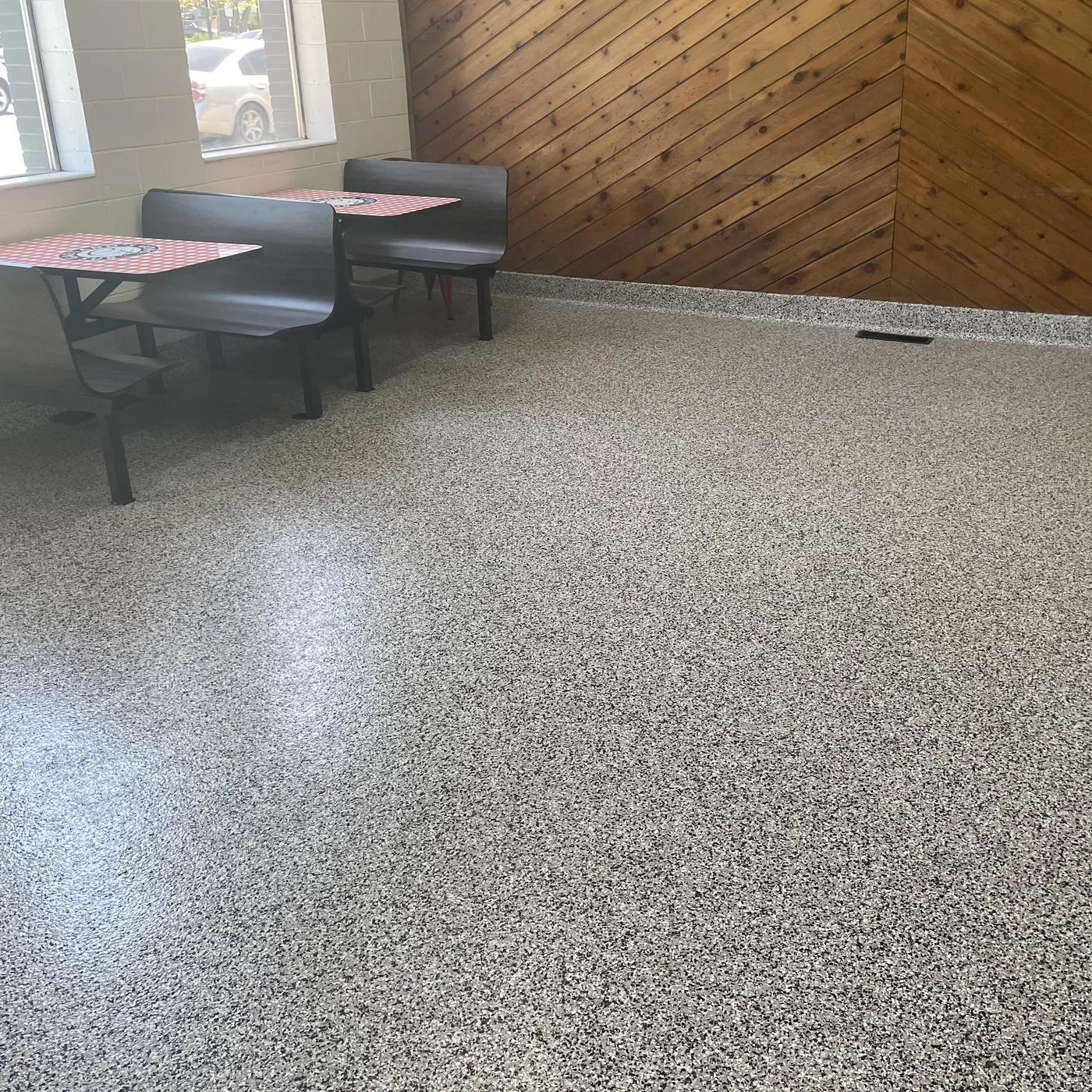

Quartz floor coatings
Quartz systems embed colored quartz sand in resin, building a hard, textured floor that holds up in wet, high-traffic areas.
What a quartz floor is
A quartz floor is a resin coating with colored quartz granules broadcast into it, usually in more than one layer.
The granules are a natural mineral, so they add hardness as well as color.
The finished surface has a fine, sandy texture under a clear seal coat. Its speckled look is similar to terrazzo from a distance, but it is installed as a seamless coating.
How it is installed
After grinding and repair, a resin base coat goes down and quartz is broadcast to full coverage.
Once cured, excess sand is removed and the process may be repeated to build thickness.
One or more clear grout and seal coats fill the texture to the level of grip the space needs. Fewer seal coats leave more texture; more coats give a smoother, easier-to-clean surface.
- Grind and repair the slab
- Resin base coat
- Broadcast quartz to refusal
- Remove excess and repeat if specified
- Clear grout and seal coats
Key properties
Quartz builds a dense, abrasion-resistant floor with dependable traction.
Because the texture is part of the system, footing stays more consistent as the floor wears.
The seal coats determine chemical resistance and cleanability, so the resin is chosen for what the floor will be exposed to.
Where quartz floors are used
Quartz is common where water, foot traffic and cleaning all happen at once: commercial restrooms, kitchen corridors, locker rooms and animal care areas.
Strengths, limits and when to choose something else
Quartz trades some ease of cleaning for grip and toughness.
The texture that helps footing also holds more dirt, so cleaning routines need a brush or scrubber rather than a mop alone.
For constant hot water or steam, urethane cement with a broadcast is usually specified instead. Where a sleek, smooth look matters more than texture, flake or solid systems are simpler.
Care and maintenance
Clean with a neutral or mildly alkaline cleaner and a stiff brush or auto-scrubber, then rinse so residue does not build up in the texture.
Squeegee standing water toward drains.
Over time the seal coat in the busiest paths can be refreshed with a new clear coat, restoring color and cleanability.
At a glance
| Property | What to expect |
|---|---|
| Look | Speckled, granite-like color |
| Texture | Fine sand texture, tuned with seal coats |
| Durability | Hard and abrasion-resistant |
| Wet areas | Good footing when wet |
| Cleaning | Needs a brush or scrubber, not just a mop |
| Downtime | Moderate, with more coats than flake |
FAQ
Quartz coatings: questions
Straight answers to the questions we hear most.
How is quartz different from a flake floor?
Flake uses vinyl chips that mainly add color, while quartz uses mineral granules that add hardness and texture. Quartz is usually chosen for heavier wear and wetter areas.
Can the texture be adjusted?
Yes. The number of clear seal coats controls how rough or smooth the surface feels. Spaces that are wet most of the day usually keep more texture.
Is a quartz floor hard to clean?
It takes a little more effort than a smooth floor because dirt can sit in the texture. A brush or auto-scrubber with a neutral cleaner, followed by a rinse, keeps it looking clean.
Can quartz be used in a commercial kitchen?
Quartz works well in kitchen corridors, dish areas and restrooms. Cook lines with hot water and steam usually call for urethane cement, sometimes with a quartz broadcast for texture.
Related
Keep reading
- SystemsFlake coatingsA textured, multi-color coating that hides scuffs and suits busy staff and service areas.Read more →
- SystemsUrethane cementA heavy-duty floor for hot washdown, steam cleaning and thermal shock.Read more →
- Problems we fixSlippery wet floorsFloors that turn slick with water, grease or snow, and how textured systems add traction.Read more →
- IndustriesRestaurants & kitchensSeamless, slip-resistant kitchen floors installed overnight or on your closed day.Read more →
- GuidesSlip-resistant flooring basicsWhat makes floors slippery, how coatings add texture, and how to keep grip and cleanability in balance.Read more →

Request a bid
Ready for a bid?
Send your project details or plans. We reply within 1 business day.