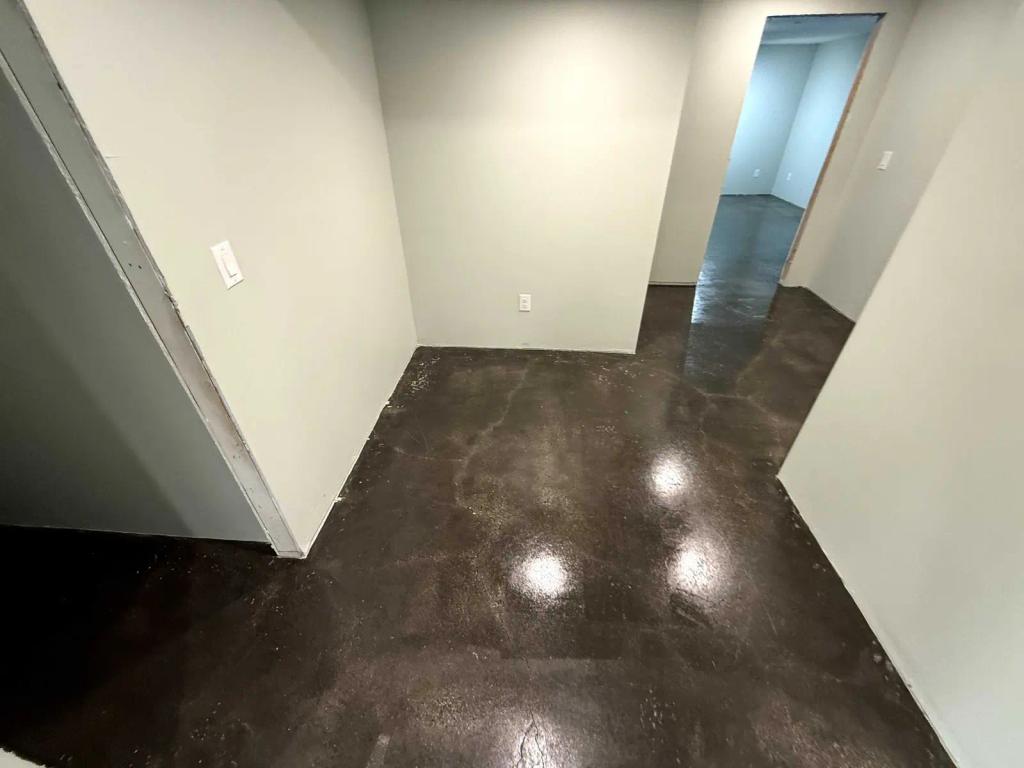

Stained concrete for businesses
Stains color the concrete itself, giving a varied, natural-looking floor that is sealed for protection.
What stained concrete is
Concrete stain penetrates the surface and colors it, rather than covering it.
Acid stains react chemically with the concrete to produce mottled, earthy tones, while water-based stains offer a wider and more predictable color range.
Because the color comes from the slab's own reaction, the result varies across the floor, which is part of its appeal.
How it is installed
The slab is cleaned and prepared so the stain can soak in evenly; old sealers, glue and coatings have to come off first.
Stain is sprayed or brushed on, sometimes in more than one color.
Acid stain residue is neutralized and rinsed. A clear sealer or coating is then applied to protect the color and set the sheen.
- Remove sealers, glue and coatings
- Clean and prepare
- Apply stain in one or more colors
- Neutralize and rinse where needed
- Seal or coat
Key properties
Stained floors have depth and variation that a solid color cannot match.
The color is in the concrete, so it does not peel, though the protective sealer on top does wear.
Stain shows what is in the slab: patches, cracks and old marks remain visible and often become part of the look.
Where stained concrete is used
Staining fits interior spaces where a warm, natural look matters and traffic is mostly foot traffic: dining rooms, retail floors, offices and event spaces.
Strengths, limits and when to choose something else
Staining gives a distinctive look on an existing slab without adding much thickness.
It is not suited to heavy-wear industrial floors, and results on patched or damaged concrete are hard to predict.
For a more uniform decorative floor, metallic epoxy or a tinted coating gives more control. For a low-maintenance modern slab, polished concrete with dye is another option.
Care and maintenance
Dust mop and damp mop with a neutral cleaner.
The sealer protects the color, so keeping it intact is the main job.
When traffic areas look dull or start to absorb water, a fresh coat of sealer restores protection and color depth.
At a glance
| Property | What to expect |
|---|---|
| Look | Mottled, natural color variation |
| Color | Earthy acid tones or wider water-based range |
| Protection | Depends on the sealer on top |
| Slab condition | Patches and marks stay visible |
| Traffic | Foot traffic and light carts |
| Upkeep | Neutral cleaner, reseal as it wears |
FAQ
Concrete staining: questions
Straight answers to the questions we hear most.
Will the stained floor match the sample exactly?
Not exactly. Every slab takes stain differently, so a test area on the actual floor is the best preview of the final color.
Can stain cover old tile adhesive marks?
Stain is translucent, so marks and glue shadows usually show through. If a uniform look is needed, a coating may be a better fit.
Is acid stain safe to use in an occupied building?
Acid stain is applied with ventilation and the residue is neutralized and cleaned up before sealing. Water-based stains are often chosen where fumes are a concern.
Does stained concrete need a sealer?
Yes. The sealer protects the color from wear and keeps spills from soaking in. It is the part that is maintained over time.
Related
Keep reading
- SystemsPolished concreteA ground, densified and polished slab with no coating to peel.Read more →
- SystemsMetallic epoxyA high-gloss, marbled epoxy finish for showrooms, lobbies and offices.Read more →
- SystemsSealed concreteAn affordable way to dust-proof and protect large slabs.Read more →
- IndustriesRestaurants & kitchensSeamless, slip-resistant kitchen floors installed overnight or on your closed day.Read more →
- IndustriesRetail, showrooms & officesPolished, metallic and flake floors for stores, showrooms and offices, installed after hours.Read more →

Request a bid
Ready for a bid?
Send your project details or plans. We reply within 1 business day.