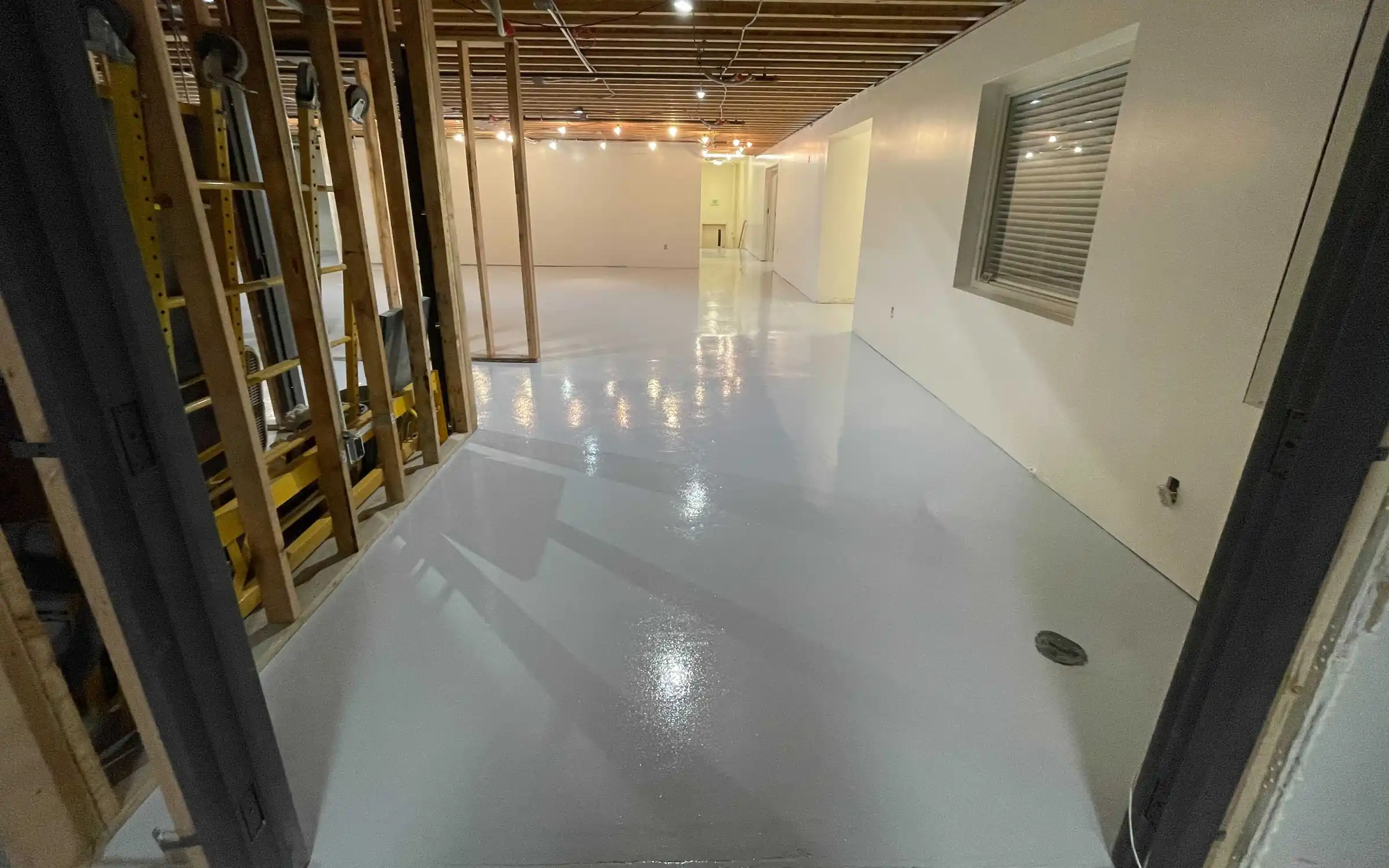

Solid epoxy floor coatings
A solid-color epoxy system turns bare concrete into a seamless, sealed floor that is easy to clean and stands up to steady work traffic.
What a solid epoxy floor is
Solid epoxy is a two-part resin coating that bonds to prepared concrete and cures into a hard, continuous film. It is pigmented in one color, so the finished floor reads as a clean, uniform surface rather than a decorative one.
Most systems are built in layers: a primer that soaks into the slab, one or more pigmented body coats, and often a clear or tinted topcoat chosen for the wear the floor will see.
How it is installed
The slab is mechanically ground or shot-blasted to open the surface and remove old sealers, grease and laitance.
Cracks, spalls and pits are repaired so they do not telegraph through the finished coat.
Primer and body coats go down in sequence, each allowed to cure enough to accept the next. Grit can be added to the final coat in wet or sloped areas for better footing.
- Moisture check of the slab
- Diamond grinding with dust control
- Crack and joint repair
- Primer, pigmented body coat, topcoat
- Cure before traffic returns
Key properties
Epoxy bonds strongly to properly prepared concrete and builds a tough, impact-resistant surface.
It resists many oils, fuels and common cleaning chemicals, which is why it is a long-standing choice for industrial floors.
Light-colored epoxy brightens a building by reflecting overhead light. Standard epoxy can amber or chalk under sunlight, so areas near open bay doors usually get a UV-stable topcoat.
Where solid epoxy is used
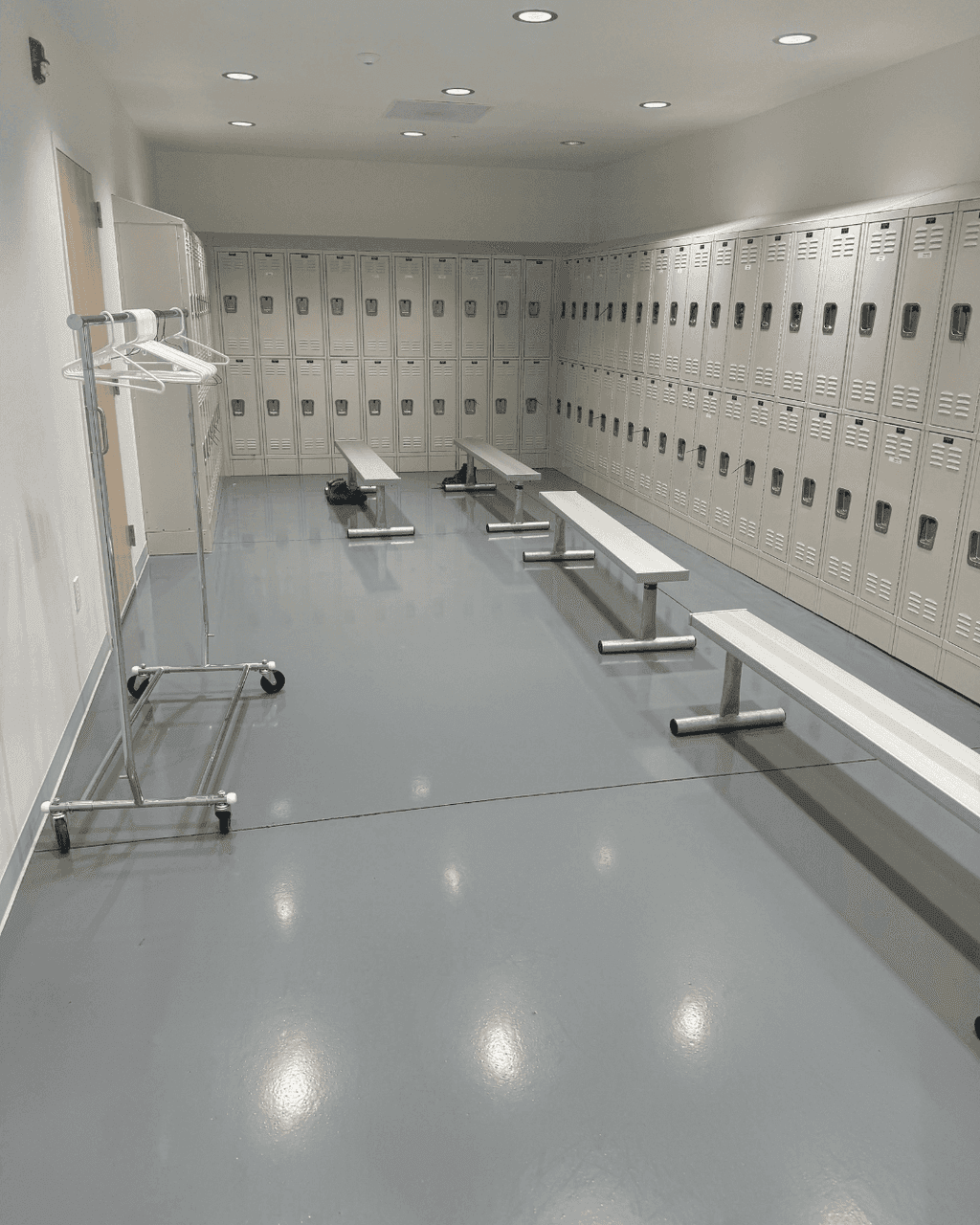
Solid epoxy fits floors that need to be durable, cleanable and plain rather than decorative.
It is common in storage areas, production floors, maintenance shops and back-of-house rooms.
Strengths, limits and when to choose something else
The main strengths are toughness, chemical resistance and a smooth, sanitary surface at a reasonable cost.
The trade-offs are a longer cure than fast-cure coatings and a surface that can be slick when wet without added grit.
Floors that see hot water, steam cleaning or sharp temperature swings usually do better with urethane cement. If downtime is the main constraint, a polyaspartic topcoat or full polyaspartic system may fit better.
Care and maintenance
Daily sweeping or dust mopping keeps grit from dulling the surface, and an auto-scrubber with a neutral cleaner handles larger floors.
Spills of strong solvents or acids are best wiped up promptly.
Heavy-traffic lanes wear first.
A fresh topcoat over the existing system, applied before the base layers wear through, usually restores the floor without starting over.
At a glance
| Property | What to expect |
|---|---|
| Look | One uniform color, satin to gloss |
| Durability | Tough and impact-resistant under carts and forklifts |
| Chemical resistance | Good against oils, fuels and common cleaners |
| Downtime | Short to moderate; depends on temperature and topcoat |
| Slip resistance | Grit can be added to the final coat |
| Upkeep | Sweep, scrub with a neutral cleaner, recoat worn lanes |
FAQ
Solid epoxy: questions
Straight answers to the questions we hear most.
Is solid epoxy strong enough for forklift traffic?
Epoxy is widely used under forklifts and pallet jacks when it is installed at a thickness suited to the load and the slab is properly prepared. Damaged joints are usually repaired or filled at the same time so wheels do not break the edges.
Will an epoxy floor turn yellow?
Many epoxies amber over time when exposed to sunlight. In areas near bay doors or windows, a UV-stable topcoat helps keep the color consistent.
Can a solid epoxy floor be patched later?
Yes. Damaged spots can be ground out and recoated, though new material may look slightly different from aged coating. Recoating a whole room or zone gives the most even result.
How do I choose a color for an industrial floor?
Light greys and tans brighten a space and make spills and debris easy to spot. Darker colors hide tire marks better but show dust, so the choice often depends on what the floor sees each day.
Related
Keep reading
- SystemsPolyasparticA fast-curing, UV-stable coating for spaces that need to reopen quickly.Read more →
- SystemsUrethane cementA heavy-duty floor for hot washdown, steam cleaning and thermal shock.Read more →
- SystemsJoint fillSemi-rigid filler that protects slab joints from forklift and cart damage.Read more →
- IndustriesWarehouses & distributionForklift lanes, docks and aisles coated and sealed around your shipping schedule.Read more →
- ComparisonsEpoxy vs urethane cementTwo seamless systems compared for heat, washdown, chemicals and appearance.Read more →
- CommercialRequest a bidSend the building, size and timing for a written bid.Read more →

Request a bid
Ready for a bid?
Send your project details or plans. We reply within 1 business day.