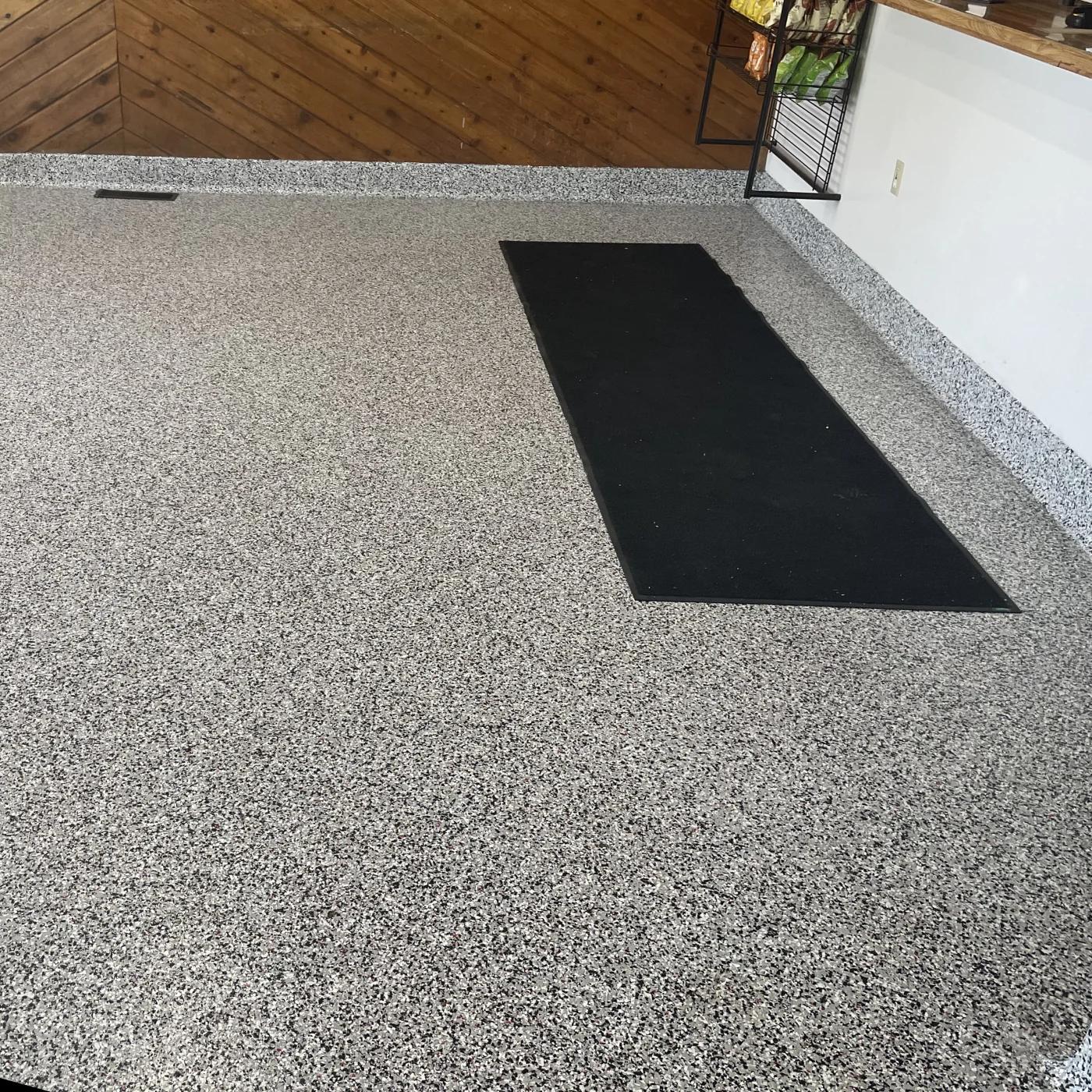

Urethane cement flooring
Urethane cement is a heavy-duty, cement-filled resin system built for hot water, steam cleaning and sudden temperature changes.
What urethane cement is
Urethane cement, sometimes called urethane concrete, combines a polyurethane resin with cement and aggregate.
The result is a thick, dense floor that behaves more like the concrete beneath it than a thin film does.
Because it expands and contracts closer to the way concrete does, it tolerates hot water, steam and cold spills that can crack or debond other coatings.
How it is installed
The slab is prepared with aggressive grinding, and the edges are anchored with saw-cut keyways so the system locks in at drains, doorways and terminations.
Urethane cement also tolerates more slab moisture than many coatings, though testing still comes first.
It is troweled or screeded on, often with a broadcast for texture, then finished with a topcoat. Integral cove bases are common so the floor and wall meet without a seam.
- Moisture testing and surface prep
- Keyway cuts at edges and drains
- Trowel or slurry application
- Optional broadcast for texture
- Cove base and topcoat
Key properties
Urethane cement is known for thermal shock resistance, strong chemical resistance to many food acids and cleaning agents, and impact strength.
Its texture can be set for good footing on wet floors.
It has a matte, utilitarian look and limited color options compared with decorative systems.
Where urethane cement is used
It is the usual system for wet, hot and hard-cleaned spaces: cook lines, dish rooms, food and beverage production, and cold rooms that see temperature swings.
Strengths, limits and when to choose something else
For heat, steam and harsh washdown, few coatings match it.
The trade-offs are a higher cost than standard epoxy, a more industrial look and color that can shift over time in sunlight.
Dry storage, offices and showrooms rarely need it; solid epoxy, flake or polished concrete cost less and look more finished in those spaces.
Care and maintenance
Urethane cement is designed to be cleaned hard.
Daily scrubbing with the facility's approved cleaners and hot water is normal, followed by squeegeeing to drains.
Watch for damage at drains, door thresholds and equipment feet, where impact is highest, and repair small areas before water gets underneath.
At a glance
| Property | What to expect |
|---|---|
| Look | Matte, textured, limited colors |
| Heat | Handles hot water, steam and thermal shock |
| Chemicals | Strong resistance to many food acids and cleaners |
| Thickness | Thick, troweled system |
| Footing | Texture can be set for wet floors |
| Upkeep | Daily washdown, check drains and thresholds |
FAQ
Urethane cement: questions
Straight answers to the questions we hear most.
Why not use epoxy in a commercial kitchen?
Epoxy can crack or lose its bond when it is hit repeatedly with hot water, steam or grease at high temperatures. Urethane cement is formulated to move with the slab under those conditions.
Can urethane cement go on a slab with some moisture?
It generally tolerates more slab moisture than thin coatings, but every slab should still be tested. The results decide whether extra preparation or a vapor-control layer is needed.
Does urethane cement help with food-safety inspections?
A seamless, nonabsorbent floor with coved edges is easier to keep clean, which is what food-safety rules generally ask of floors. The final word on any space belongs to the local health inspector.
Will the color change over time?
Many urethane cement systems amber or shift in color with UV exposure. Indoor production areas see little change, and the performance is unaffected.
Can urethane cement be installed around equipment?
Often yes, by working in zones and moving equipment in phases. Fixed equipment is usually coated around with careful terminations and sealed edges.
Related
Keep reading
- SystemsSolid epoxyA seamless, single-color epoxy floor for warehouses, shops and service areas.Read more →
- SystemsQuartz coatingsColored quartz sand in resin for a hard, textured floor in wet, busy areas.Read more →
- ComparisonsEpoxy vs urethane cementTwo seamless systems compared for heat, washdown, chemicals and appearance.Read more →
- IndustriesFood & beverage plantsSeamless washdown floors for food plants and breweries that handle steam and thermal shock.Read more →
- IndustriesRestaurants & kitchensSeamless, slip-resistant kitchen floors installed overnight or on your closed day.Read more →
- GuidesRestaurant floors and food codeWhat food-safety rules generally ask of kitchen floors, and how seamless coatings meet them.Read more →

Request a bid
Ready for a bid?
Send your project details or plans. We reply within 1 business day.