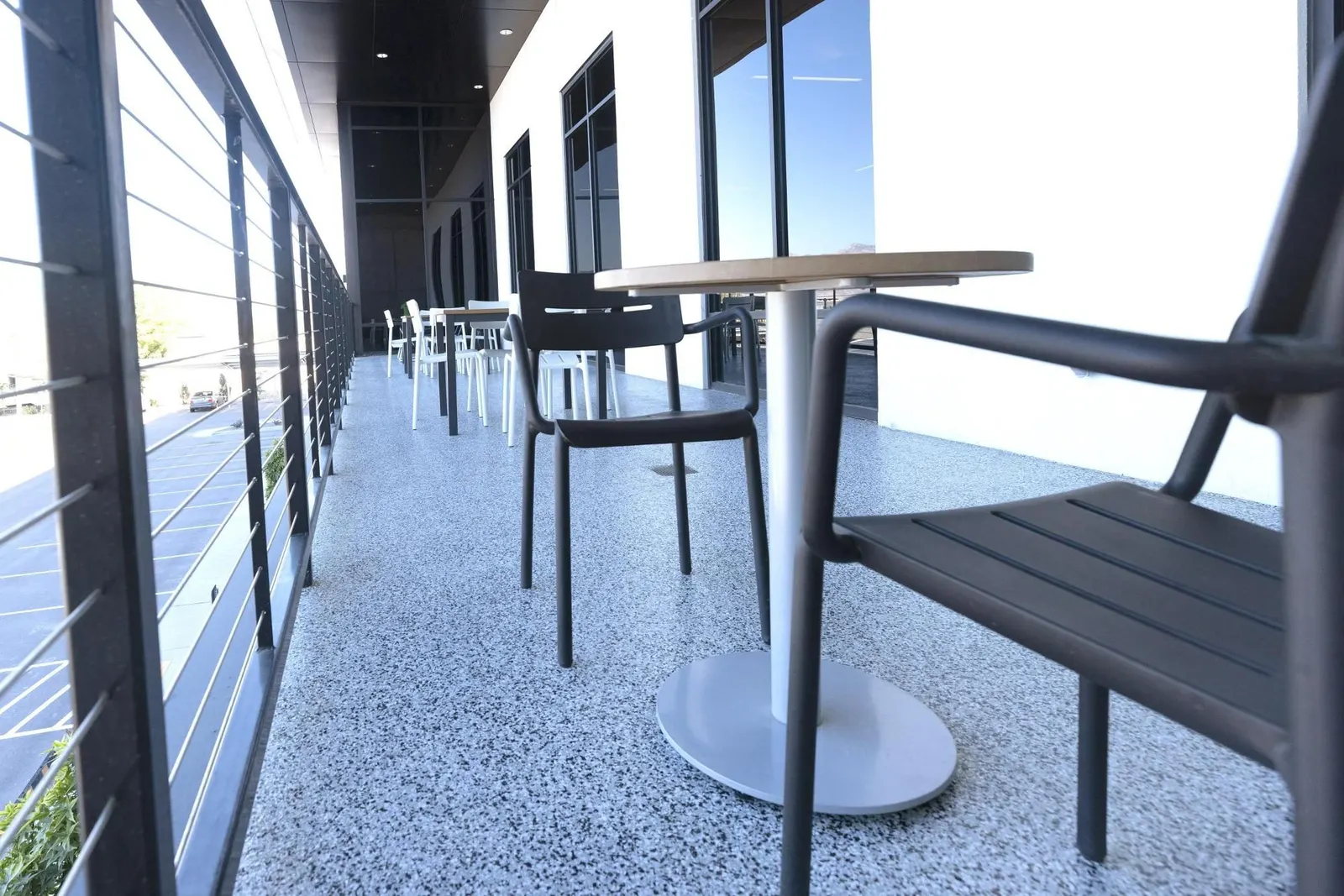

Waterproof deck coatings
Walkable waterproof membranes protect balconies, breezeways and plaza decks, including decks over occupied space.
What a waterproof deck coating is
A waterproof deck coating is a seamless, flexible membrane applied to a balcony, walkway, stair landing or plaza deck.
It stops water from passing into the structure or the rooms below.
Systems are layered: a waterproof base membrane, then textured wearing coats that take foot traffic and weather.
How it is installed
The deck is prepared and the edges, drains, posts and wall transitions are flashed first, since those details are where most leaks start.
The base membrane is then applied over the whole deck.
Texture is added in the wearing coats for grip, and a topcoat gives the final color and UV protection.
- Surface prep and repairs
- Flashing at walls, edges, posts and drains
- Base waterproof membrane
- Textured wearing coat
- UV-resistant topcoat
Key properties
Deck membranes are flexible, so they can handle the expansion and contraction that come with Utah's freeze-thaw cycles.
A textured finish keeps walking surfaces safer in rain and snow.
The membrane is only as good as its details, so flashing and terminations matter as much as the coating.
Where it is used
Common on apartment balconies and breezeways, hotel walkways, rooftop and plaza decks, and stair landings, especially where there is living or working space underneath.
Hotel and hospitality flooring →Parking garages for multifamily buildings →Church and event venue flooring →
Strengths, limits and when to choose something else
A deck membrane keeps water out of the structure and gives a clean, uniform walking surface.
It is designed for foot traffic, not cars; vehicle areas use a heavier parking deck system.
Wood-framed decks, deck boards and some substrates need a different approach, so the substrate is checked during the site visit.
Care and maintenance
Sweep and rinse decks, keep drains and scuppers clear, and avoid sharp metal shovels and heavy chemical deicers in winter.
Inspect the flashing and edges regularly.
A fresh topcoat before the wearing layer is gone keeps the membrane below protected.
At a glance
| Property | What to expect |
|---|---|
| Purpose | Keeps water out of the deck and rooms below |
| Traffic | Foot traffic, not vehicles |
| Footing | Textured finish for wet and snowy weather |
| Weather | Flexible through freeze-thaw cycles |
| Critical detail | Flashing at walls, edges, posts and drains |
| Upkeep | Clear drains, gentle snow removal, recoat top |
FAQ
Waterproof deck coatings: questions
Straight answers to the questions we hear most.
Why does water still leak after a deck was coated?
Most leaks come from the edges, drains, posts and wall transitions rather than the open deck. A proper system flashes and seals those details as part of the install.
Can a balcony coating handle snow shovels?
Plastic shovels are the safest choice. Metal edges and heavy chemical deicers can scratch or wear the topcoat over time.
Is a deck membrane the same as a parking deck coating?
They are related, but parking deck systems are built for vehicle wear while pedestrian membranes are lighter. Each is designed for its own traffic.
Can residents still use balconies during the project?
Usually not the balcony being coated, but work can be scheduled in groups so only some units are affected at a time.
Related
Keep reading
- SystemsParking deck coatingsLayered traffic coatings that waterproof parking decks and add traction.Read more →
- IndustriesHotels & HospitalityTough back-of-house floors and finished guest spaces for hotels, phased around occupancy.Read more →
- IndustriesParking & MultifamilyWaterproof traffic coatings for apartment and condo parking decks, balconies and walkways, phased for residents.Read more →
- GuidesPhased installs and downtimeHow floors are coated in zones, at night or during shutdowns so the business stays open.Read more →
- CommercialRequest a bidSend the building, size and timing for a written bid.Read more →

Request a bid
Ready for a bid?
Send your project details or plans. We reply within 1 business day.