
Metallic epoxy floors for businesses
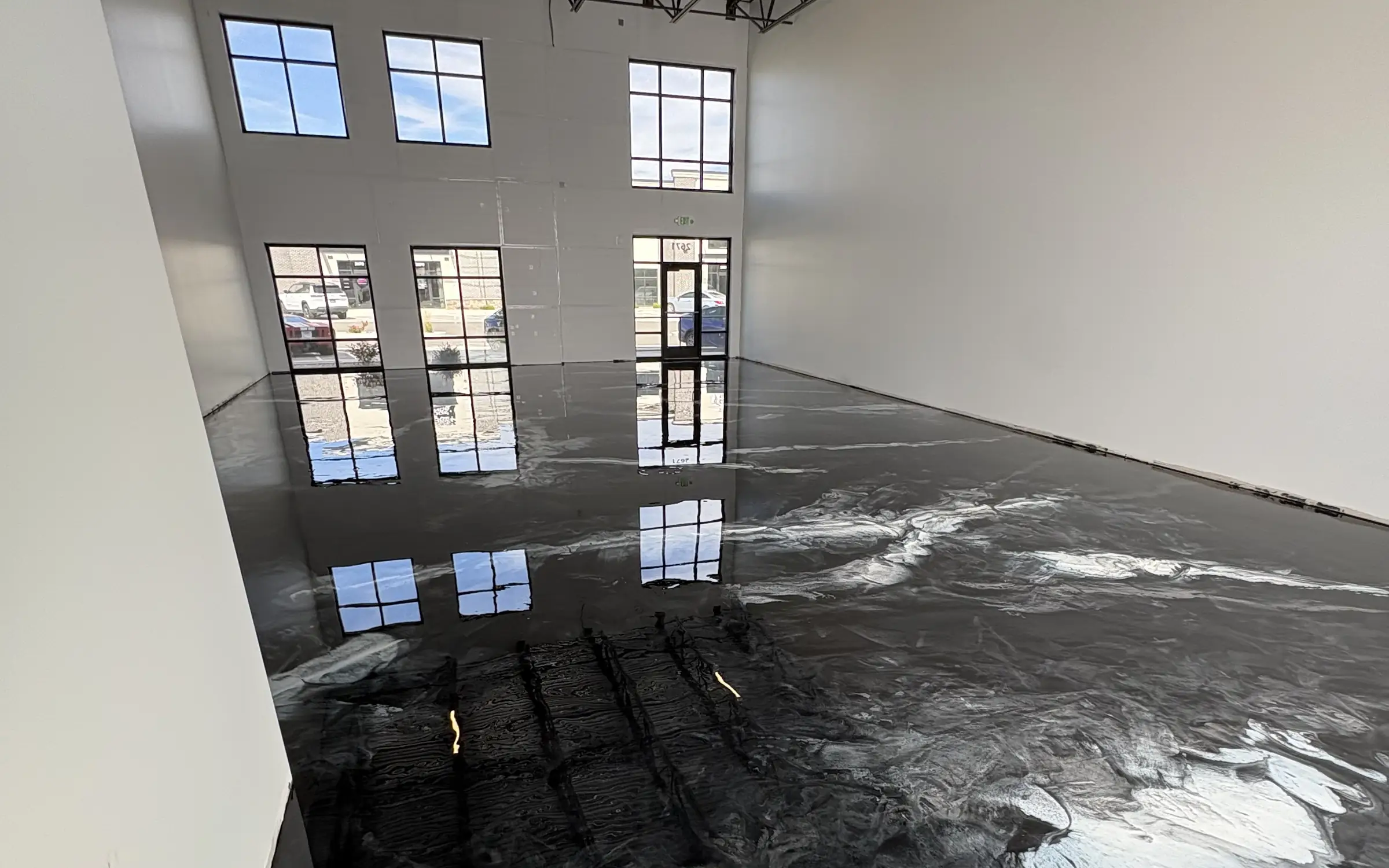
Metallic epoxy uses pigments that move in the wet resin to create a marbled, high-gloss floor, so the floor becomes part of the space's design.
What metallic epoxy is
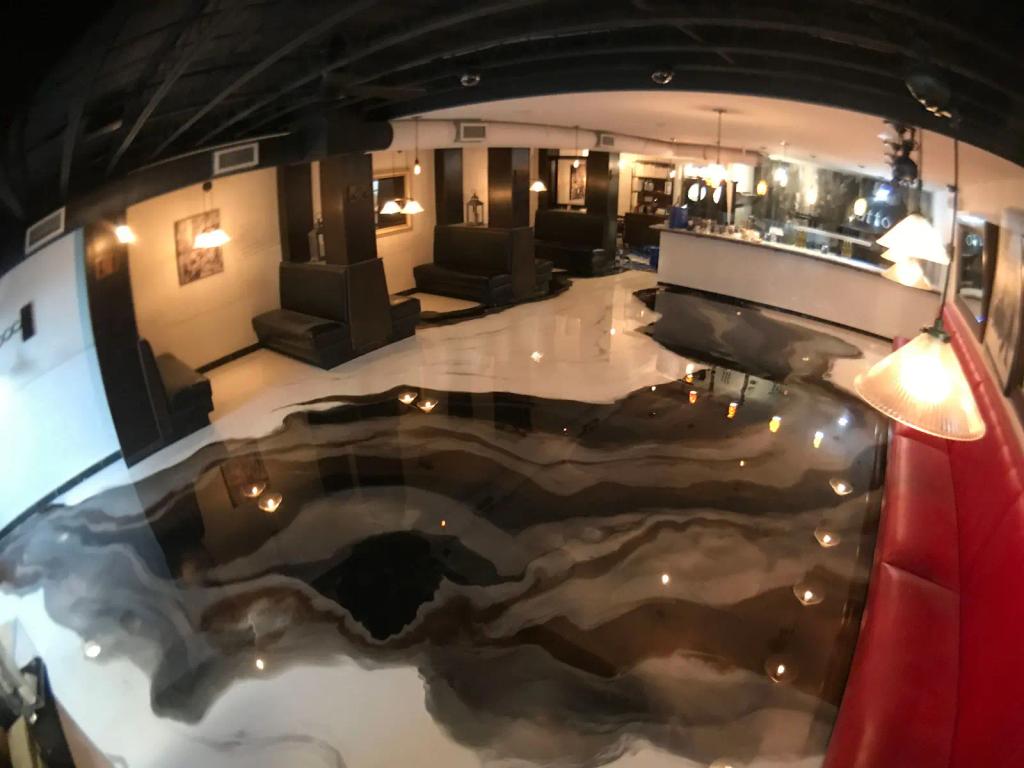
Metallic epoxy is a clear or tinted epoxy with metallic pigments mixed in. As the coating is worked while wet, the pigments drift and settle into swirls, depth and a marble-like pattern.
No two metallic floors look exactly alike, which is why it is chosen for spaces where the floor is part of the brand or the room's design.
How it is installed
Metallic floors need a very flat, well-prepared slab because the gloss shows every ripple. After grinding and crack repair, a primer and a solid-color base coat create an even background.
The metallic layer goes down and is manipulated by hand or with tools to set the pattern. A clear topcoat then protects the finish and sets the final sheen.
- Grind and repair to a flat surface
- Primer and base color
- Metallic epoxy layer worked while wet
- Clear protective topcoat
Key properties
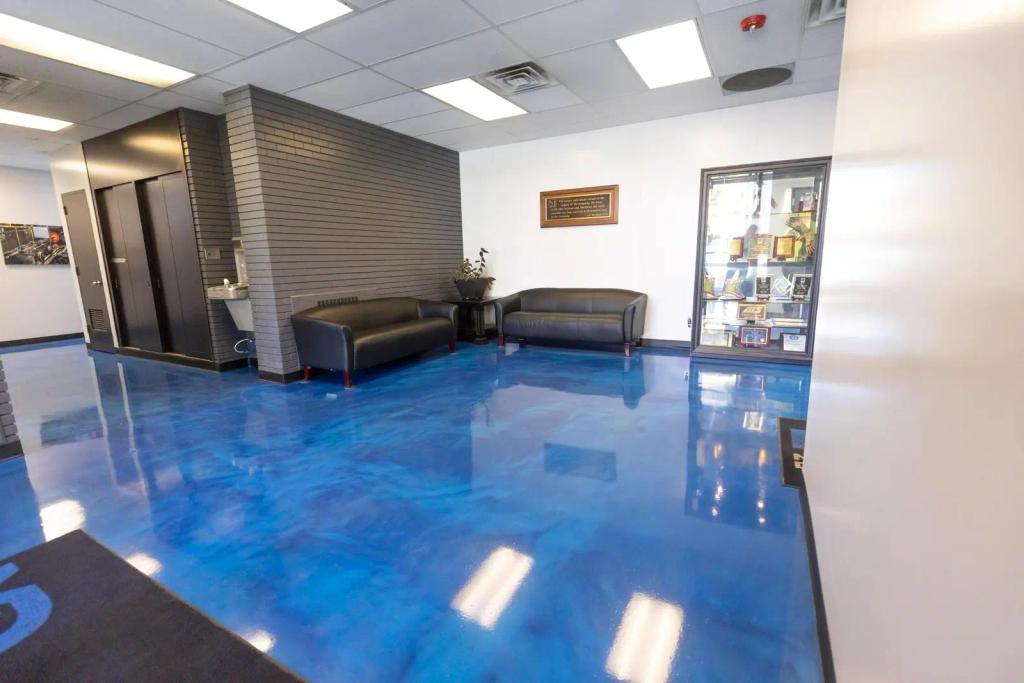
The result is a seamless, high-gloss floor with a lot of visual depth.
It cleans easily and resists everyday spills when sealed with a suitable topcoat.
Like most epoxies, metallic can shift in color under long, direct sunlight, and the gloss shows scratches and grit more than a textured floor.
Where metallic epoxy is used
Metallic fits customer-facing spaces with moderate traffic, where appearance carries weight: showrooms, offices, lobbies, salons and event spaces.
Strengths, limits and when to choose something else
Its strength is appearance: few floors match its depth and movement.
It is less suited to heavy forklift lanes, constant grit or wet, sloped areas where a textured system gives better footing.
Polished concrete is a lower-maintenance option for a modern look in large spaces, and flake or quartz suit busy staff areas better.
Care and maintenance
Walk-off mats at entries and felt pads under furniture prevent most scratches.
Dust mop daily and damp mop with a pH-neutral cleaner; avoid abrasive pads and harsh chemicals.
When the gloss dulls in walking paths, a fresh clear topcoat restores the shine without touching the metallic layer below.
At a glance
| Property | What to expect |
|---|---|
| Look | Marbled, swirled, high gloss |
| Uniqueness | Every floor's pattern is one of a kind |
| Traffic | Best for foot traffic and light carts |
| Sunlight | Long direct sun can shift the color |
| Flatness | Shows ripples, so prep must be thorough |
| Upkeep | Mats, felt pads, neutral cleaner, recoat topcoat |
FAQ
Metallic epoxy: questions
Straight answers to the questions we hear most.
Can metallic epoxy match our brand colors?
Metallic pigments come in a range of tones and can often be combined to suit a palette. Seeing a sample under the space's own lighting is the best way to judge the final look.
Will a metallic floor be slippery?
The high-gloss finish can be slick when wet. A fine texture additive in the topcoat improves grip, though it slightly changes the look, so entries and wet zones often get mats as well.
Does every metallic floor look different?
Yes. The pattern forms as the pigments move in the wet coating, so each floor is unique, and even sections within one space vary slightly.
Is metallic epoxy durable enough for a dealership showroom?
It is often used in showrooms where vehicles are parked and moved occasionally. Lanes with constant vehicle traffic or heavy equipment are better served by a tougher, textured system.
Related
Keep reading
- SystemsPolished concreteA ground, densified and polished slab with no coating to peel.Read more →
- SystemsConcrete stainingDecorative color absorbed into the slab, sealed for everyday protection.Read more →
- ComparisonsEpoxy vs polished concreteA resin coating versus the slab itself, compared on spills, wear, looks and upkeep.Read more →
- IndustriesRetail, showrooms & officesPolished, metallic and flake floors for stores, showrooms and offices, installed after hours.Read more →
- IndustriesSalons & SpasStylish, dye-resistant floors for salons, barbershops and spas that sweep clean between clients.Read more →

Request a bid
Ready for a bid?
Send your project details or plans. We reply within 1 business day.