
Floor coating questions, answered
What homeowners ask us most about garage, basement, patio and decorative concrete floors, grouped by topic.
Garage floor coatings
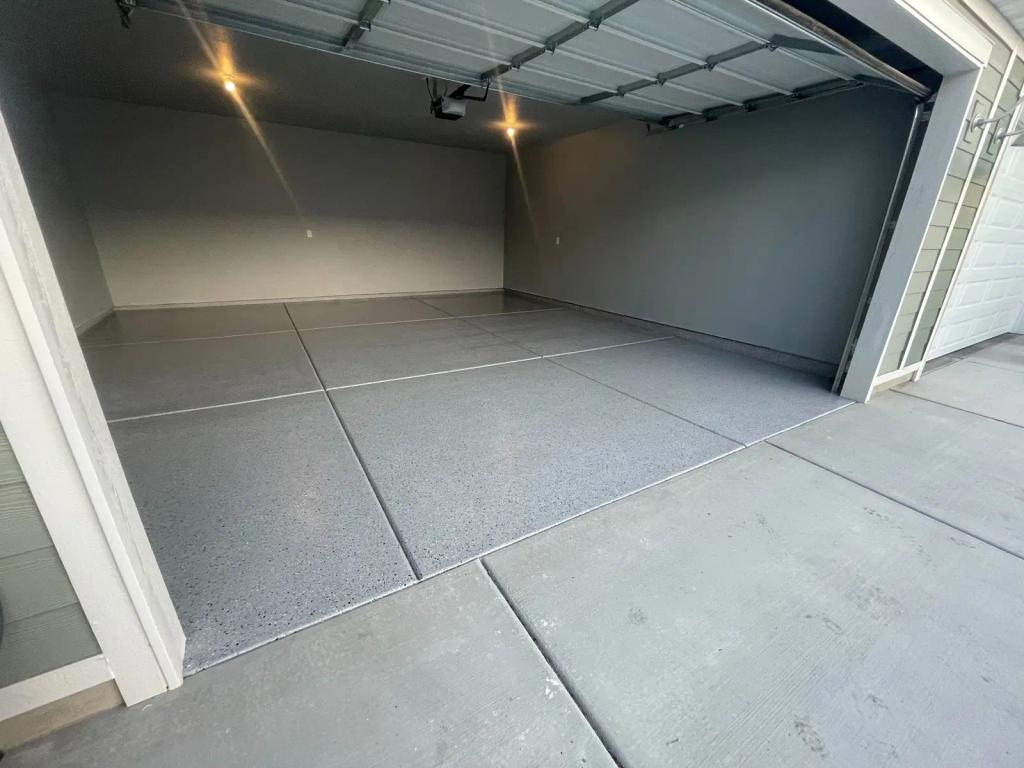
How long will my garage floor take to install?
Most projects are done in a single day. A standard 2-3 car garage is fully coated in about 6-8 hours. Larger 3-car-plus garages or floors needing significant crack and pitting repair may run 2-3 days. Either way, we give you an exact timeline during your free estimate so there are no surprises.
How long before I can walk or drive on my new garage floor?
You'll be back to using your garage quickly. You can walk on the floor within 24 hours, move light items back in after 48 hours, and drive your vehicle onto it after 72 hours. We'll walk you through the exact cure schedule when we finish so you know precisely when to bring everything back in.
Will cracks or divots in my floor prevent a coating?
Not at all. Cracks and divots are part of nearly every garage floor we coat, and fixing them is a standard step in our process. Before any coating goes down, we fill cracks, patch divots, and grind the surface smooth so the new floor bonds properly and lasts. A damaged starting point is normal, that's what the prep work is for.
Can my garage floor be coated in the winter?
A lot of people assume floor coatings are a summer-only project, but that's an epoxy limitation. Our polyaspartic system installs and cures reliably in cold temperatures, so we work year-round in both garages and basements, no waiting until spring.
Metallic epoxy floors
What is a metallic epoxy floor?
It’s an epoxy coating with metallic pigments mixed in. As it goes down, the pigments create swirls, depth and a marble-like look, so every floor is one of a kind.
Where can a metallic epoxy floor go?
Basements, home gyms, kitchens and garages, and commercial spaces like break rooms, showrooms and dealerships. Areas with long, direct sun exposure aren’t ideal, because UV can fade or discolor the finish.
How long does a metallic epoxy floor last?
With proper care, metallic epoxy floors can last up to 20 years or more. They resist scratches, spills and stains, and a protective topcoat adds another layer of defense.
How do I clean a metallic epoxy floor?
Sweep with a soft broom or microfiber dust mop, and damp-mop with a mild, non-abrasive cleaner. Skip harsh chemicals, ammonia and abrasive scrub pads, and wipe up spills quickly.
How much does a metallic epoxy floor cost?
It depends on the size of the space, the condition of the concrete and the prep it needs. Our garage floor coating cost guide covers typical ranges, and a free estimate gives you an exact price for your floor.
Patios and porches
What finishes are available for patios?
Flake systems, quartz finishes, decorative overlays, and textured coatings designed for outdoor spaces, in a range of colors.
Will a patio coating hold up to Utah weather?
Our outdoor patio coatings use UV-stable materials designed to resist yellowing, fading, moisture damage, and surface breakdown through Utah’s sun, snow, rain, and freeze–thaw cycles.
Can a coated patio be slip-resistant?
Yes. Patio coatings can be finished as a slip-resistant surface, which works well for poolside areas.
How do you prepare the patio before coating?
Every patio coating starts with industrial diamond grinding with simultaneous vacuum dust extraction. Cracks and pitting are repaired before the coating goes down, so it bonds properly and lasts.
Resurfacing outdoor concrete
What is the RESIST Exterior Sand Epoxy System?
A two-component system that rebuilds the surface of your existing concrete instead of replacing it. A durable epoxy layer bonds to the slab and is finished with Armorstone, a crushed-basalt aggregate.
How soon can I use my driveway or patio?
Walk on it in about 12 hours and drive on it within 48 hours.
Is the surface slippery when wet?
No. A broadcast layer of Armorstone aggregate gives real grip underfoot, even when wet, which makes it ideal for pool decks, patios, and entryways.
Will it hold up to road salt and freeze–thaw?
Yes. It’s built to flex through Utah’s freeze–thaw cycles and resist the road salt and deicing chemicals that crack and pit bare concrete.
Sport courts
What sports can the court be set up for?
Pickleball, basketball, tennis, and multi-sport layouts. Boundary striping and court layout are configured for the games you play.
Can you resurface an existing court?
Yes. We upgrade backyard courts and resurface existing slabs. Every project starts with a full evaluation of the concrete or asphalt for cracks, low spots, and surface wear.
Will the court colors fade in Utah’s sun?
Our sport court coatings use UV-stable, weather-resistant materials designed to resist fading, peeling, and surface breakdown through Utah’s sun, snow, and temperature swings.
Do you fix cracks before coating the court?
Yes. Cracks and minor surface imperfections are repaired first to create a smooth, consistent playing surface. That improves ball response and reduces future surface breakdown.
How a project works
Do I need to be home during the install?
It helps to be there at the start to confirm the plan and at the end for the walkthrough. In between, the crew needs the space clear and free of foot traffic.
What do I need to do to get my garage ready?
Move cars, stored items and anything on the floor out of the space before the crew arrives. We explain exactly what to clear when we schedule your install.
How soon can I drive on my new garage floor?
It depends on the system and the temperature on install day. We tell you when the floor is ready for walking and when it is ready for vehicles.
Can cracks and pitting be fixed first?
Yes. Cracks, pitting and minor surface damage are repaired during prep, before any coating goes down, so the finished floor looks seamless.
Still have a question?
Ask us directly, or request a free estimate and we will answer it on the visit.
We do commercial too: restaurants, warehouses, showrooms, offices and shops. See our commercial floors →