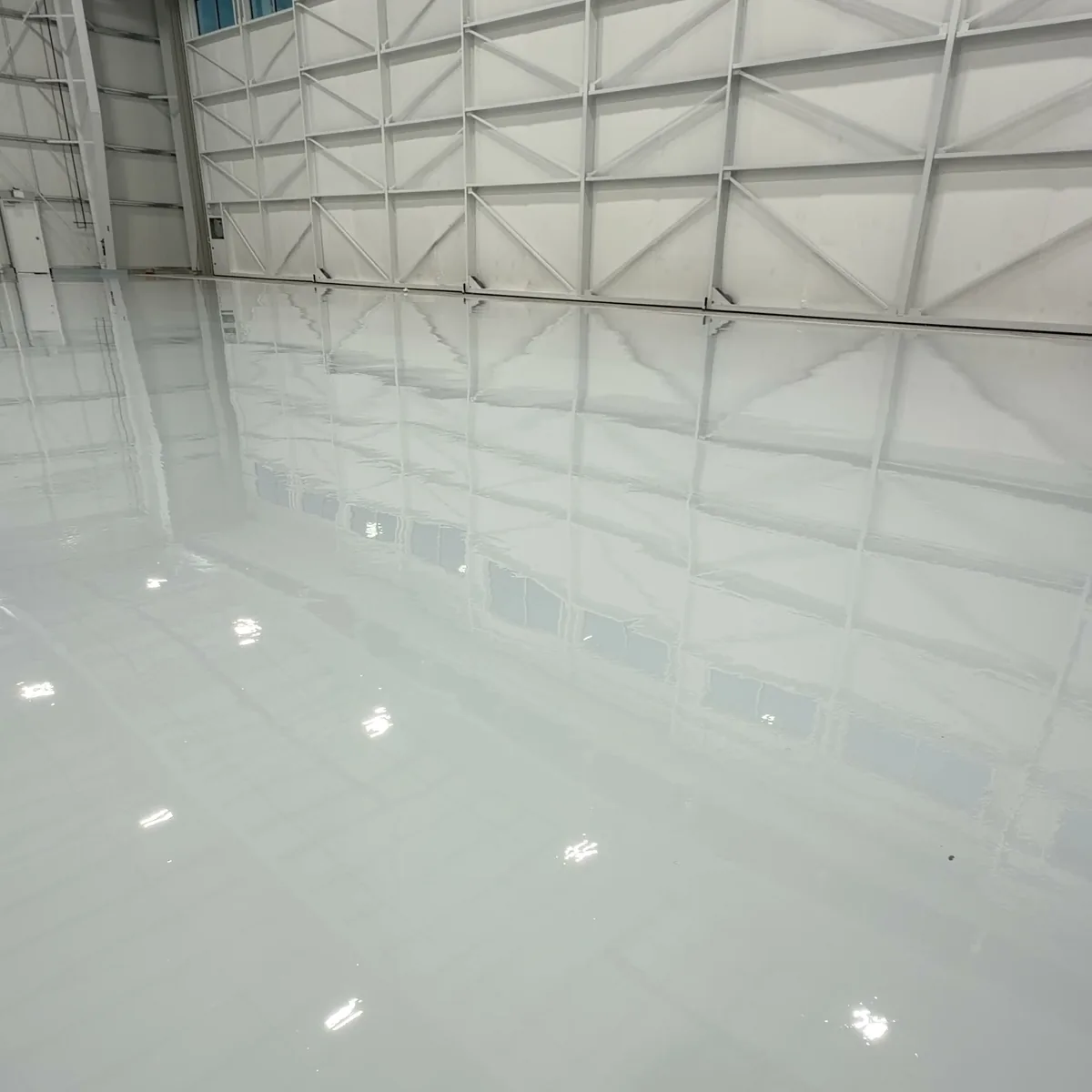

Warehouse & Distribution Center Floor Coatings in Utah
Forklift lanes, docks and racking aisles, coated and sealed around your shipping schedule.
Rating
4.9 on Google
From 198+ Google reviews
Experience
10+ years
In Utah since 2016
Coverage
Licensed & insured
Installers
Same crew
Installed by the same crew that's been with Elevated since day one
What a warehouse floor has to handle
Warehouse floors take constant forklift and pallet jack traffic, turning wheels and dropped loads, often across very large areas. Hard wheels hitting open control joints chip and spall the edges, and turning forklifts wear aisles, docks and intersections fastest.
Bare slabs shed fine dust that settles on products, racking and equipment, and gray concrete absorbs light and makes aisles darker. Spills soak into unsealed concrete, and new slabs can bring moisture that has to be checked first.
- Forklift and pallet jack wheels on joints
- Abrasion in aisles, docks and turning areas
- Dust from unsealed concrete
- Rack base plates and dropped loads
What we recommend and why
Solid epoxy gives forklift lanes, docks and work areas a durable, bright floor that is easy to scrub.
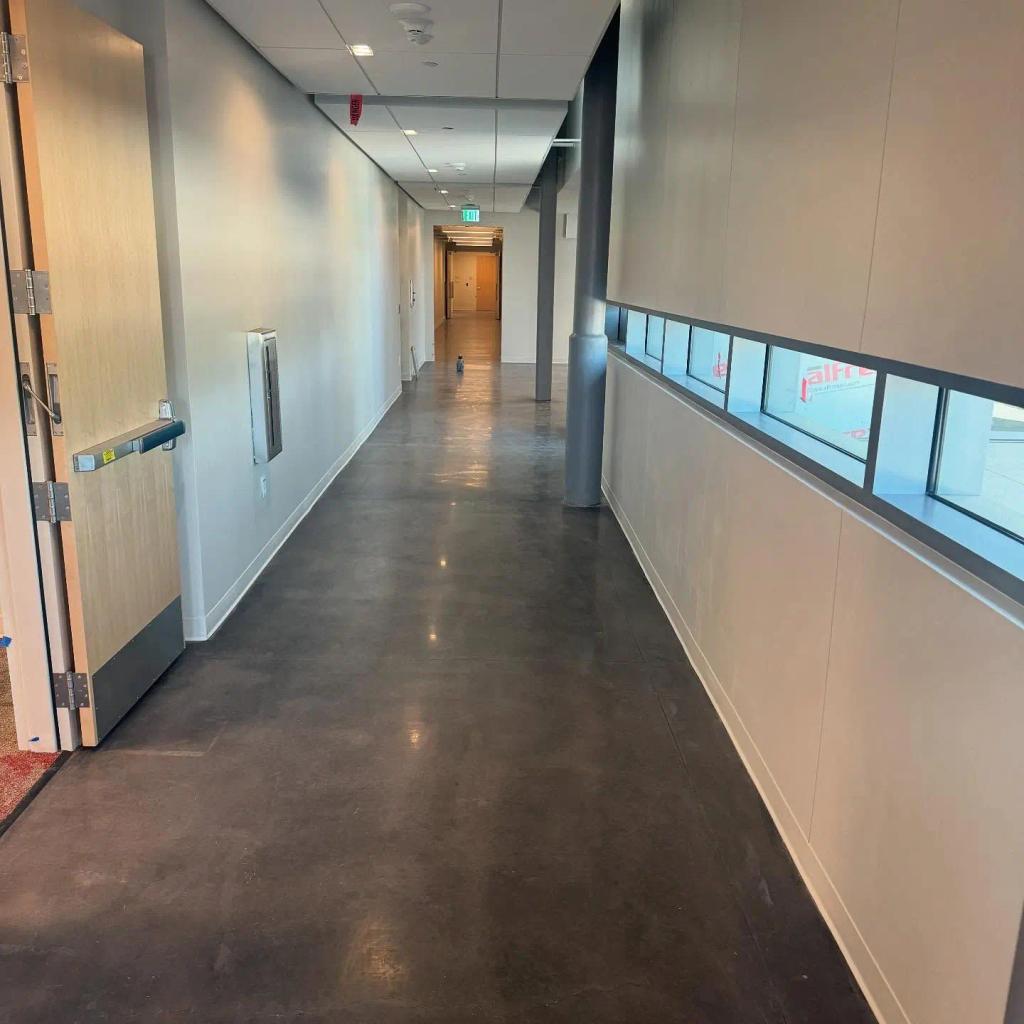
Large storage areas with limited chemicals and wear can be dust-proofed with a sealer at a lower cost.
Joint fill is often the most important piece. A semi-rigid filler supports the joint edges so wheels roll across smoothly instead of breaking the concrete.
How the install works around shipping
Warehouse work is usually phased by zone or aisle so goods can be moved around the area being coated, often on nights, weekends or slower shipping periods.
On new construction the schedule is set with the general contractor before racking goes in.
Racking, goods and forklifts return zone by zone as each area cures. Cure time depends on the system, the building temperature and when the area needs to carry forklift traffic again.
Prep and concrete testing
Warehouse slabs are usually ground to remove curing compounds, old sealers, tire marks and contaminants so the new system can bond.
Cracks and spalled joints are repaired, and joints are cleaned out before they are filled.
Moisture testing matters most on newer slabs and buildings without a vapor barrier, since vapor can push a coating off the concrete.
Safety, visibility and cleaning
Light-colored coatings and sealed surfaces reflect more light, which makes aisles easier to see.
A sealed floor also stops dusting, so it is easier to sweep and scrub and keeps dust off products and equipment.
Hydraulic fluid and battery acid from forklifts should be cleaned up promptly, and dock areas kept clear of gravel tracked in from trucks. Smooth, filled joints give wheels and loads a steadier ride across the floor.
Maintenance and lifespan
A warehouse floor lasts longest when grit is scrubbed off regularly and damaged joints are fixed before the damage spreads.
Traffic volume, wheel type and how often the floor is cleaned decide how long a coating or sealer goes before it needs work.
Slabs keep shrinking for some time after they are poured, so joint fill may need topping up as joints open.
- Run an auto-scrubber with a pH-neutral cleaner on a regular schedule
- Keep docks clear of gravel and debris from trucks
- Inspect joints, dock plates and turning areas and repair them early
- Clean up hydraulic fluid and battery acid promptly
Spec
Which system goes where
Area | What it needs | System |
|---|---|---|
Racking aisles | Forklift wear, tire marks | Solid epoxy |
Loading docks | UV from open doors, temperature swings | Epoxy, or urethane cement for heavy forklift traffic and temperature swings |
Slab joints | Forklift wheels breaking the edges | Joint fill |
Battery charging | Acid spills | Chemical-resistant epoxy, spec'd to the chemicals in the area |
Break rooms and offices | Cleanability, appearance | Flake or polished concrete |
Process
How a bid works
Request
Send the building type, size and timing, and any plans or photos.
Site visit
For most bids, we look at the slab and agree the work window; moisture is tested when the slab needs it and listed in the bid. Some are bid from plans or an RFQ.
Written bid
Every bid comes in writing with the scope: the system, the prep and the areas covered.
Install
Planned around your hours. Before you reopen, we go over the cure schedule: when you can walk, load and drive on it.
Who installs your floor
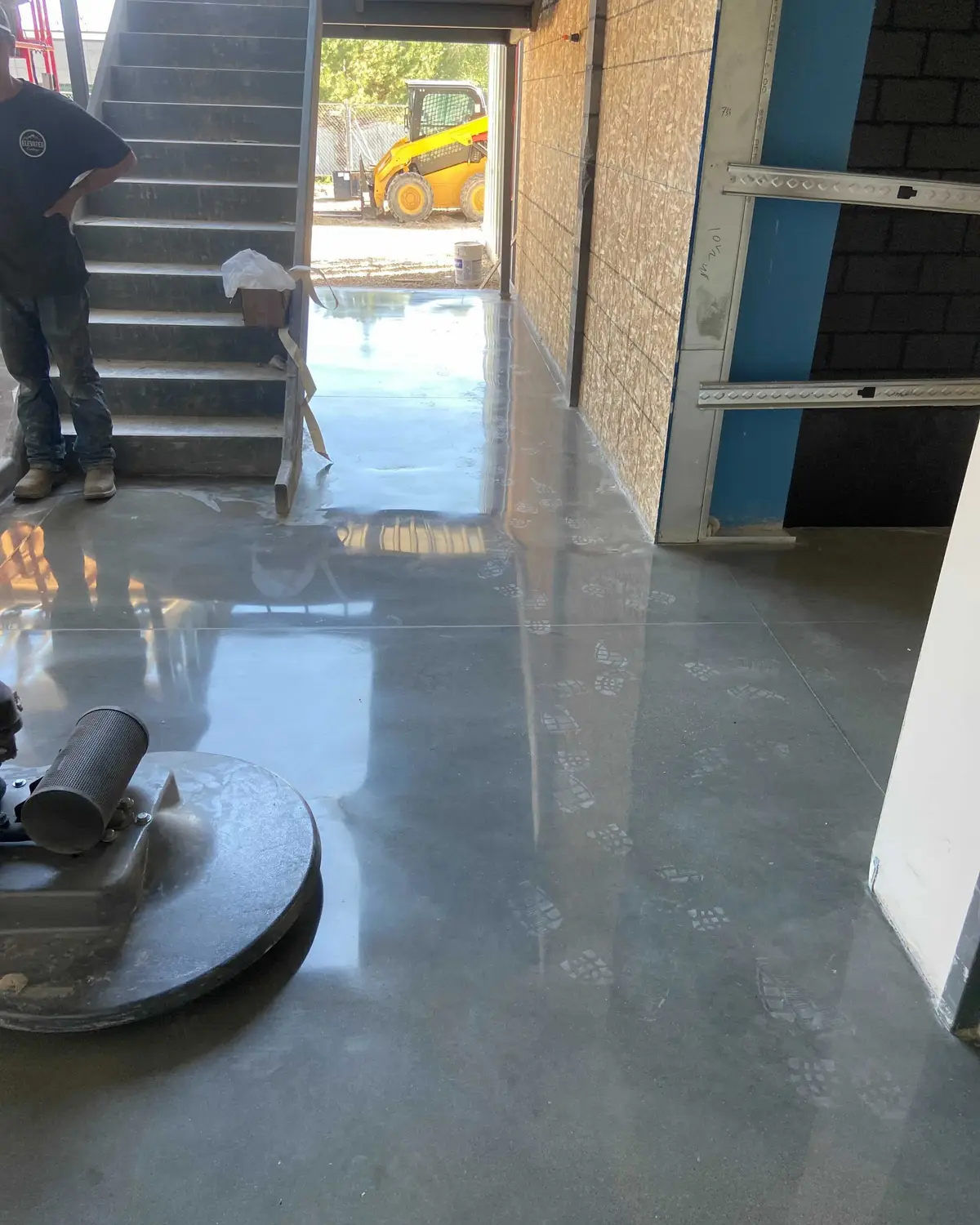
Installed by the same crew that's been with Elevated since day one
Every bid comes in writing with the scope: the system, the prep and the areas covered.
Most bids start with a look at the slab; some are bid from plans or an RFQ.
Every bid comes in writing with the scope.
Planned around your hours.
Keep reading
Systems, problems and guides for this work
- Problems we fixForklift-damaged concreteChipped joints, ruts and worn-through coating in forklift lanes, and how they are repaired.Read more →
- Problems we fixDusty concrete floorsBare slabs that keep shedding dust, and the sealing options that stop it at the source.Read more →
- ComparisonsSealer vs coatingPenetrating sealers and full coatings compared on protection, wear, chemicals and budget.Read more →
- GuidesPhased installs and downtimeHow floors are coated in zones, at night or during shutdowns so the business stays open.Read more →
- IndustriesManufacturing & industrialChemical, impact and heat-resistant plant floors installed during your planned shutdowns.Read more →
- LocationsSalt Lake ValleyCoatings for Salt Lake Valley warehouses, kitchens, offices and retail floors, phased around your hours.Read more →
- GuidesWarehouse safety stripingHow to plan warehouse aisles, walkways and hazard markings, and keep the lines visible under traffic.Read more →
- BlogBest Floor Coating Solutions for Industrial WarehousesWhich floor coatings hold up in warehouses and distribution centers with forklifts, chemicals and heavy traffic, and how to choose the right system.Read more →
- BlogBenefits of Concrete Coatings for Commercial FloorsWhy businesses coat high-traffic concrete: durability, chemical resistance and easy cleaning. Which coatings suit busy commercial floors and why.Read more →
- BlogMinimizing Downtime During Commercial Floor CoatingsKeep a business running during a floor coating: fast-curing systems, phased zones, night and weekend installs and planning that shortens downtime.Read more →
- BlogCommercial Floors: Coatings vs Polished ConcreteEpoxy coatings and polished concrete compared on durability, spills, upkeep and looks, with honest trade-offs to help you choose the right floor.Read more →
Industries
Other industries we serve
- IndustriesRestaurants & kitchensSeamless, cleanable, slip-resistant floors for restaurants, quick-service kitchens and ice cream, soda and dessert shops — installed overnight or on your closed day.Read more →
- IndustriesBuild-outs & tenant improvementsMoving into a new space or remodeling one? Floors bid to your budget and scheduled around your build-out.Read more →
- IndustriesFranchise & multi-locationThe same floor in every store: we can install one spec across all your locations.Read more →
- IndustriesRetail, showrooms & officesPolished, metallic and flake floors for stores, showrooms, lobbies and offices, installed after hours.Read more →
- IndustriesAuto shops & dealershipsService bays that shrug off hot tires and fluids, and showroom floors that sell the cars on them.Read more →
- IndustriesAll industriesEvery type of facility we coat floors for, in one list.Read more →
FAQ
Warehouses & distribution: questions
Straight answers to the questions we hear most.
Can you coat around racking?
Yes. We work zone by zone, coating open aisles and the floor under racking that can be cleared; your scope shows each zone's dates.
How do you handle forklift traffic?
We specify a system rated for forklift traffic and build in a return-to-service time before forklifts go back on it. The times are in the downtime schedule on this page.
Our building is new. When can the slab be coated?
After it passes a moisture test. A new slab can take weeks to dry enough; we test it when it needs it, list that in the bid and tell you, rather than coat it early, so the coating isn't the first thing to fail.
Can you phase by zone?
Yes. Phasing is how most occupied warehouses get coated: we agree the zones and the order with you.
Can an unheated warehouse be coated in winter?
Temperature affects how coatings cure, so cold buildings may need temporary heat or a system suited to lower temperatures. The timing is planned around the building's conditions.
What floor works in a forklift battery charging area?
Charging areas can see battery acid, so they usually get a system with good chemical resistance. Spills there should still be cleaned and neutralized promptly.
Do dock areas need a different finish?
Docks see grit, weather and turning forklifts, so they often get a tougher system or extra attention to joints and edges than the storage floor.

Request a bid
Ready for a bid?
Send your project details or plans. We reply within 1 business day.