
Epoxy vs urethane cement: which commercial floor fits your space
Both are seamless, durable resin floors, but they are built for different conditions. Heat, water and chemicals usually decide which one belongs on a given slab.
How each system works
Epoxy is a two-part resin that cures into a hard, glossy film bonded to prepared concrete.
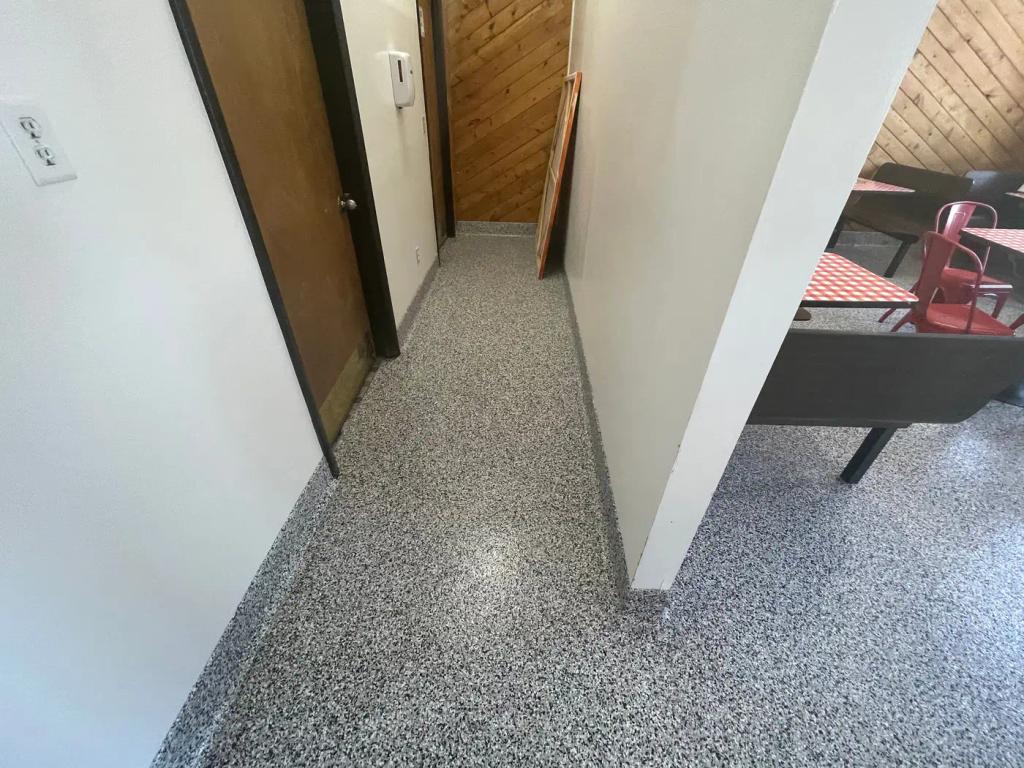
It is usually installed in layers, sometimes with flake or quartz broadcast for texture and color, and finished with a top coat chosen for wear or UV stability.
Urethane cement, sometimes called urethane concrete, blends a polyurethane resin with cement and aggregate. It is installed as a thicker, trowelled or slurry layer that behaves more like the concrete beneath it as temperatures change, which is why it holds up to heat and thermal shock.
Side by side
| Epoxy | Urethane cement | |
|---|---|---|
| Hot water and steam cleaning | Can soften or crack with repeated high heat | Built for hot washdown and thermal shock |
| Chemical resistance | Good for many shop and plant chemicals | Strong against many acids, caustics and food by-products |
| Tolerance for damp slabs | Usually needs dry concrete or a vapor barrier | Generally more tolerant of slab moisture |
| Appearance options | Wide color range, smooth or decorative finishes | Limited colors, matte and more utilitarian |
| Texture | Smooth to lightly textured | Usually textured for wet traction |
| Color stability in sunlight | Can yellow under UV without a stable top coat | Can also change color over time; usually used indoors |
| Typical cost position | Generally the lower-cost option | Generally the higher-cost option |
Where each one wins
Urethane cement is the usual answer where floors see hot water, steam cleaning, oven and fryer heat, or cold-to-hot swings, such as commercial kitchens, breweries and food processing rooms.
Its resistance to food acids, fats and sanitizers is a large part of why it is specified in those spaces.
Epoxy wins in dry or moderately wet areas where cost and looks matter more: warehouses, shops, service bays, back-of-house corridors, showrooms and offices. It also offers far more color and decorative choices, from solid colors to flake and metallic finishes.
Where each one struggles
Epoxy's main weakness is heat.
Repeated hot water or steam can soften it, and sudden temperature swings can make it crack or lose its bond, so it is a poor fit near kettles, dish machines and steam lines.
Urethane cement is less decorative, with a short list of colors and a matte look, and it usually costs more to install. It also takes skilled crews because it is trowelled and detailed by hand at drains and edges.
What affects the cost of each
For both systems, slab condition and prep are a large share of the work: removing old coatings, repairing cracks, and handling moisture all add scope.
Detailing such as cove bases, drains and transitions adds cost in kitchens and processing rooms in particular.
Urethane cement is generally installed thicker and uses more material per area, so it usually sits above epoxy on price. Epoxy costs change mainly with the number of layers, broadcast and top coat chosen.
- Removal of existing flooring or coating
- Moisture testing and mitigation
- Thickness and number of layers
- Cove base, drains and edge detailing
- After-hours or phased scheduling
Which to choose by space
Kitchens, breweries and food or beverage processing rooms usually lean toward urethane cement, at least in the hot and wet zones.
Warehouses, manufacturing floors, auto shops and retail spaces usually lean toward epoxy.
Many buildings use both: urethane cement where heat and washdown happen, and epoxy in dry storage, offices and corridors, joined with a clean transition.
Restaurant and commercial kitchen floors →Brewery, winery and distillery floors →Warehouse and distribution floors →
The verdict
Choose by the hottest, wettest thing that happens to the floor, not by the average day.
- Hot water, steam or thermal shock: urethane cement
- Food acids, fats and strong sanitizers: urethane cement
- Dry or lightly wet areas on a tighter budget: epoxy
- Color, branding or decorative finishes: epoxy
- Mixed building: both, zoned by use
FAQ
Epoxy vs urethane cement: questions
Straight answers to the questions we hear most.
Can epoxy be used in a restaurant kitchen?
Epoxy can work in dry storage, offices and some prep areas. Near dish machines, fryers, kettles or hot washdown, urethane cement is usually the safer choice because epoxy can soften or crack with heat.
Is urethane cement slippery when wet?
It is usually installed with a textured finish so it keeps traction in wet areas. The texture level can be adjusted for how the space is cleaned.
Can urethane cement go over an existing epoxy floor?
Usually the old coating is removed so the urethane cement bonds directly to prepared concrete. The condition of the existing floor decides what is required.
Why does urethane cement cost more?
It is generally installed thicker, uses more material, and takes more hand work at drains, coves and edges. The extra cost buys heat and washdown resistance that epoxy does not offer.
Related
Keep reading
- SystemsUrethane cementA heavy-duty floor for hot washdown, steam cleaning and thermal shock.Read more →
- SystemsSolid epoxyA seamless, single-color epoxy floor for warehouses, shops and service areas.Read more →
- IndustriesRestaurants & kitchensSeamless, slip-resistant kitchen floors installed overnight or on your closed day.Read more →
- IndustriesFood & beverage plantsSeamless washdown floors for food plants and breweries that handle steam and thermal shock.Read more →
- CommercialRequest a bidSend the building, size and timing for a written bid.Read more →

Request a bid
Ready for a bid?
Send your project details or plans. We reply within 1 business day.