
Gym and Fitness Center Floor Coatings in Utah
Locker rooms, showers, lobbies and hallways take water, sweat and constant foot traffic. A coated floor keeps those areas clean, safe underfoot and good-looking.
Rating
4.9 on Google
From 198+ Google reviews
Experience
10+ years
In Utah since 2016
Coverage
Licensed & insured
Installers
Same crew
Installed by the same crew that's been with Elevated since day one
What a gym floor has to handle
A fitness facility is really several floors in one building. Locker rooms and showers are wet most of the day, lobbies and hallways take street grit and constant traffic, and storage or mechanical rooms see equipment carts and occasional leaks.
Sweat, body oils and frequent disinfecting are hard on bare concrete and on tile grout, which absorbs moisture and odor over time. Lifting areas are a different case: heavy dropped weights belong on rubber flooring or platforms, and a coating is not a substitute for that impact protection.
- Wet, barefoot traffic in locker rooms and showers
- Grit and heavy foot traffic at the entry
- Daily disinfecting and cleaning chemicals
- Equipment carts and moving machines
What we recommend and why
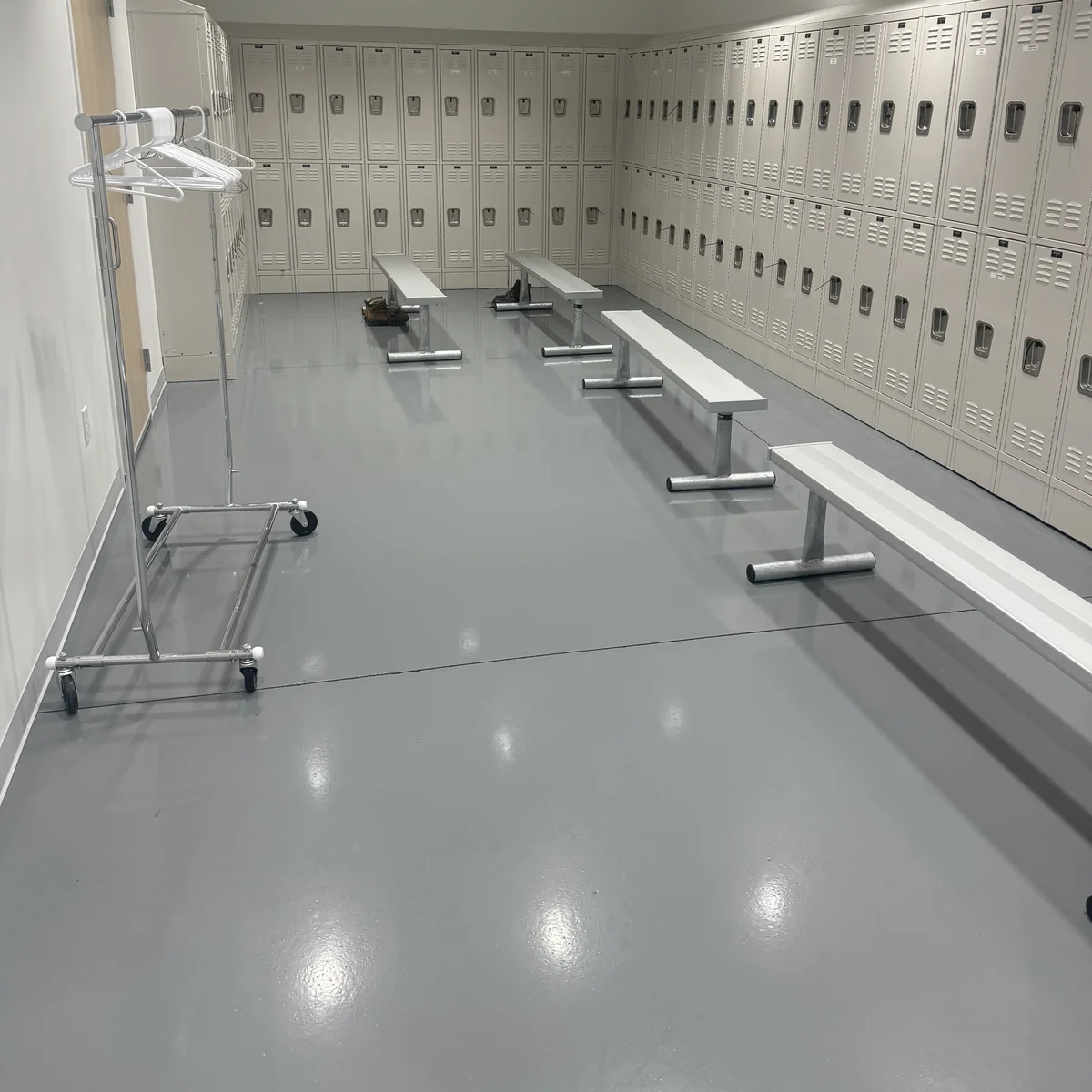
Flake systems are a common choice for locker rooms, restrooms and shower areas.
The broadcast flake adds texture for bare feet, hides water spots and wear, and the seamless surface has no grout lines to hold moisture.
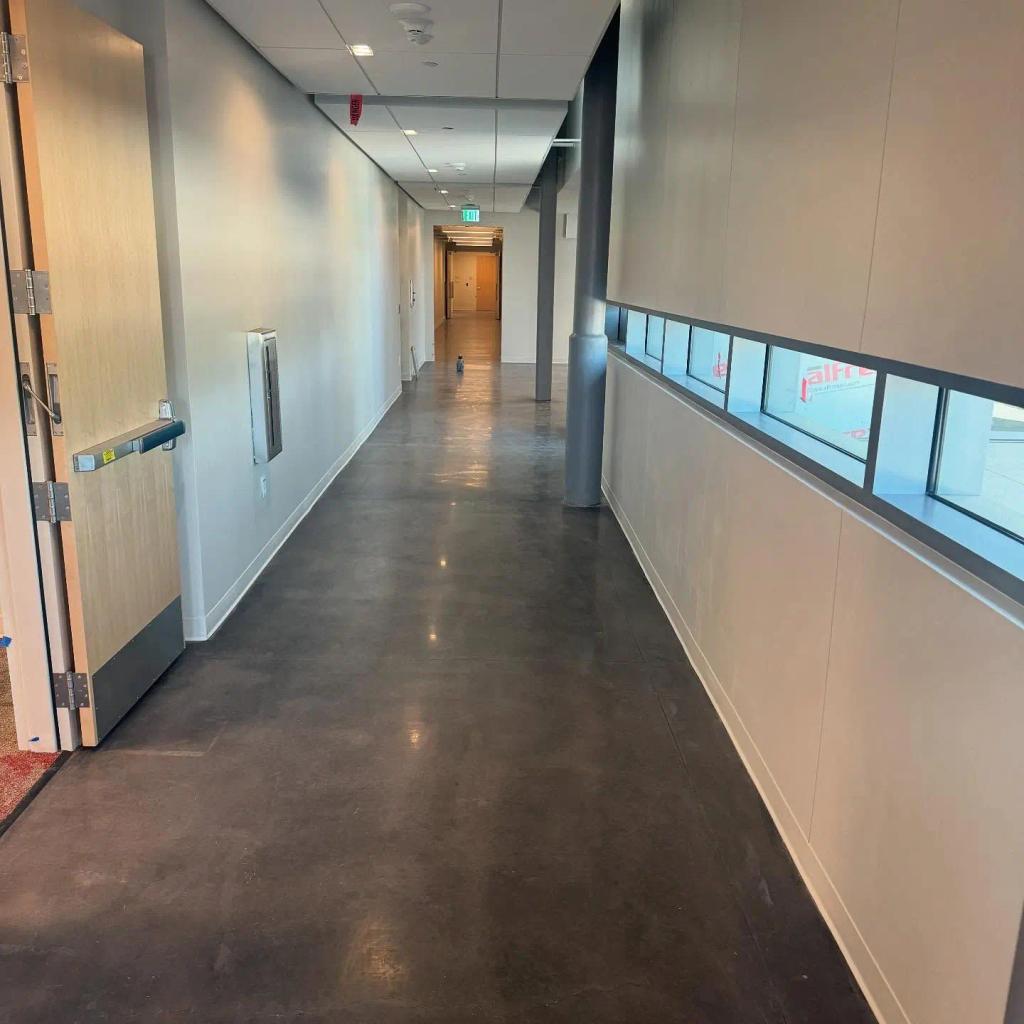
For lobbies, hallways and front desks, polished concrete or a metallic epoxy gives a finished look that cleans easily. Under rubber flooring in lifting areas, a sealed slab keeps concrete dust down and makes the floor easier to clean when mats are lifted.
- Flake floors for locker rooms, restrooms and showers
- Polished concrete or metallic epoxy for lobbies
- Sealed concrete under rubber in weight areas
How the install works around member hours
Gyms with long hours are usually done in zones: one locker room at a time while the other stays open, or hallways and lobbies overnight.
Facilities that close on a holiday or a slow week can often get more done in one stretch.
Most bids include a site visit (some are bid from plans or an RFQ), and every bid comes in writing with the scope. Return-to-use depends on the system and the building temperature, and wet areas typically wait longer before showers run again.
Prep and concrete testing
Many gym projects start under existing tile, carpet or rubber, so removal and adhesive cleanup are part of prep.
The concrete is then ground to open the surface, and cracks and damaged areas are repaired.
Locker rooms and showers often sit on slabs that stay damp, and older adhesives can hide moisture problems. Moisture testing before coating tells whether a vapor barrier layer is needed, and drains are detailed so the new floor slopes to them cleanly.
Safety and cleaning
Slip resistance is the first concern in any barefoot wet area.
The texture of the flake and the topcoat can be adjusted so the floor has more grip in showers and less in dry areas where easy cleaning matters more.
A seamless coating stands up well to the disinfectants gyms use daily. Using the cleaner at the strength the label calls for, and rinsing residue, keeps the surface from building up a slippery film.
- More texture in showers and at pool or sauna doors
- Walk-off mats at entries to catch grit
- Rinse cleaner residue from wet areas
Maintenance and lifespan
Locker rooms and lobbies are cleaned often, which is the best thing for a coated floor.
The entry and the busiest walkways wear first, and a fresh topcoat restores them without redoing the whole system.
Moving heavy machines should be done on dollies or plywood rather than dragging them, which can gouge any finish.
Process
How a bid works
Request
Send the building type, size and timing, and any plans or photos.
Site visit
For most bids, we look at the slab and agree the work window; moisture is tested when the slab needs it and listed in the bid. Some are bid from plans or an RFQ.
Written bid
Every bid comes in writing with the scope: the system, the prep and the areas covered.
Install
Planned around your hours. Before you reopen, we go over the cure schedule: when you can walk, load and drive on it.
Who installs your floor
Installed by the same crew that's been with Elevated since day one
Every bid comes in writing with the scope: the system, the prep and the areas covered.
Most bids start with a look at the slab; some are bid from plans or an RFQ.
Every bid comes in writing with the scope.
Planned around your hours.
Keep reading
Systems, problems and guides for this work
- IndustriesSchools & universitiesCafeterias, locker rooms, shops and hallways, coated during summer and holiday breaks.Read more →
- IndustriesSalons & SpasStylish, dye-resistant floors for salons, barbershops and spas that sweep clean between clients.Read more →
- SystemsFlake coatingsA textured, multi-color coating that hides scuffs and suits busy staff and service areas.Read more →
- Problems we fixSlippery wet floorsFloors that turn slick with water, grease or snow, and how textured systems add traction.Read more →
- ComparisonsCoating vs tile or VCTSeamless resin floors against quarry tile and VCT on grout, waxing, water and repairs.Read more →
Industries
Other industries we serve
- IndustriesRestaurants & kitchensSeamless, cleanable, slip-resistant floors for restaurants, quick-service kitchens and ice cream, soda and dessert shops — installed overnight or on your closed day.Read more →
- IndustriesBuild-outs & tenant improvementsMoving into a new space or remodeling one? Floors bid to your budget and scheduled around your build-out.Read more →
- IndustriesFranchise & multi-locationThe same floor in every store: we can install one spec across all your locations.Read more →
- IndustriesRetail, showrooms & officesPolished, metallic and flake floors for stores, showrooms, lobbies and offices, installed after hours.Read more →
- IndustriesAuto shops & dealershipsService bays that shrug off hot tires and fluids, and showroom floors that sell the cars on them.Read more →
- IndustriesAll industriesEvery type of facility we coat floors for, in one list.Read more →
FAQ
Gyms & fitness: questions
Straight answers to the questions we hear most.
Can you coat the floor under our weight racks?
A coating can go under rubber flooring to seal the slab, but it should not be the surface that takes dropped weights. Rubber tiles or lifting platforms are the right surface for that impact.
Is a coated locker room floor slippery?
It does not have to be. Flake and topcoat texture can be set for wet, barefoot traffic, with more grip near showers and a smoother finish in dry areas.
Can tile in an old locker room be coated over?
Coating directly over tile is generally not recommended because grout lines and loose tiles show through and can fail. Most projects remove the tile and coat the concrete underneath.
Do members have to stay out while the floor cures?
Yes, the area being coated is closed until it is ready for foot traffic. Zoned scheduling keeps other parts of the gym open in the meantime.

Request a bid
Ready for a bid?
Send your project details or plans. We reply within 1 business day.