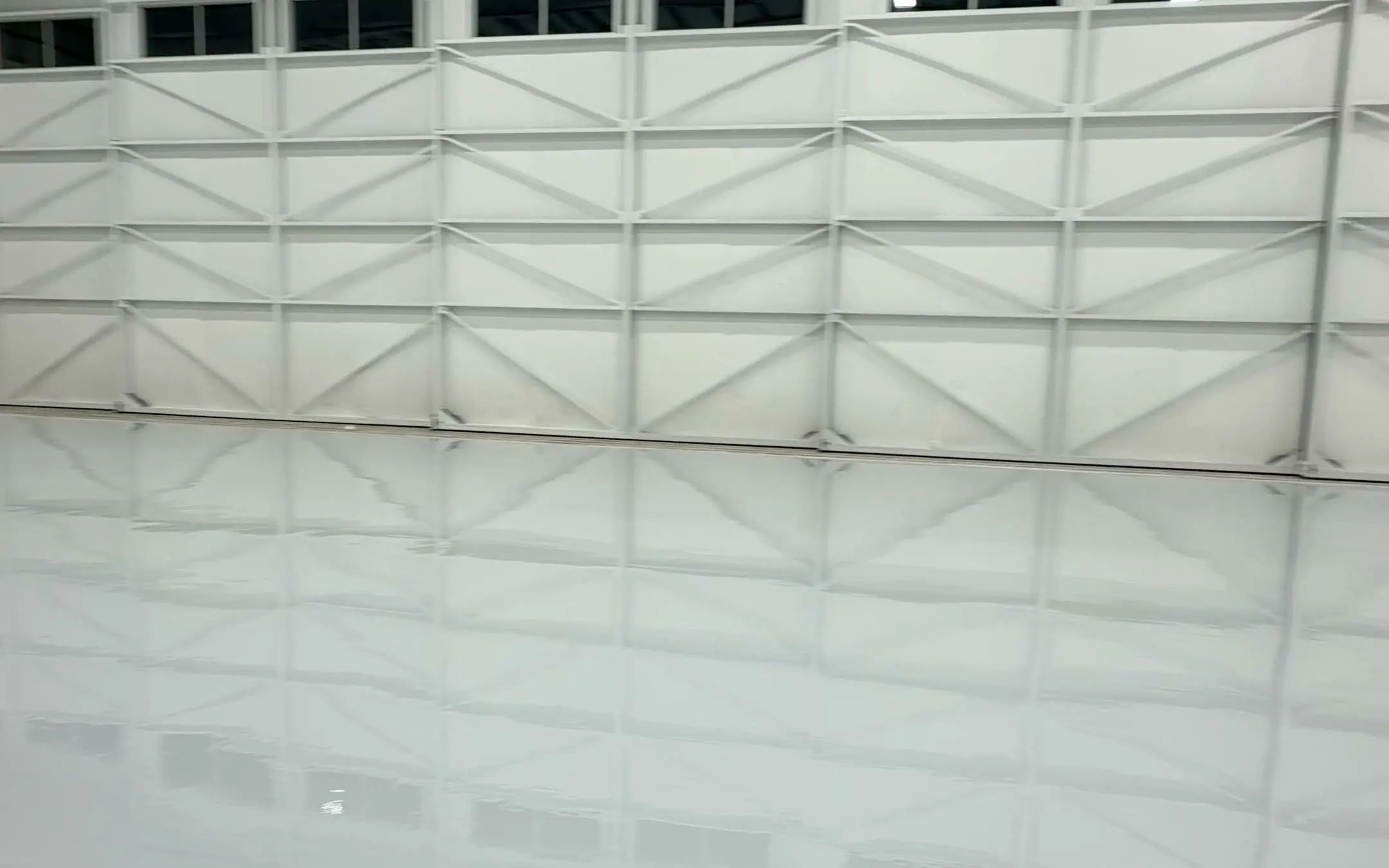

Aircraft Hangar Floor Coatings in Utah
A hangar floor has to resist hydraulic fluid and fuel, carry aircraft and tugs, and stay bright enough to spot a dropped fastener. The right coating does all three.
Rating
4.9 on Google
From 198+ Google reviews
Experience
10+ years
In Utah since 2016
Coverage
Licensed & insured
Installers
Same crew
Installed by the same crew that's been with Elevated since day one
What a hangar floor has to handle
Aircraft put a lot of weight on small tires, and tugs pivot them in tight arcs, which scrubs and twists the surface in the same spots again and again. Maintenance adds hydraulic fluid, engine oil, fuel and solvents, some of which soften or stain coatings that were not chosen for them.
Hangar doors open to Utah weather, so the floor near the door sees sun, snowmelt, de-icing residue and wide temperature swings. Inside, a gray slab swallows light and hides small parts and debris that can be ingested by an engine or damage a tire.
- Concentrated tire loads and tug turning
- Hydraulic fluid, oil, fuel and solvent drips
- Sun and temperature swings at the door line
- Dropped hardware and debris that has to be found
What we recommend and why
Most hangars do well with a high-build solid epoxy in a light color.
It is hard, reflects overhead light, and gives a smooth, uniform surface where a dropped washer or safety wire stands out.
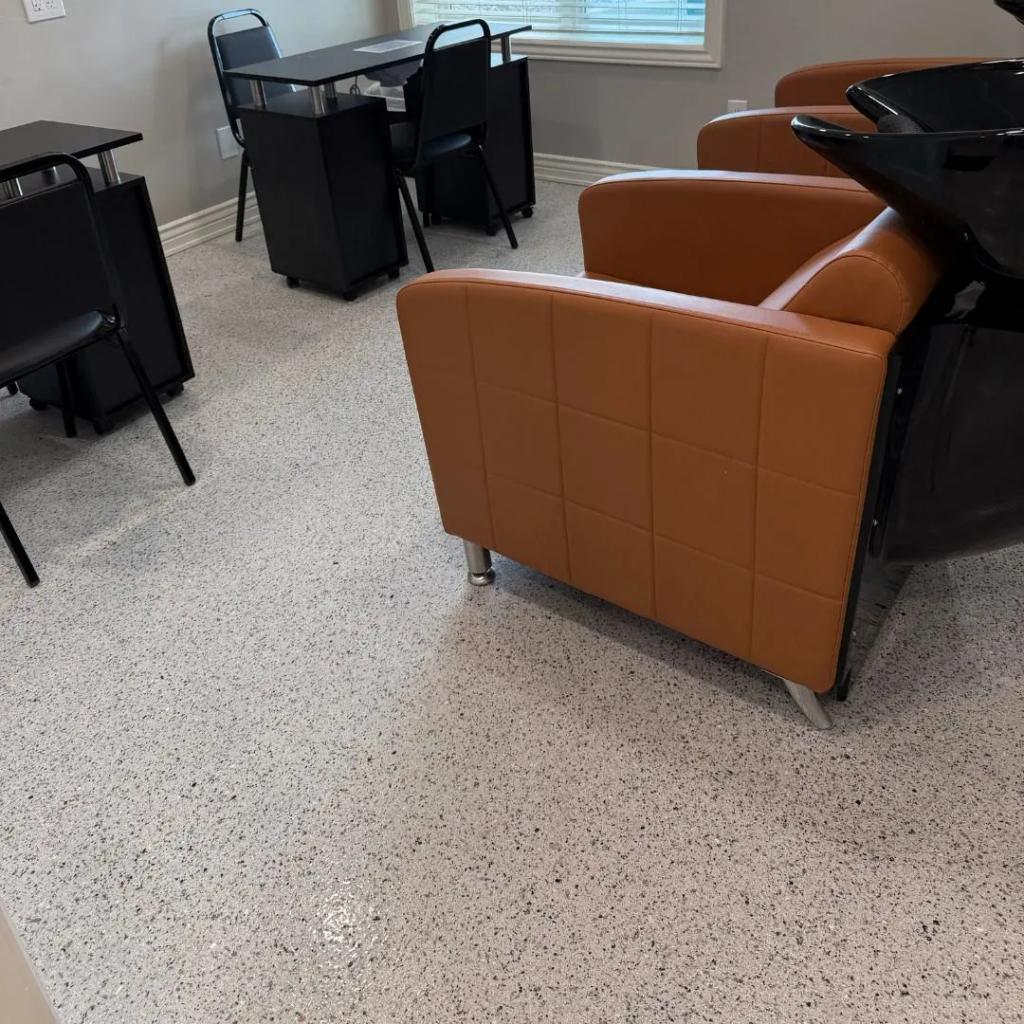
A polyaspartic topcoat is often added where the floor meets open doors, since it holds its color in sunlight better than epoxy alone. Where traction matters around wash or fueling areas, a broadcast flake or quartz system adds texture without giving up cleanability.
Solid epoxy systems →Polyaspartic coatings →Quartz floor coatings →
- Solid epoxy for the main bay: bright, hard and easy to sweep
- Polyaspartic topcoat for UV exposure near the doors
- Flake or quartz texture where floors get wet
How the install works around your aircraft
Aircraft have to be moved out before work starts, so the schedule usually lines up with a maintenance gap, an inspection period or a time the aircraft can be parked elsewhere on the field.
Larger hangars can often be done in sections so part of the building stays in use.
Most bids include a site visit (some are bid from plans or an RFQ), and every bid comes in writing with the scope. That return-to-service point depends on the system and the hangar temperature.
Prep and concrete testing
Hangar slabs have often absorbed years of fluid drips, so oil-soaked areas are cleaned and assessed before grinding.
Coatings cannot bond to concrete that is still pushing out oil, and those spots may need deeper cleaning or removal.
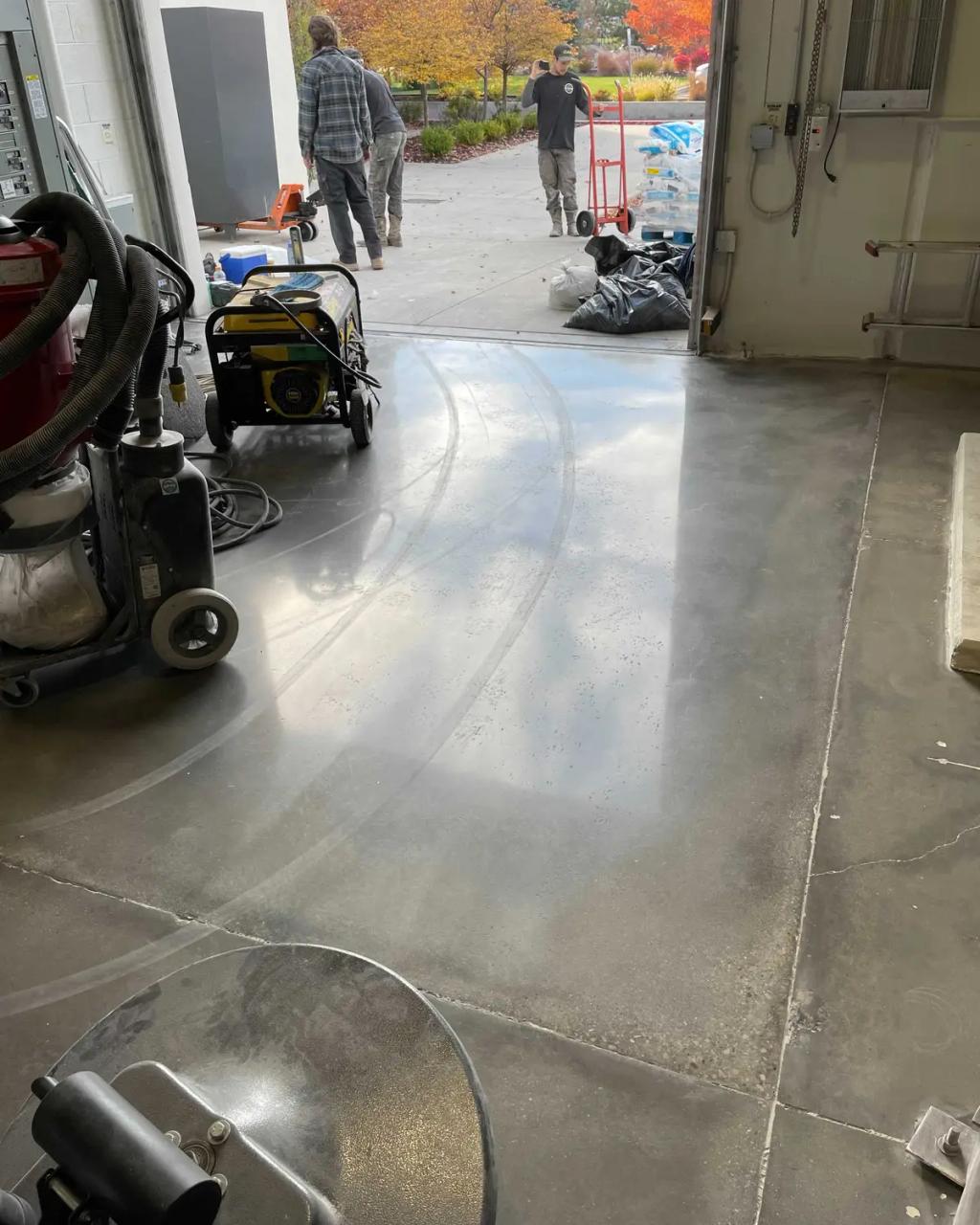
The slab is mechanically ground to open the surface, cracks and spalls are repaired, and joints are cleaned out. Newer slabs and hangars built without a vapor barrier are moisture-tested first, since vapor from below is a common reason coatings lift.
Safety and cleaning
A smooth coating is easy to clean but can get slick when fluid or water is on it.
Many hangars add a fine aggregate in the topcoat across the main floor, then keep high-gloss smooth areas to offices or storage rooms.
Spills should be wiped up promptly rather than left to sit, since even resistant coatings can stain under prolonged contact with some aviation fluids. A dedicated floor scrubber with a neutral cleaner keeps grit from dulling the finish.
- Absorbent pads under aircraft during maintenance
- Prompt cleanup of hydraulic fluid and fuel
- Regular sweeping for debris near the doors
Maintenance and lifespan
A well-prepared hangar coating can last a long time, and its life depends mostly on traffic, fluid exposure and how often it is cleaned.
The areas that wear first are tug turning paths and the strip just inside the doors.
When those areas dull, the floor can usually be cleaned, lightly abraded and recoated with a fresh topcoat rather than redone from bare concrete.
Process
How a bid works
Request
Send the building type, size and timing, and any plans or photos.
Site visit
For most bids, we look at the slab and agree the work window; moisture is tested when the slab needs it and listed in the bid. Some are bid from plans or an RFQ.
Written bid
Every bid comes in writing with the scope: the system, the prep and the areas covered.
Install
Planned around your hours. Before you reopen, we go over the cure schedule: when you can walk, load and drive on it.
Who installs your floor
Installed by the same crew that's been with Elevated since day one
Every bid comes in writing with the scope: the system, the prep and the areas covered.
Most bids start with a look at the slab; some are bid from plans or an RFQ.
Every bid comes in writing with the scope.
Planned around your hours.
Keep reading
Systems, problems and guides for this work
- IndustriesFleet & Municipal GaragesHeavy-duty floors for fleet shops, public works garages and truck bays that face salt and fluids.Read more →
- IndustriesWarehouses & distributionForklift lanes, docks and aisles coated and sealed around your shipping schedule.Read more →
- SystemsSolid epoxyA seamless, single-color epoxy floor for warehouses, shops and service areas.Read more →
- Problems we fixChemical-damaged floorsEtched, softened or stained floors from spills and cleaners, and how resistant systems fix them.Read more →
- ComparisonsPolyaspartic vs epoxyFast-curing polyaspartic and build-friendly epoxy compared on downtime, UV and wear.Read more →
- LocationsDavis and Weber countiesIndustrial floors for Davis and Weber plants, hangars, warehouses and fleet garages, planned around shutdowns.Read more →
Industries
Other industries we serve
- IndustriesRestaurants & kitchensSeamless, cleanable, slip-resistant floors for restaurants, quick-service kitchens and ice cream, soda and dessert shops — installed overnight or on your closed day.Read more →
- IndustriesBuild-outs & tenant improvementsMoving into a new space or remodeling one? Floors bid to your budget and scheduled around your build-out.Read more →
- IndustriesFranchise & multi-locationThe same floor in every store: we can install one spec across all your locations.Read more →
- IndustriesRetail, showrooms & officesPolished, metallic and flake floors for stores, showrooms, lobbies and offices, installed after hours.Read more →
- IndustriesAuto shops & dealershipsService bays that shrug off hot tires and fluids, and showroom floors that sell the cars on them.Read more →
- IndustriesAll industriesEvery type of facility we coat floors for, in one list.Read more →
FAQ
Aircraft hangars: questions
Straight answers to the questions we hear most.
Will a coating hold up to aircraft hydraulic fluid?
Some aviation hydraulic fluids are aggressive toward coatings, so the system and topcoat are chosen with the fluids used in the hangar in mind. Share what is used during the site visit, and wipe spills up promptly either way.
Why do hangar floors tend to be white or light gray?
A light floor reflects overhead light back up under wings and fuselages, which helps technicians see. It also makes dropped hardware and debris easy to spot before it reaches a tire or an engine.
Does the aircraft have to leave the hangar?
Yes, the area being coated has to be empty through prep, coating and cure. Larger hangars can often be done in sections so aircraft can stay in another part of the building.
Can a T-hangar or a small private hangar be coated?
Yes. Small hangars follow the same steps as large ones, and the system can be scaled to how the hangar is used, whether that is storage only or regular maintenance work.

Request a bid
Ready for a bid?
Send your project details or plans. We reply within 1 business day.