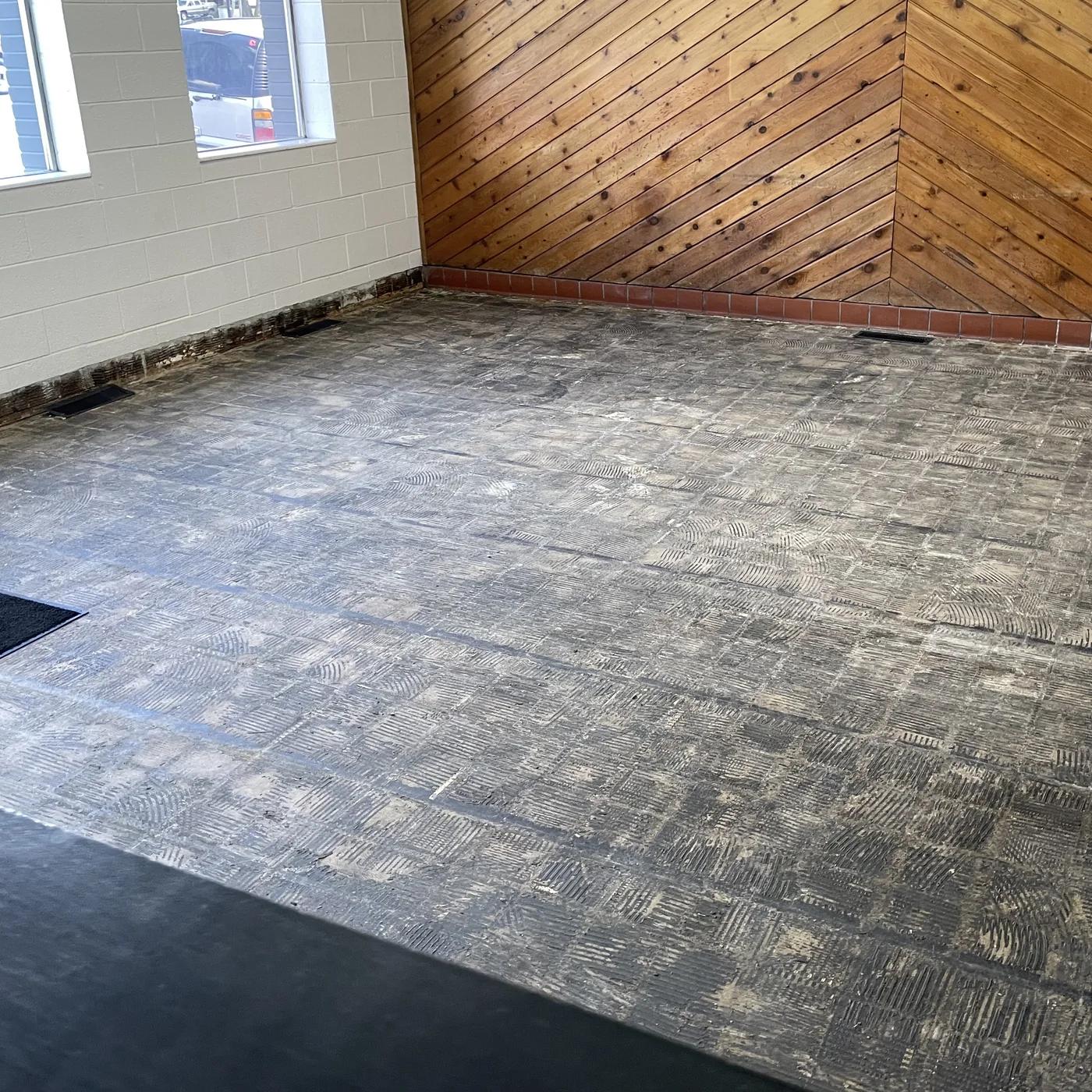

Concrete and coatings damaged by chemical spills
Spilled acids, caustics, solvents and even daily cleaners can etch concrete and soften a coating that was not made for them. The fix starts with knowing exactly what touches the floor.
What chemical damage looks like
Bare concrete attacked by acid turns rough and sandy, with exposed aggregate where the cement paste has dissolved.
Coated floors show it differently: dull or discolored patches, a surface that feels soft or tacky, blisters, or coating that lifts at the edge of a spill zone.
The damage is usually concentrated where products are stored, mixed, dispensed or washed down, so it often follows a clear pattern around tanks, drains and work stations.
- Rough, etched concrete with loose sand on the surface
- Coating that has softened, swelled or turned sticky
- Stains that will not clean out of the surface
- Damage clustered around drains, totes and dispensers
What causes it
Concrete is alkaline, so acids react with it directly, and many solvents and oils soak into its pores.
Coatings vary widely: one resin may shrug off a caustic cleaner and still be softened by a particular solvent or a hot acid.
Problems often begin when a floor was chosen for traffic or looks without a chemical list, or when the process changed later. Spills left to sit, hot liquids, and strong cleaners used undiluted all increase the attack.
Why it gets worse and what it costs
Once the surface is broken, liquids get underneath the coating or deeper into the slab, so each spill does more damage than the last.
Rough, porous concrete holds residue and bacteria, which makes cleaning slower and inspections harder.
In food and beverage spaces a damaged floor can draw attention from health inspectors, and in any facility loose concrete and lifted coating become slip and trip points.
How it is fixed
The contaminated and weakened material has to come out first.
That usually means grinding or blasting away failed coating and soft concrete, cleaning out absorbed oils where possible, and rebuilding low or rough areas so the new system bonds to sound slab.
The system is then matched to the actual chemicals, concentrations and temperatures on site. Urethane cement handles many acids and caustics along with hot washdown; solid epoxy suits a wide range of shop and plant chemicals at normal temperatures, and top coats can be selected for specific exposures.
How to prevent it coming back
Keep a current list of every chemical and cleaner that can reach the floor, including temperatures, and share it before any new floor is specified.
Clean up spills promptly instead of letting them dwell, and follow the dilution directions on cleaning products.
Coved edges where the floor meets the wall and careful detailing around drains keep liquids from finding a way under the coating.
When to call for a site visit
Call when a coating is softening, lifting near spill areas, or wearing through faster than expected.
A site visit reviews the chemical list and the condition of the slab, then sets out a written scope and a schedule that can work around production.
FAQ
Chemical-damaged floors: questions
Straight answers to the questions we hear most.
Is any floor coating resistant to every chemical?
No single coating resists everything. Resistance depends on the resin, the chemical, its strength, its temperature and how long it sits, which is why the chemical list matters so much.
Can a new coating go over oil-soaked concrete?
Oil in the slab can stop a coating from bonding. The surface is cleaned and ground back, and heavily contaminated areas may need extra treatment or removal before coating.
What information should I gather before getting a bid?
A list of the chemicals and cleaners used, how they are applied, typical temperatures, and where spills usually happen. Safety data sheets are a useful starting point.
Why did my epoxy floor turn soft near the cleaning station?
Some cleaners and solvents slowly soften certain resins, especially when they sit on the floor or are used hot. A different top coat or system may be needed in that zone.
Related
Keep reading
- IndustriesFood & beverage plantsSeamless washdown floors for food plants and breweries that handle steam and thermal shock.Read more →
- IndustriesManufacturing & industrialChemical, impact and heat-resistant plant floors installed during your planned shutdowns.Read more →
- SystemsUrethane cementA heavy-duty floor for hot washdown, steam cleaning and thermal shock.Read more →
- Problems we fixPeeling floor coatingCoating that flakes, lifts or delaminates, what usually caused it and how it is redone right.Read more →
- CommercialRequest a bidSend the building, size and timing for a written bid.Read more →

Request a bid
Ready for a bid?
Send your project details or plans. We reply within 1 business day.