
Brewery, Winery and Distillery Flooring in Utah
Hot wort, caustic cleaners, acid sanitizers, spilled sugars and heavy tanks break down ordinary floors fast. Production floors need a system built for all of it.
Rating
4.9 on Google
From 198+ Google reviews
Experience
10+ years
In Utah since 2016
Coverage
Licensed & insured
Installers
Same crew
Installed by the same crew that's been with Elevated since day one
What a production floor has to handle
Brewhouses and cellars are wet most of the day. Hot water and steam from cleaning, caustic and acid cleaning chemicals, and spilled wort, juice or mash all hit the floor, and sugars and acids eat into bare concrete and many standard coatings.
The quick change from hot liquid to a cool slab creates thermal shock, which can crack or debond coatings that are too rigid. Add the weight of full tanks, forklifts moving kegs and barrels, and hoses dragged across the floor, and production areas are among the hardest floors to keep intact.
- Hot water, steam and thermal shock
- Caustic cleaners and acid sanitizers
- Sugars, fruit acids and spent grain
- Tank loads, forklifts and dragged hoses
What we recommend and why
Urethane cement is the usual choice for brewhouses, cellars, crush pads and still rooms.
It tolerates hot washdown and thermal shock better than epoxy, resists the acids and caustics used in cleaning, and can be finished with texture for wet traction.
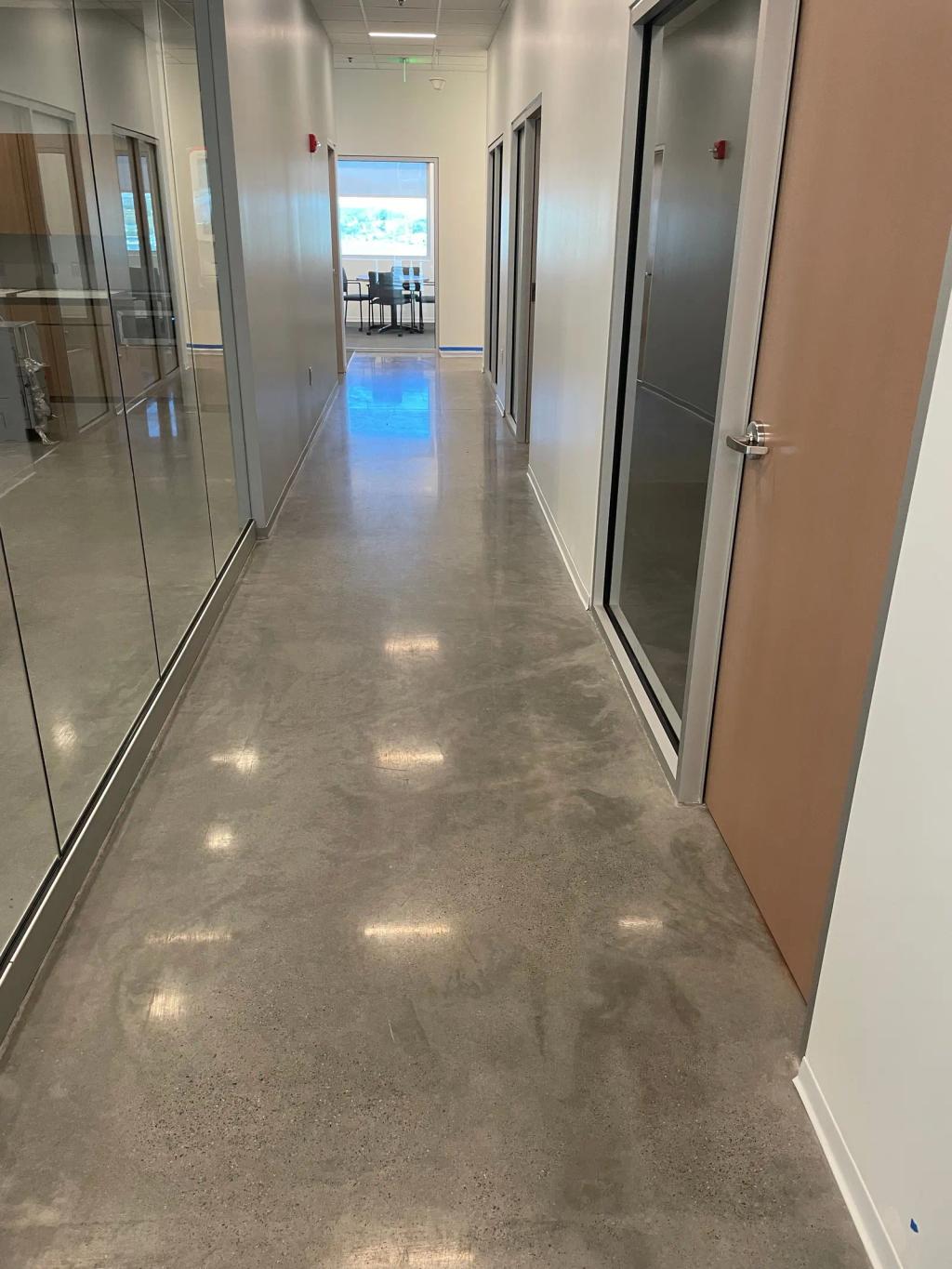
Dry storage, grain rooms and packaging areas that stay dry can use solid epoxy. Tasting rooms and retail spaces, where the floor is part of the guest experience, often use polished concrete or a metallic epoxy.
- Urethane cement for brewhouse, cellar and crush areas
- Solid epoxy for dry storage and packaging
- Polished concrete or metallic for tasting rooms
How the install works around production
Production floors are usually done between batches or during a planned shutdown.
Wineries often schedule outside of harvest and crush, while breweries and distilleries look for a gap in the brewing or distilling calendar.
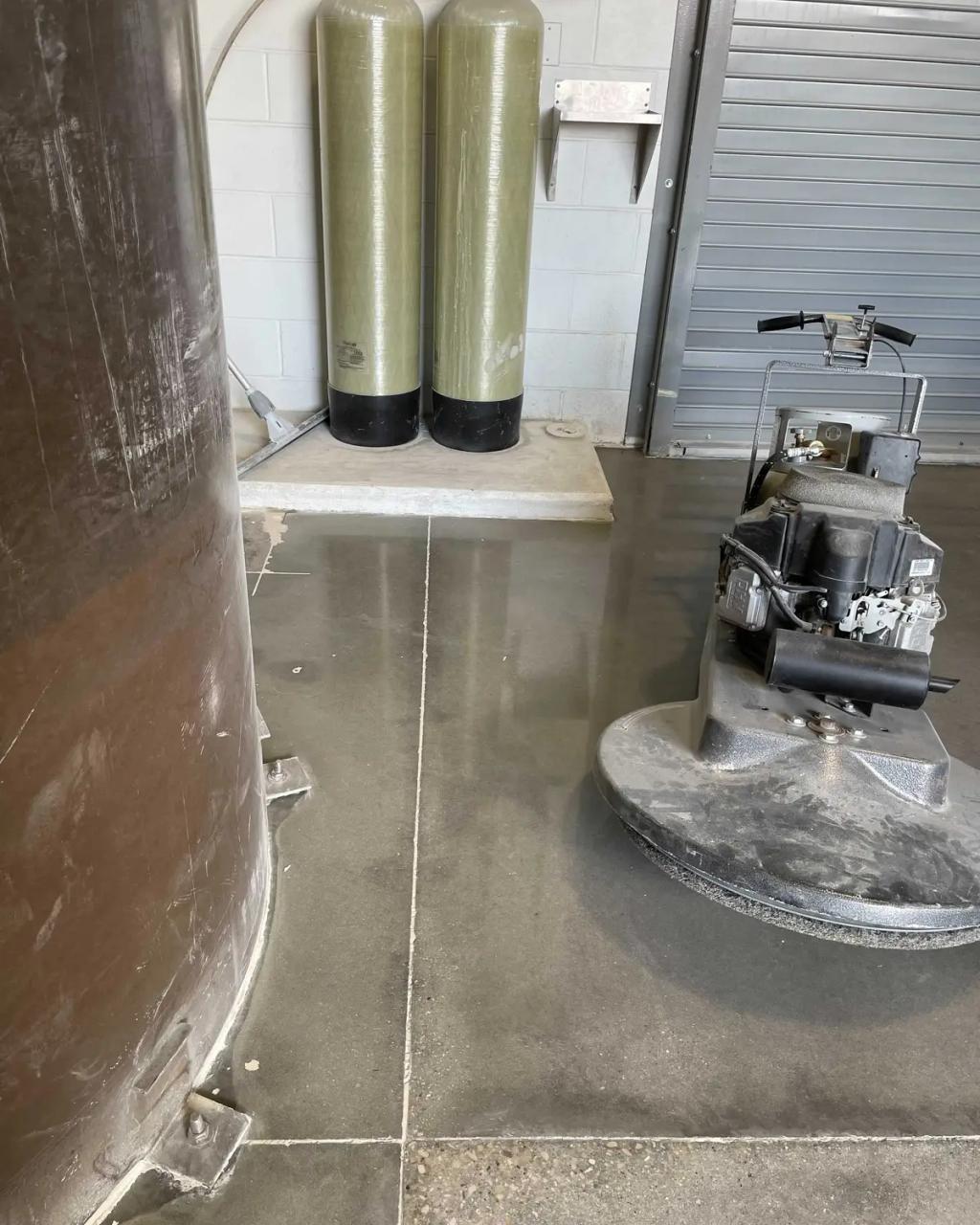
Tanks that cannot move are worked around, and the floor is coated up to and around their legs. Most bids include a site visit (some are bid from plans or an RFQ), and every bid comes in writing with the scope.
How a commercial project works →Phased installs and downtime →
Prep and concrete testing
Concrete in an existing brewery has often been softened by years of sugar and acid exposure.
Prep removes the damaged surface down to sound concrete, which can mean deeper grinding or patching in the worst areas.
Drains and slope matter as much as the coating. Prep checks that the floor still drains to trench and floor drains, and the system is terminated tightly at drain edges, where many production floors fail first. Moisture is tested as well, especially on newer slabs.
Safety, compliance and cleaning
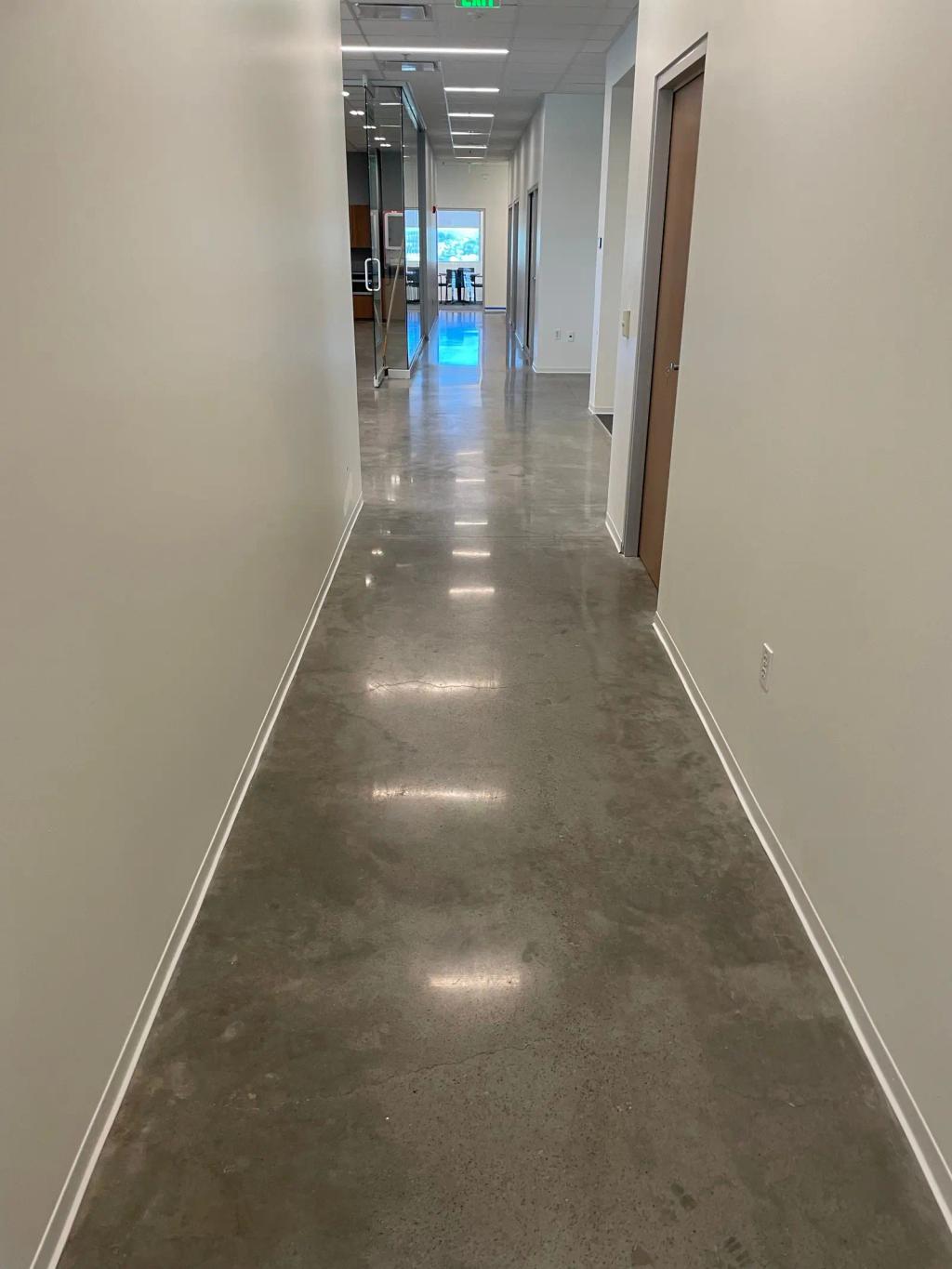
Production floors are wet constantly, so a textured finish is standard.
Food-safety rules and inspectors generally want floors in production areas to be smooth, durable, nonabsorbent and easy to clean, and a seamless urethane cement floor fits that.
Follow the chemical supplier's dilution and contact times, and rinse cleaners and sanitizers from the floor after use. Spent grain and pomace should be cleared promptly rather than left to sit.
- Texture matched to how wet each area gets
- Rinse caustic and acid cleaners after use
- Keep drains clear so water does not pool
Maintenance and lifespan
A urethane cement floor is built for daily washdown, so normal cleaning is the right maintenance.
Watch the areas around drains, under tank outlets and where hoses are dragged, and repair any damage early before liquid gets under the edge.
Tasting rooms and dry areas need only routine sweeping and mopping, with a topcoat refresh or re-polish when traffic dulls the surface.
Process
How a bid works
Request
Send the building type, size and timing, and any plans or photos.
Site visit
For most bids, we look at the slab and agree the work window; moisture is tested when the slab needs it and listed in the bid. Some are bid from plans or an RFQ.
Written bid
Every bid comes in writing with the scope: the system, the prep and the areas covered.
Install
Planned around your hours. Before you reopen, we go over the cure schedule: when you can walk, load and drive on it.
Who installs your floor
Installed by the same crew that's been with Elevated since day one
Every bid comes in writing with the scope: the system, the prep and the areas covered.
Most bids start with a look at the slab; some are bid from plans or an RFQ.
Every bid comes in writing with the scope.
Planned around your hours.
Keep reading
Systems, problems and guides for this work
- IndustriesFood & beverage plantsSeamless washdown floors for food plants and breweries that handle steam and thermal shock.Read more →
- IndustriesRestaurants & kitchensSeamless, slip-resistant kitchen floors installed overnight or on your closed day.Read more →
- SystemsUrethane cementA heavy-duty floor for hot washdown, steam cleaning and thermal shock.Read more →
- ComparisonsEpoxy vs urethane cementTwo seamless systems compared for heat, washdown, chemicals and appearance.Read more →
- Problems we fixChemical-damaged floorsEtched, softened or stained floors from spills and cleaners, and how resistant systems fix them.Read more →
Industries
Other industries we serve
- IndustriesRestaurants & kitchensSeamless, cleanable, slip-resistant floors for restaurants, quick-service kitchens and ice cream, soda and dessert shops — installed overnight or on your closed day.Read more →
- IndustriesBuild-outs & tenant improvementsMoving into a new space or remodeling one? Floors bid to your budget and scheduled around your build-out.Read more →
- IndustriesFranchise & multi-locationThe same floor in every store: we can install one spec across all your locations.Read more →
- IndustriesRetail, showrooms & officesPolished, metallic and flake floors for stores, showrooms, lobbies and offices, installed after hours.Read more →
- IndustriesAuto shops & dealershipsService bays that shrug off hot tires and fluids, and showroom floors that sell the cars on them.Read more →
- IndustriesAll industriesEvery type of facility we coat floors for, in one list.Read more →
FAQ
Breweries & wineries: questions
Straight answers to the questions we hear most.
Why not just use epoxy in a brewhouse?
Epoxy works in dry areas, but hot washdown and thermal shock can crack or debond it over time. Urethane cement is made to handle those conditions, which is why it is common in production areas.
Can the floor be done without moving our tanks?
Often, yes. The floor is prepped and coated around fixed tank legs and equipment, though anything that can be moved makes for a cleaner, faster install.
What about the tasting room?
Tasting rooms see guest traffic rather than production chemicals, so polished concrete or a metallic epoxy is common. It can be done in the same project or separately.
Do distilleries need anything different?
Still rooms add heat and spilled spirits to the usual washdown. Urethane cement handles those conditions, and ventilation and site safety rules are planned for the install.

Request a bid
Ready for a bid?
Send your project details or plans. We reply within 1 business day.