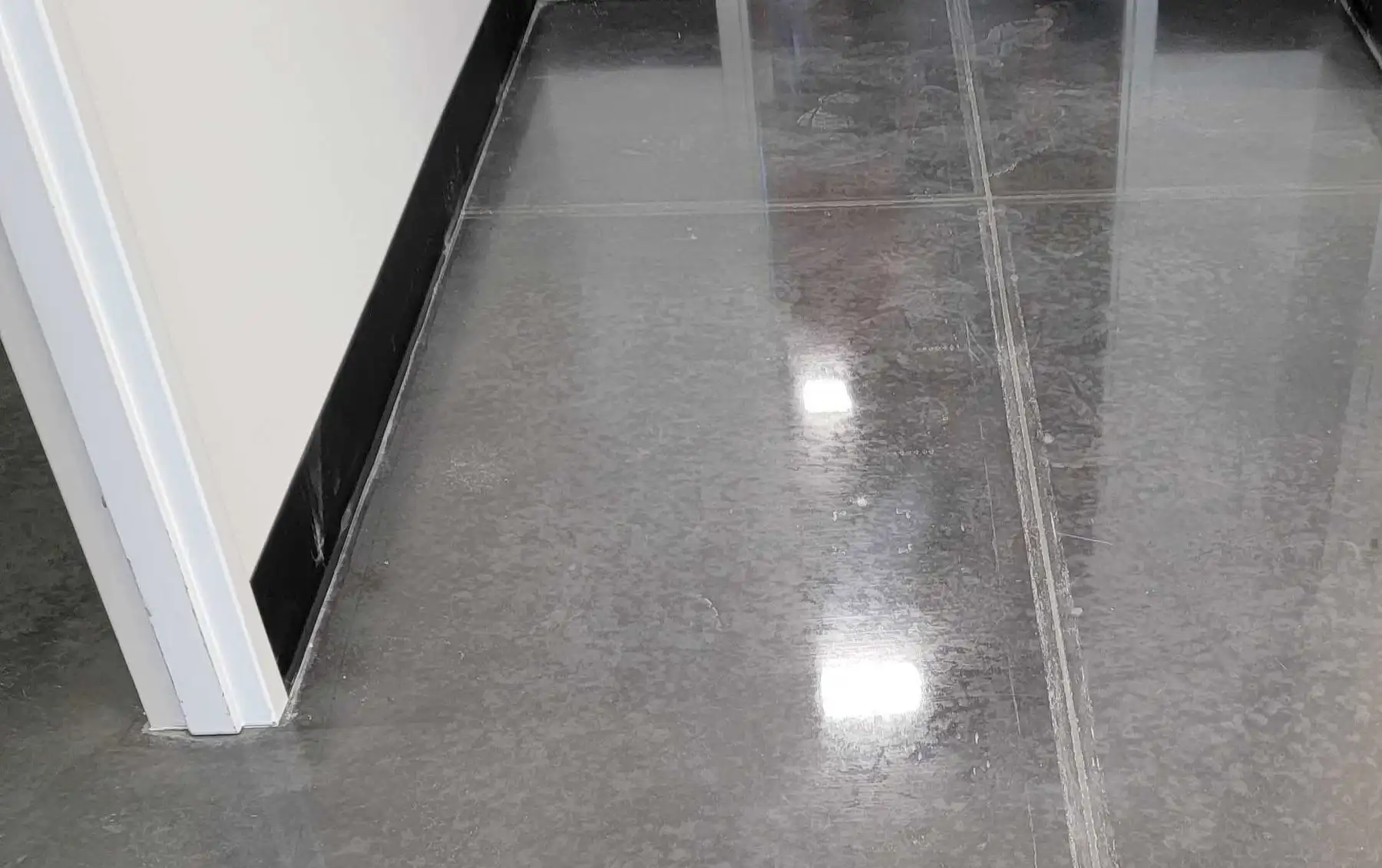

Epoxy vs polished concrete for commercial floors
One adds a resin layer on top of the slab; the other refines the slab itself. Each is excellent in the right space and frustrating in the wrong one.
How each one works
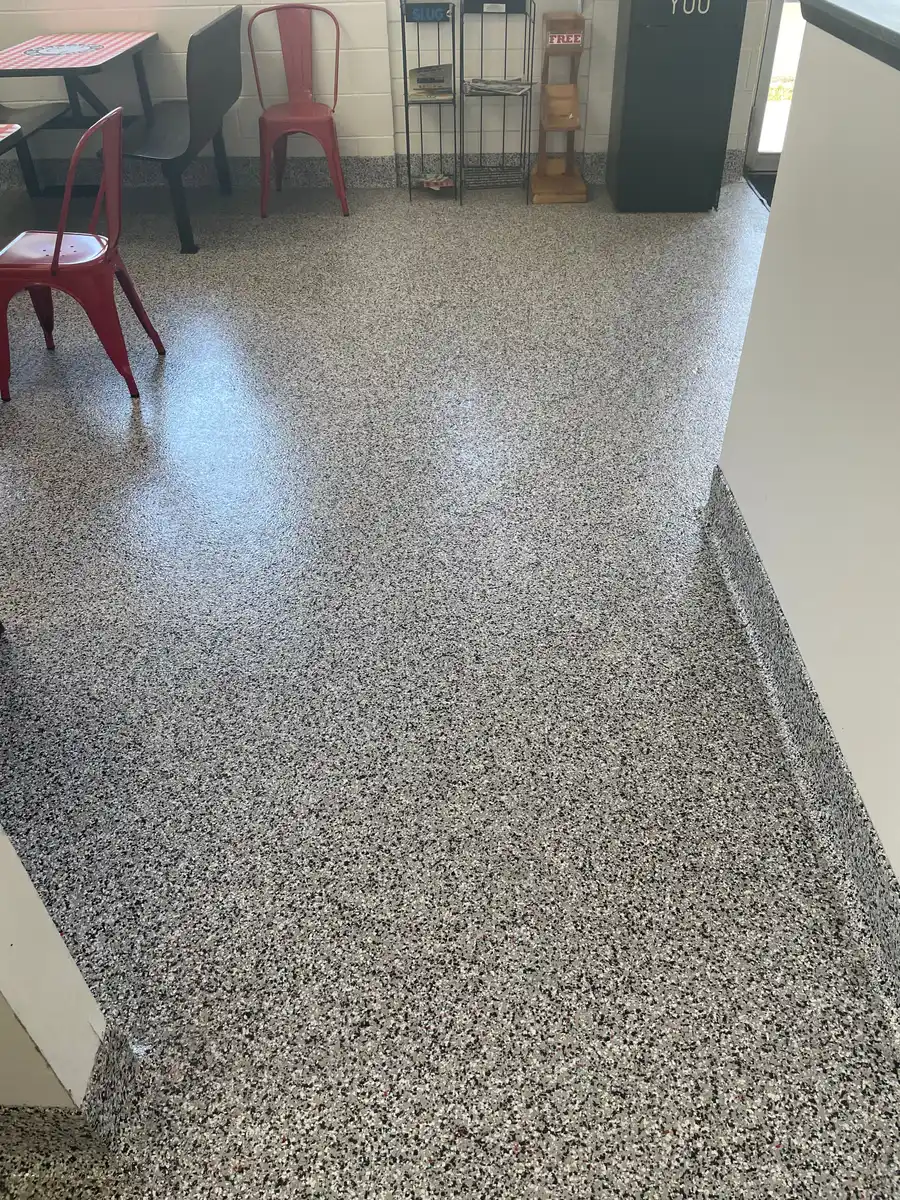
An epoxy floor is a coating: after the slab is ground for a profile and repaired, layers of resin are applied and cured into a seamless surface.
What you see and walk on is the resin, not the concrete.
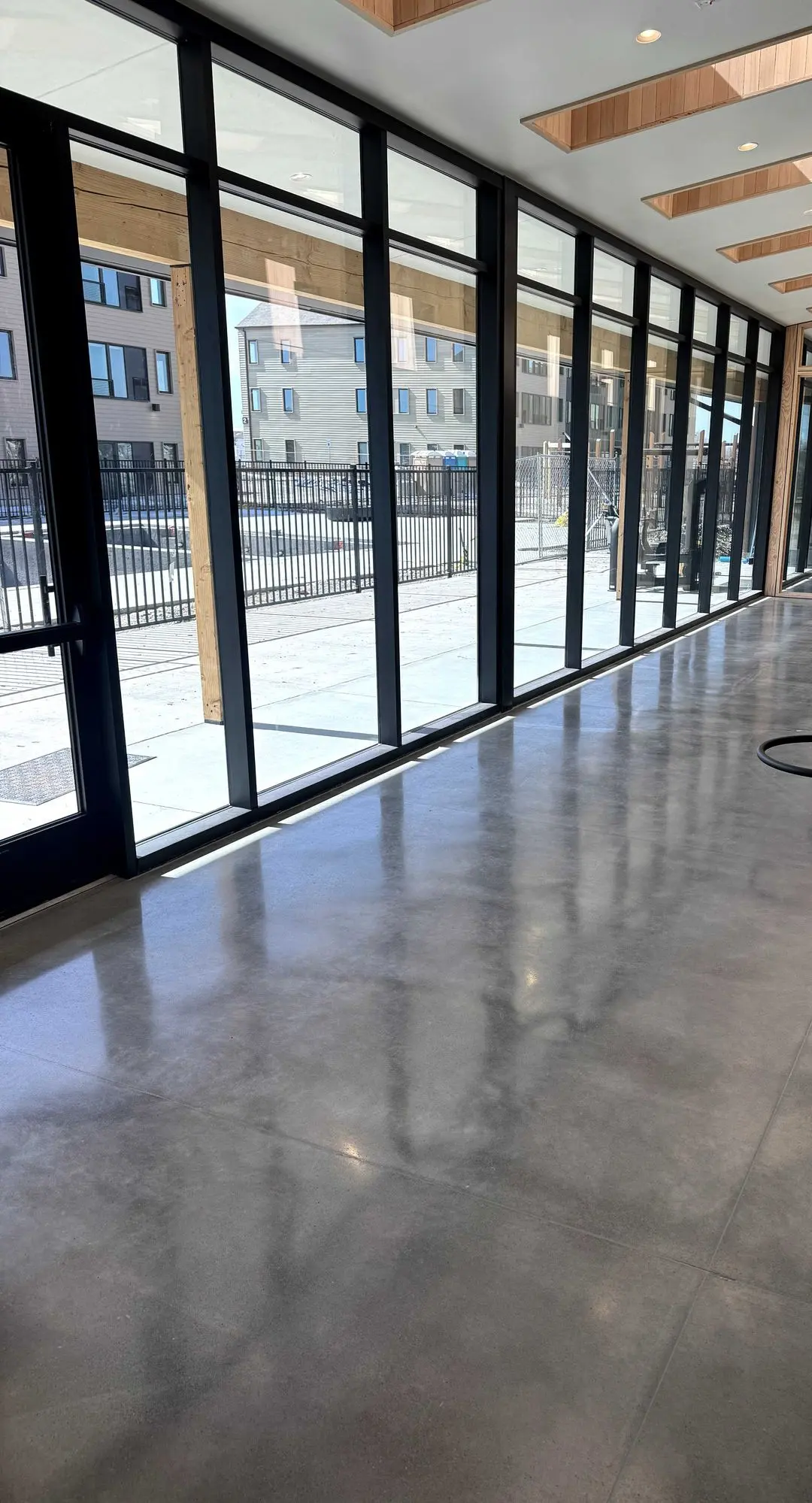
Polished concrete has no coating to speak of. The slab is ground with progressively finer abrasives, treated with a densifier that hardens the surface, and polished to the sheen you choose, with an optional guard or sealer to help with stains.
Side by side
| Epoxy coating | Polished concrete | |
|---|---|---|
| What the floor is | A resin layer bonded on top of the slab | The slab itself, ground, densified and polished |
| Spills and stains | Resists most spills and oils on the surface | Can stain from oil, acids and some drinks |
| Slab condition needed | Can hide many cosmetic flaws and repairs | Shows the slab's character, patches and cracks |
| Color and design | Wide color range, flake, quartz and metallic | Natural concrete tones, optional dyes or stains |
| Wear over time | Top coat wears and can be recoated | No coating to peel; sheen is maintained by burnishing |
| Moisture in the slab | Needs dry concrete or a vapor barrier | Not affected by vapor in the same way |
| Day-to-day cleaning | Mop or scrub with neutral cleaner | Dust mop and auto-scrub; occasional burnishing |
Where each one wins
Polished concrete shines in dry, high-traffic spaces where low upkeep and a clean modern look matter: retail sales floors, showrooms, offices and some warehouses.
There is no film to peel, and moisture coming up through the slab does not lift it.
Epoxy wins where liquids and chemicals hit the floor, or where color, branding or hiding a rough slab matters. Auto shops, service bays, back-of-house areas and light manufacturing are common fits, and it can cover patched or uneven concrete that would look poor polished.
Polished concrete →Solid epoxy floor coatings →Metallic epoxy floors →
Where each one struggles
Polished concrete is still porous at a microscopic level, so oil, acids, wine, citrus and some cleaners can stain or etch it.
It also shows the slab as it is: patches, cracks and color variation stay visible, and a badly damaged slab may not polish well.
Epoxy depends on a good bond, so slab moisture and poor prep can cause blistering or peeling. Its surface also scratches and wears in heavy lanes, and it needs recoating at some point rather than just burnishing.
What drives the cost
Polished concrete cost depends heavily on the slab: hardness, flatness, old adhesives or coatings to remove, and how high a sheen is wanted all change the number of grinding passes.
Epoxy cost depends on prep, repairs, moisture mitigation and how many layers and decorative elements the system has.
Long-term cost differs too. Polished floors mainly need regular cleaning and periodic burnishing, while coated floors eventually need a fresh top coat in high-wear areas.
- Slab condition and repairs
- Removal of existing flooring, glue or coating
- Desired sheen or decorative finish
- Moisture testing and mitigation for coatings
- Maintenance over the life of the floor
Which to choose by space
Retail stores, showrooms and offices with dry traffic often suit polished concrete, unless spills or branding colors push toward a coating.
Auto shops, dealership service drives and manufacturing areas usually suit epoxy because of oils and chemicals.
Warehouses can go either way: polished or densified concrete for dry storage, epoxy where forklifts turn, batteries are charged or spills happen.
Retail, showroom and office floors →Auto shop and dealership floors →Warehouse and distribution floors →
The verdict
Start with what lands on the floor, then look at what the slab looks like today.
- Dry traffic, low upkeep, sound slab: polished concrete
- Oils, chemicals or frequent spills: epoxy
- Patched or uneven slab that should look uniform: epoxy
- Damp slab without a vapor barrier: polished, or epoxy over mitigation
- Brand colors or a decorative look: epoxy
FAQ
Epoxy vs polished concrete: questions
Straight answers to the questions we hear most.
Is polished concrete cheaper than epoxy?
It can be on a good, hard slab, but not always. Old glue, damage or a high sheen can add grinding passes, while epoxy costs change with prep and system build.
Can polished concrete be used in an auto shop?
It can handle the traffic, but oil, coolant and brake fluid can stain it. Most shops prefer a coating in work bays for that reason.
Can an epoxy floor be removed and polished later?
Yes, the coating can be ground off and the slab polished, though removal adds time and the slab underneath may show marks from the original prep.
Which looks better?
It depends on the look you want. Polished concrete has a natural, stone-like character, while epoxy offers solid colors, flake blends and metallic effects.
Related
Keep reading
- SystemsPolished concreteA ground, densified and polished slab with no coating to peel.Read more →
- SystemsSolid epoxyA seamless, single-color epoxy floor for warehouses, shops and service areas.Read more →
- IndustriesRetail, showrooms & officesPolished, metallic and flake floors for stores, showrooms and offices, installed after hours.Read more →
- ComparisonsSealer vs coatingPenetrating sealers and full coatings compared on protection, wear, chemicals and budget.Read more →
- CommercialRequest a bidSend the building, size and timing for a written bid.Read more →

Request a bid
Ready for a bid?
Send your project details or plans. We reply within 1 business day.