
On this page
Size, layout and access
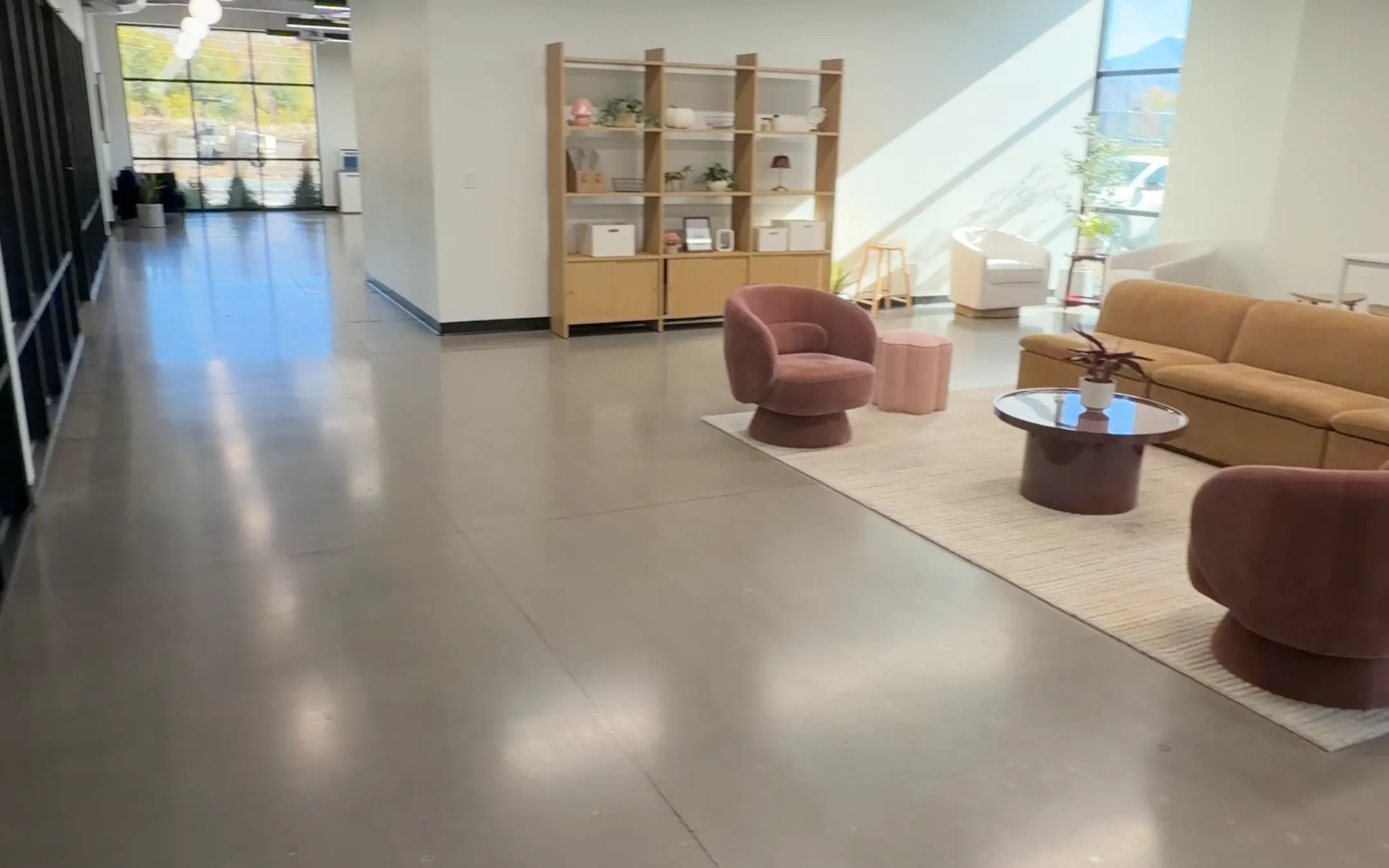
Larger open floors are generally more efficient to coat than small or broken-up areas, because equipment can run longer without stopping. Rooms full of corners, columns, curbs and fixed equipment take more hand work.
Access matters too. Floors on upper levels, spaces without a nearby door for equipment, or sites with limited parking and power add time to every day of the job.
Slab condition and old flooring
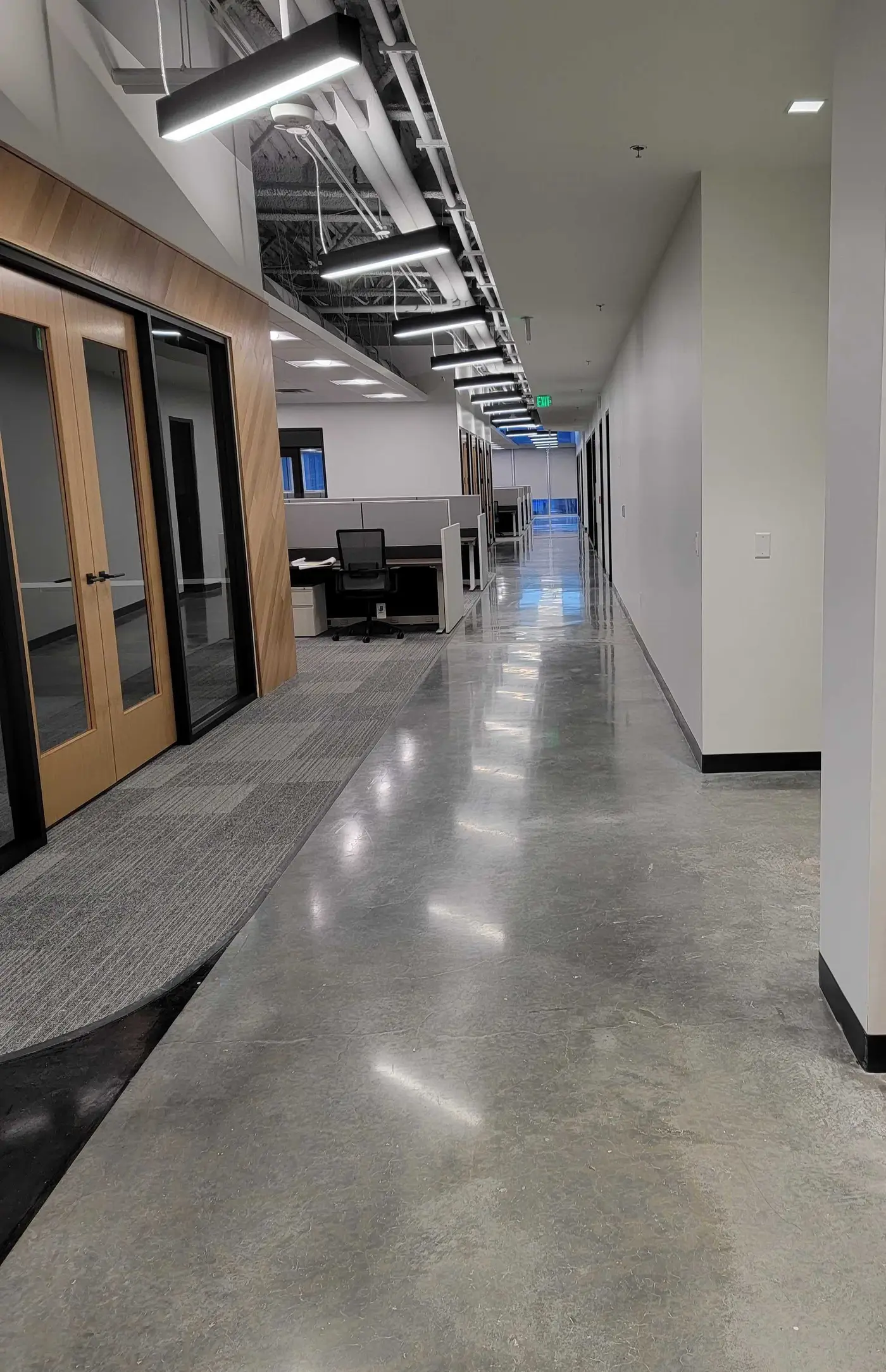
Prep is often the biggest variable. Cracks, spalls, broken joints and uneven areas need repair before coating, and the amount of repair is only clear once the floor is seen.
Removing existing tile, adhesive or a failing coating adds a full step before normal prep begins. Old coatings that are still well bonded can sometimes be prepared and recoated instead.
Peeling commercial floor coatings →Cracked concrete and joint repair →
Moisture and testing
Moisture rising through the slab is a leading cause of coating failure. When testing shows high moisture, a moisture mitigation layer goes down before the coating, which adds material and time.
It is less costly to plan for moisture at the start than to replace a failed floor later. That is why new slabs are tested for moisture when they need it, and the testing is listed in the bid.
The system you choose
Systems range from penetrating sealers and polished concrete to multi-coat epoxy, flake, quartz and urethane cement. Thicker, more chemical- and heat-resistant systems use more material and more steps.
Decorative choices such as metallic finishes, custom colors or logos also change the price. The right system is the one that matches the floor's traffic, liquids and look, not the cheapest or the heaviest.
Edges, drains, joints and cove base
Details are priced separately from the open floor. Cove base along walls, sloping to drains, filling control joints and coating around equipment pads all take extra labor.
These details are often what makes a floor work in kitchens, processing areas and warehouses. Leaving them out lowers a bid but can shorten the floor's life.
- Cove base along walls and curbs
- Re-sloping and sealing around drains
- Filling control and expansion joints
- Working around fixed equipment
Schedule and phasing
Night, weekend and phased work keeps a business open but can add setup and cleanup each time a crew returns. A floor that can be closed and finished in one continuous run is usually the most efficient to install.
Tight deadlines, holiday shutdowns and cold buildings that need heating also affect the schedule and the price.
