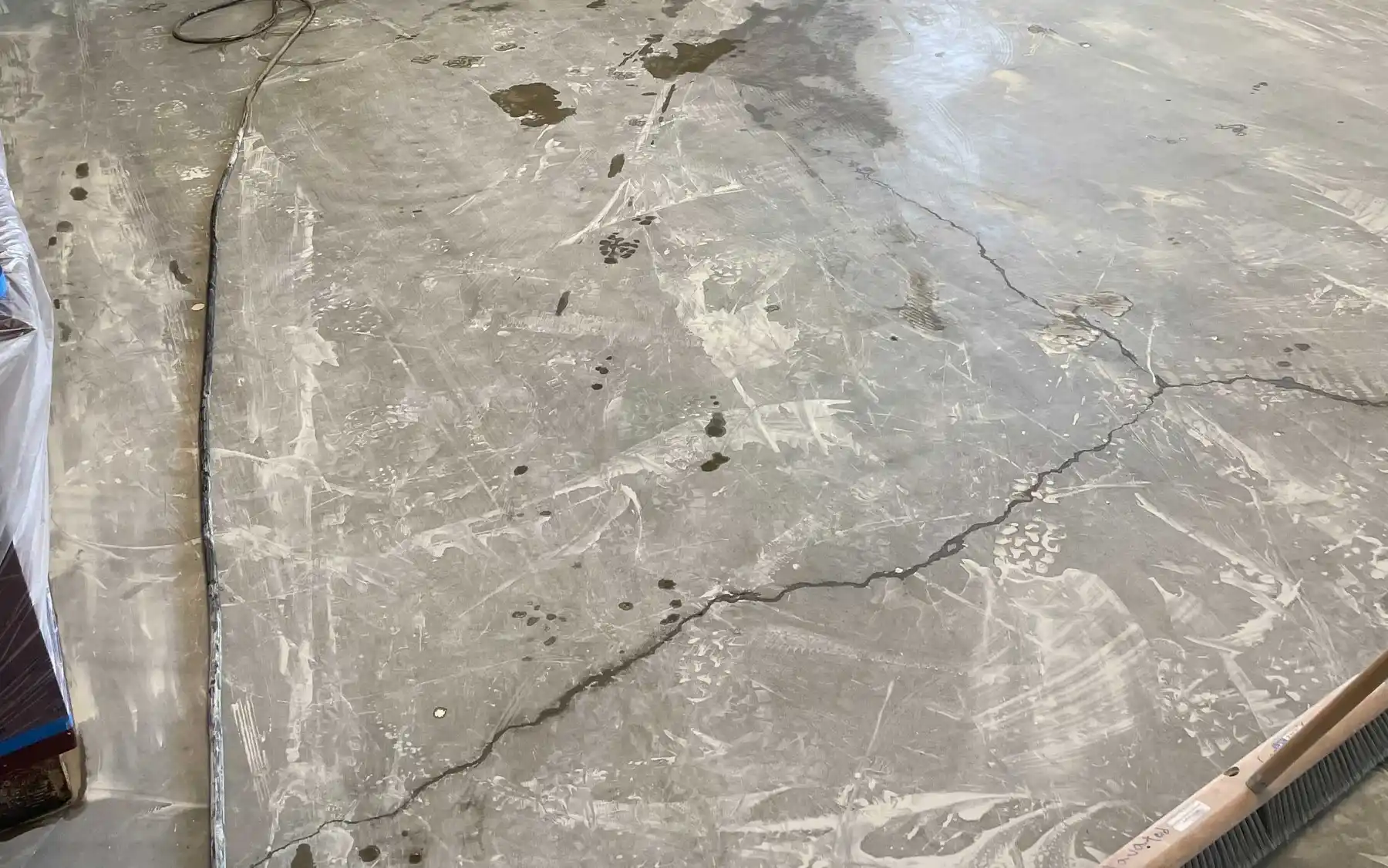

Cracked concrete and open joints in commercial floors
Almost every slab cracks somewhere. What matters is whether a crack or joint is still moving, and repairing it in a way that suits that movement.
What cracks and joint problems look like
Hairline shrinkage cracks often wander across a slab or run from corners and column bases.
Wider cracks may have uneven edges, a slight height difference from one side to the other, or debris packed into them.
Joints show their own problems: empty or crumbling filler, chipped edges, and coatings that crack in a straight line right over the joint below.
- Random hairline cracks across the slab
- Cracks with one side higher than the other
- Empty, dirty or crumbling joint filler
- Coating cracking along joint lines
What causes them
Concrete shrinks as it dries, and control joints are cut to tell it where to crack.
When joints are spaced too far apart or cut late, the slab cracks on its own between them.
Settling soil underneath, heavy point loads from racking, freeze and thaw at doorways, and temperature swings all add movement. Joints themselves open and close slightly with the seasons, which is why rigid fillers can crack loose.
Why it gets worse and what it costs
An open crack collects dirt and water, and wheels hitting its edges break them down until it becomes a pothole.
Moisture getting in can also undermine coatings on either side.
Coating over a crack without treating it usually means the crack comes right back through the new floor, which spoils the look of a fresh install and opens a path for liquids underneath.
How it is fixed
Each crack and joint is assessed for movement.
Static cracks are typically routed or chased open, cleaned and filled with a rigid repair material that is ground flush, so the coating can run continuously over them.
Moving joints and cracks are treated differently: they are cleaned out and filled with a semi-rigid or flexible joint filler, and the coating is usually cut or detailed at the joint so it is not torn as the slab moves. Height differences may be ground or rebuilt first.
Joint fill for commercial slabs →Solid epoxy floor coatings →Sealed concrete →
- Map cracks and decide which are moving
- Fill static cracks rigidly and grind flush
- Fill joints with a material that allows movement
- Honor moving joints through the coating
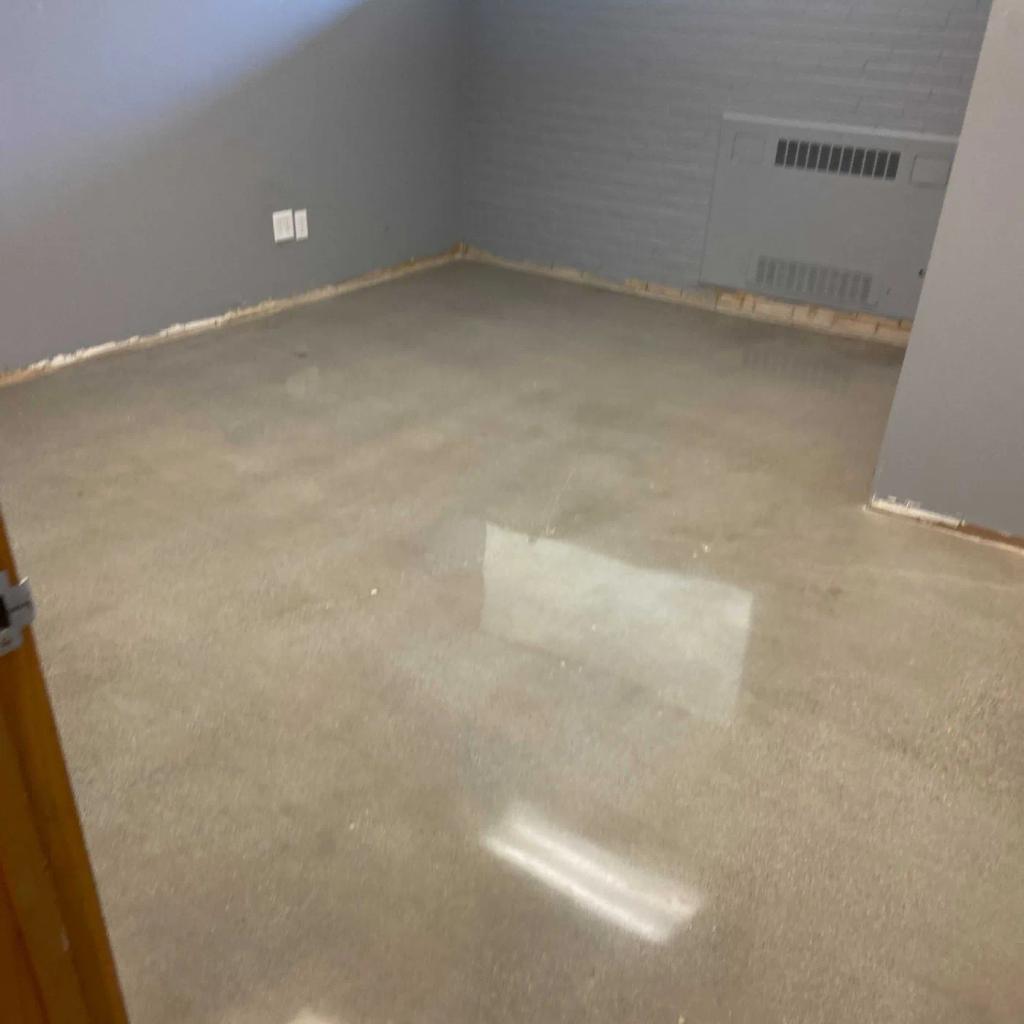
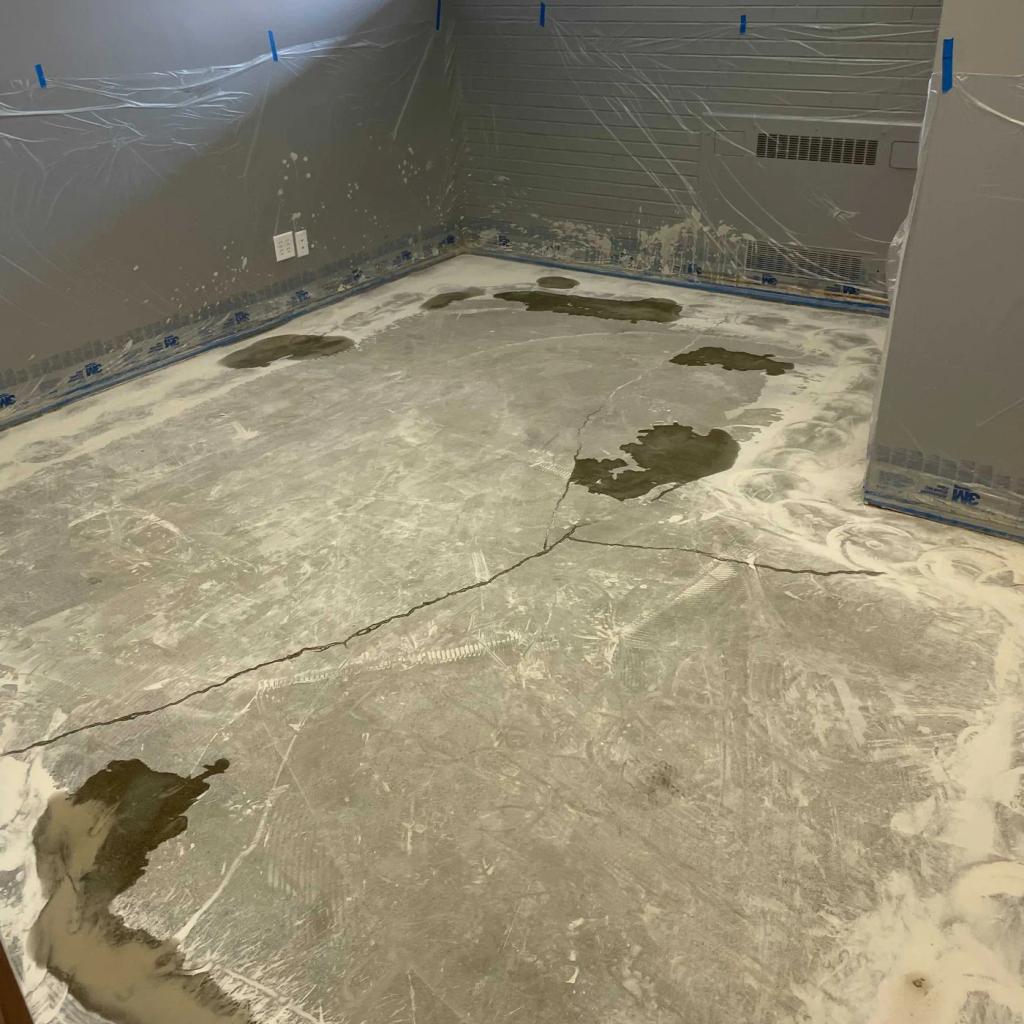
Before & after
Cracked slab to finished floor
The same training room: cracks and old patches before, then repaired and finished.
How to keep cracks from returning
No repair stops a slab from moving, but matching the repair to the movement keeps it from failing.
Inspect joint filler periodically and top it up where it has pulled away or worn low, especially in forklift lanes.
If one crack keeps widening or one side keeps dropping, that points to something under the slab, which a structural engineer should look at before more surface repair.
When to call for a site visit
Call when cracks are catching wheels, joints are empty or breaking, or before coating a slab with visible cracking.
A site visit maps the cracks and joints and puts the repairs into a written scope with the rest of the floor work.
FAQ
Cracks and joints: questions
Straight answers to the questions we hear most.
Will cracks show through a new floor coating?
Static cracks that are properly filled and ground flush usually stay hidden. Cracks and joints that still move can reappear, which is why they are treated with flexible fillers and detailed in the coating.
Should joints be filled before or after coating?
It depends on the system and the joint. Some joints are filled first and coated over, while moving joints are often filled and re-cut after coating so the floor can move without cracking.
Are hairline cracks a structural problem?
Most hairline cracks come from normal shrinkage and are not structural. Cracks that keep widening, have a step, or line up with settling should be checked by a structural engineer.
Can cracks be repaired without coating the whole floor?
Yes. Crack and joint repair can be a project on its own, and the repaired areas can be sealed or left bare if a full coating is not needed.
Related
Keep reading
- SystemsJoint fillSemi-rigid filler that protects slab joints from forklift and cart damage.Read more →
- Problems we fixForklift-damaged concreteChipped joints, ruts and worn-through coating in forklift lanes, and how they are repaired.Read more →
- IndustriesWarehouses & distributionForklift lanes, docks and aisles coated and sealed around your shipping schedule.Read more →
- IndustriesBuild-outs & tenant improvementsFloors bid to your budget and scheduled around your build-out.Read more →
- CommercialRequest a bidSend the building, size and timing for a written bid.Read more →

Request a bid
Ready for a bid?
Send your project details or plans. We reply within 1 business day.