
On this page
What hot tire pickup is
Tires heat up on the drive home. When a car parks on a soft or thin coating, the warm rubber presses into it, and as the tire cools it can bond to the surface. The next time the car pulls out, it lifts the coating with it.
The result is patches of bare concrete in the parking spots, usually under the tires first. Once the edge of a patch is open, water and grit get underneath and it keeps spreading.
Hot tire pickup is not the same as tire marks
A coating that peels off is a failure of the bond. Tire marks or dull patches on an intact floor are a different issue: rubber and plasticisers leave a stain or soften the shine, but the coating stays on the concrete.
Tire marks usually clean up or can be refreshed. Hot tire pickup is a failure of the bond itself, which cleaning cannot fix.
Why some coatings let go
Hot tire pickup is most common with thin, store-bought coatings. Kits rely on acid etching or a scrub instead of grinding, so the coating sits on a weak surface layer, and a single thin coat softens under heat.
Oil in the concrete, moisture coming up through the slab and too little cure time before parking all make it more likely.
- A thin coat that softens under warm tires
- Etching instead of mechanical grinding
- Oil or contamination left in the slab
- Moisture coming up through the concrete
- Parking on the floor before it has cured
How a failed floor is fixed
Patching the bare spots often does not hold, because the coating around them can have the same weak bond. Floors with widespread lifting generally need the old coating removed so the new one can bond to sound concrete.
Elevated's diamond grinding removes the old coating down to bare concrete under vacuum dust extraction. Cracks and pitting are repaired, and a moisture primer, base coat and flake go down before the polyaspartic topcoat. Whether a few spots can be repaired instead is something we check on the estimate.
What keeps it from coming back
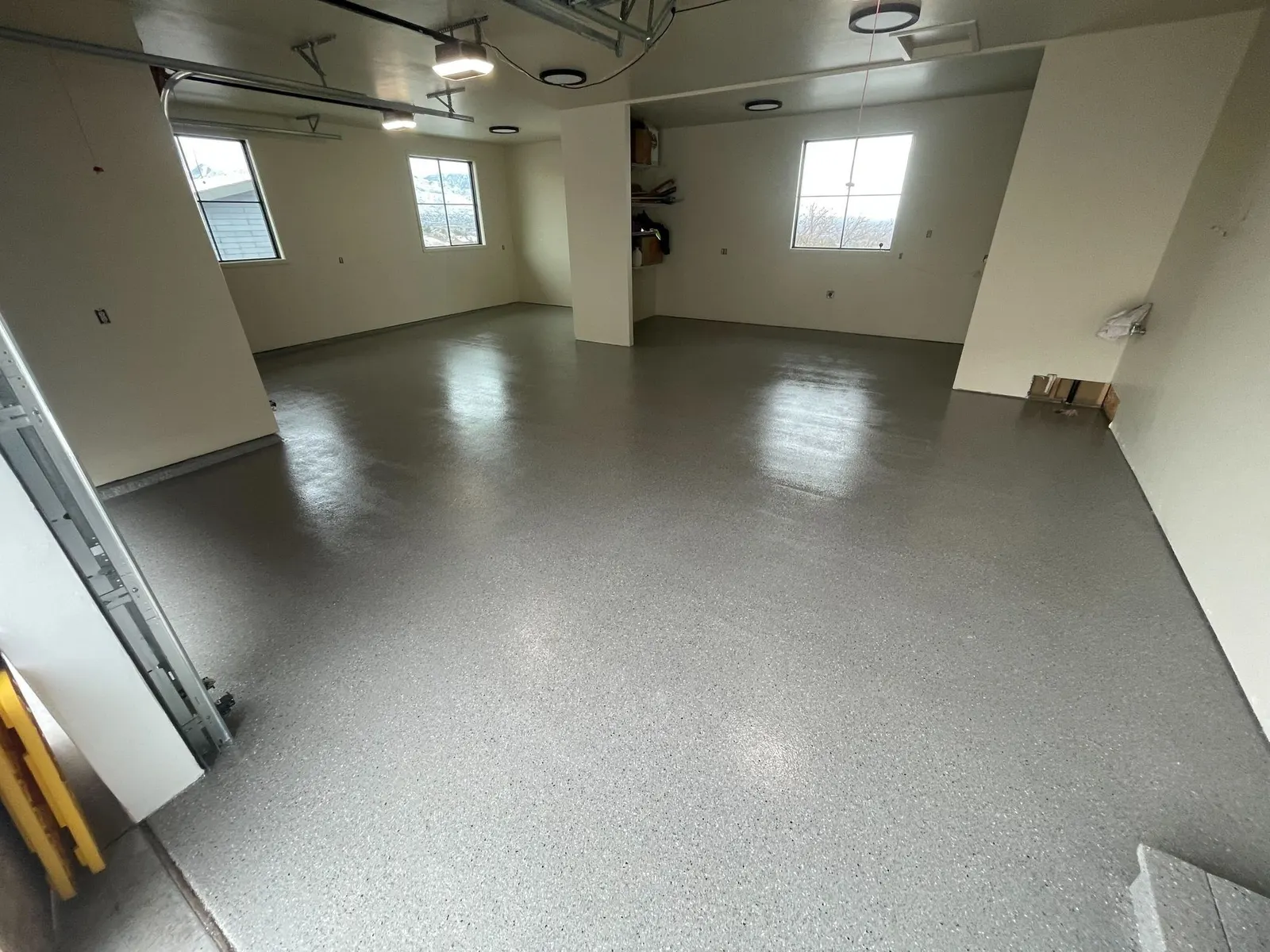
Diamond grinding gives the primer clean, open concrete to bond to, and a multi-layer flake system with a polyaspartic topcoat is less likely to soften under warm tires than a single thin coat.
Giving the floor its full cure matters too. You can walk on it after 24 hours, move light items back after 48 hours and park after 72 hours.