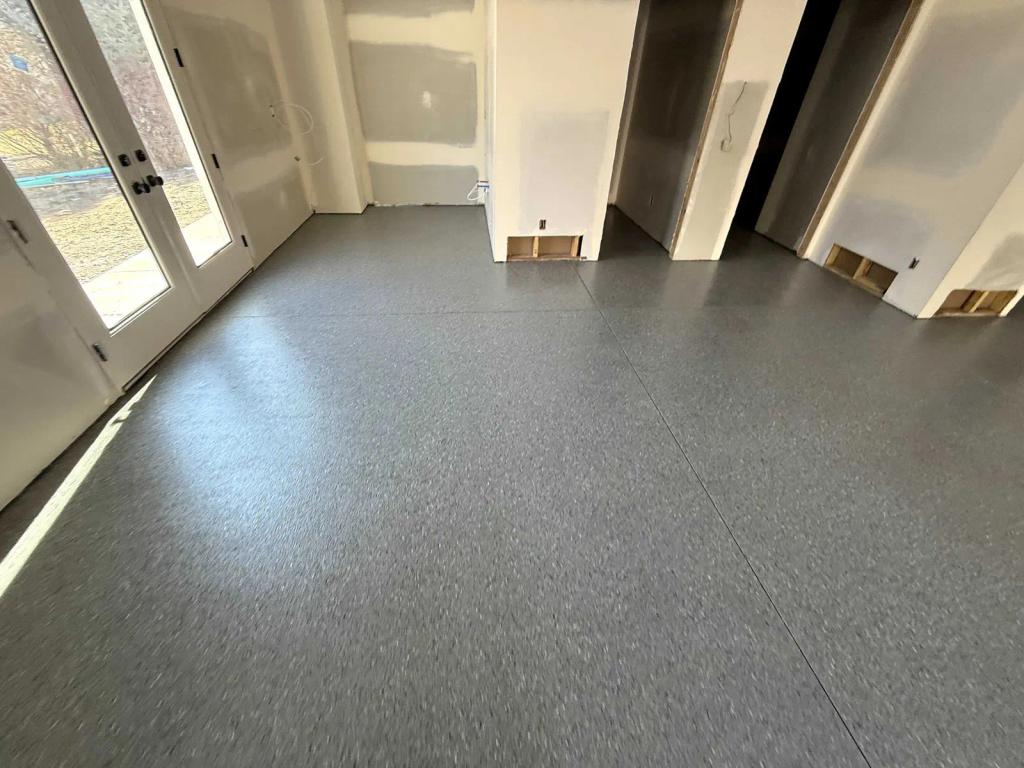
Most 1–2 car garages are done in a single day. Bigger garages can take longer. Here is what that day looks like from the house side of the door, and what to plan for afterward.
The garage needs to be empty, including anything stored along the walls that sits on the slab. Shelving, bikes and bins can go in the driveway, a side yard or the house for the day.
Vehicles should be parked outside, ideally not in front of the garage door, so equipment can come and go. The estimate covers anything specific to the home, such as access and power.
1Move everything off the floor, including wall storage
2Park cars on the street or a neighbor's driveway
3Plan where pets and kids will be during the day
4Leave a clear path from the driveway into the garage
The loud part: grinding and repair
The first stretch of the day is surface prep. Industrial diamond grinders are noisy, but vacuum dust extraction runs at the same time, so dust stays far lower than most people expect.
Cracks and pits are repaired during this stage. Inside the house, keeping the door to the garage closed is usually enough.
The quiet part: coating layers
Once prep is done, the primer, base coat and flake go down, followed by the clear topcoat after the excess flake is scraped. This part is quiet, and the crew handles mixing and timing between layers.
Coatings give off an odor while they cure. Keeping the door from the garage to the house closed and the garage ventilated as the crew directs keeps it out of living spaces.
The floor can be walked on after 24 hours, light items can go back after 48 hours, and vehicles can park after 72 hours. The crew walks through the exact schedule before leaving, since temperature affects cure.
When moving heavy items back in, lift rather than slide them, and put pads under jack stands, kickstands and toolbox casters.
When the job takes longer than a day
Larger garages, or floors that need a lot of crack and pitting repair, can take 2–3 days or more. The estimate flags this ahead of time so there are no surprises.
Cold weather does not stop a polyaspartic install, but it can lengthen the time before the floor is ready to park on.
FAQ
Install day: questions
Straight answers to the questions we hear most.
Do I need to be home during the install?
It depends on access to the garage, so the estimate covers what is needed for the specific home. Being there for the final walkthrough is worthwhile, since that is when the cure schedule is explained.
Will dust get into the house?
Grinding is done with vacuum dust extraction running at the same time, which keeps dust low. Keeping the door between the garage and the house closed helps further.
Can I use the garage door during the cure?
Ask the crew before leaving for the day, since ventilation and temperature both play a part. Either way, nothing should be driven or walked across the floor until the cure schedule allows it.
What if it rains or snows on install day?
The work happens inside the garage, so weather rarely stops it. Cold temperatures can lengthen the cure, which the crew accounts for in the schedule.