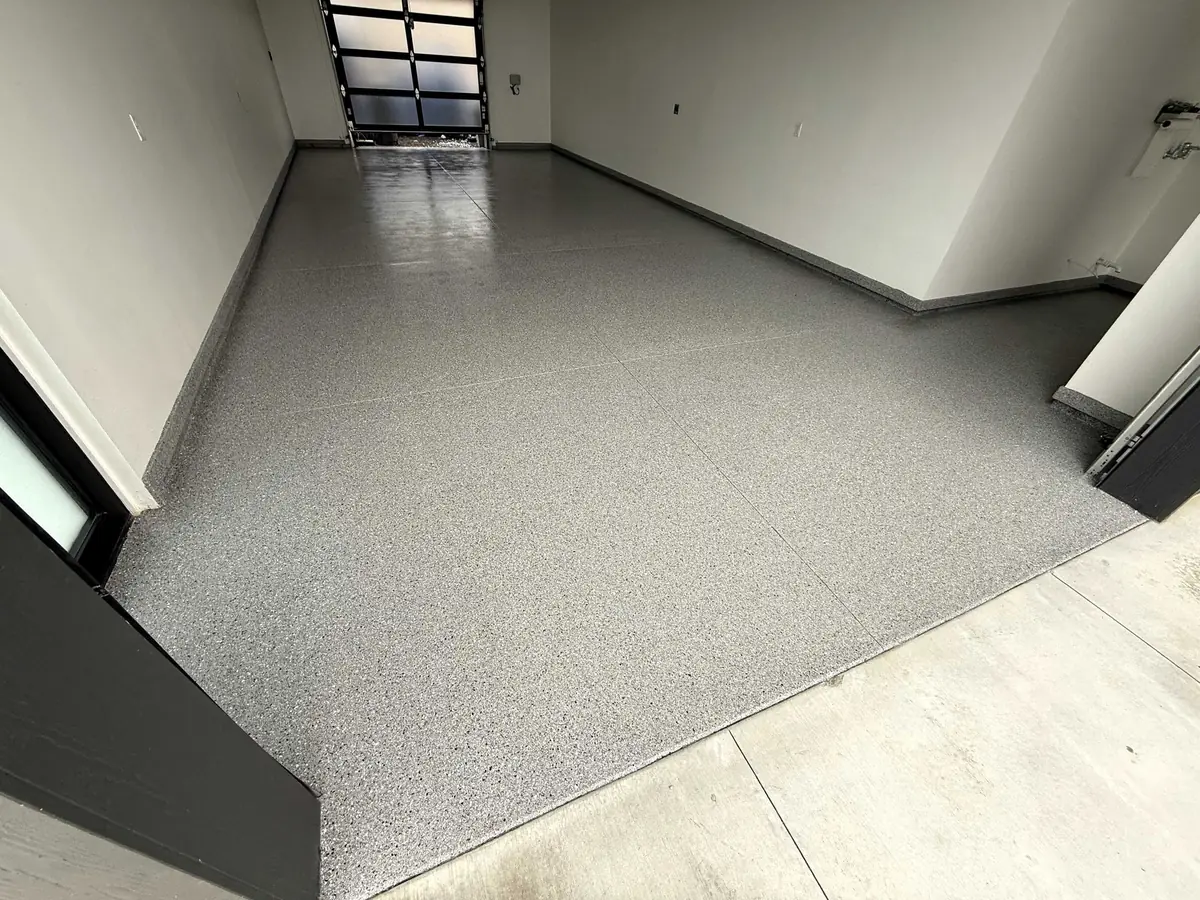
Almost every garage slab cracks. Concrete shrinks as it dries, and the saw-cut control joints in a garage floor are there to guide where that happens, though cracks often wander off the joint lines anyway.
A cracked floor is not a reason to skip a coating or to pour new concrete. Filling cracks and patching divots is a standard step in garage floor prep.
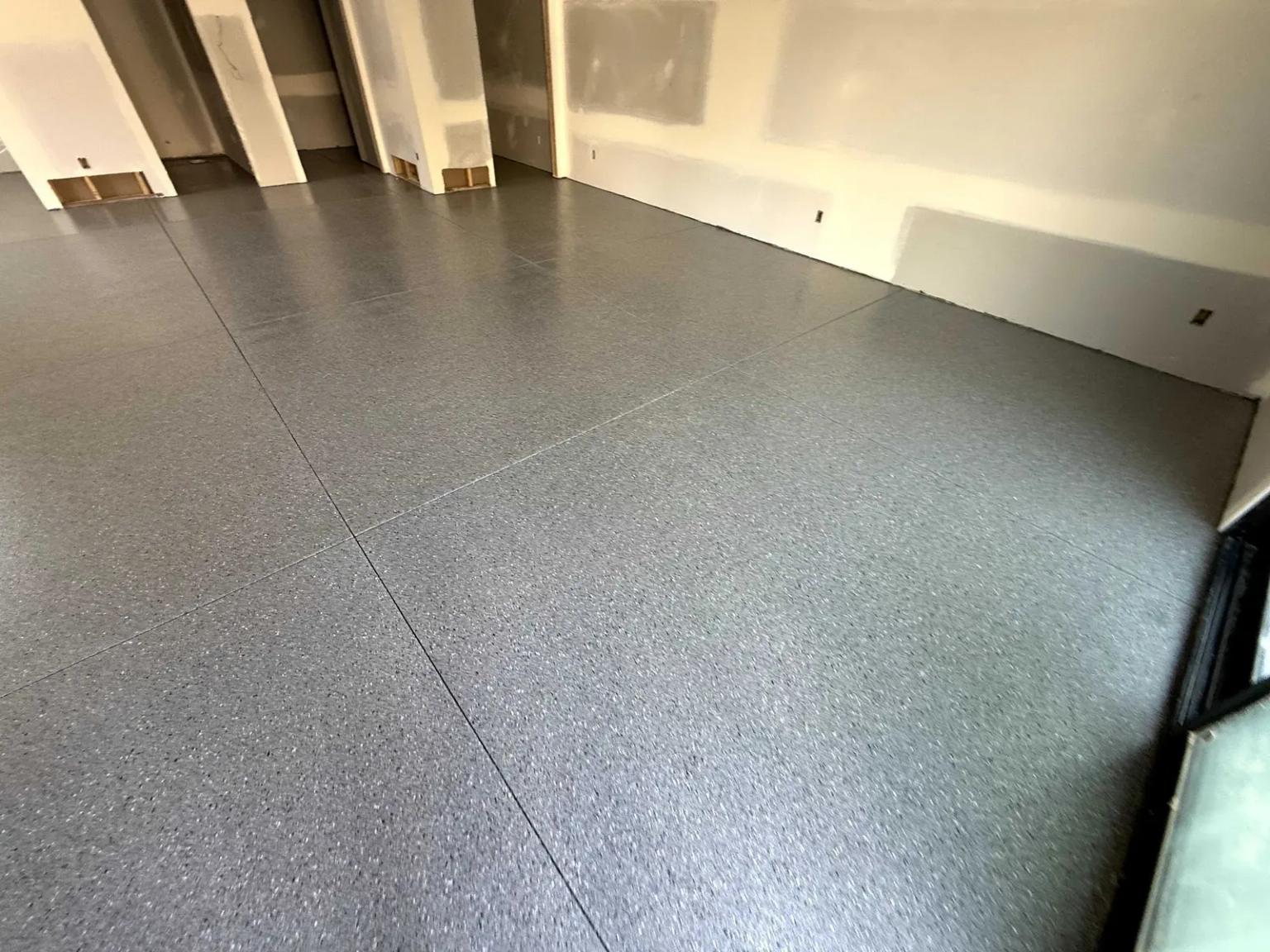
Grey flake floor in a large garage with fresh drywall
Three kinds of cracks
The type of crack decides how it is handled. Telling them apart is mostly about width, whether the two sides are level, and whether the crack is changing.
1Hairline shrinkage cracks: thin, level on both sides, common in every slab
2Settled cracks: wider, sometimes slightly uneven, but no longer changing
3Moving cracks: widening, lifting or dropping from season to season
Why Utah garage floors crack
Beyond normal shrinkage, Utah slabs face expansive clay soils that swell when wet and shrink when dry, plus water from snowmelt and irrigation. Freeze-thaw near the garage door and salty slush soaking into existing cracks make them grow.
None of these causes stop when a floor is coated. That is why a crack that is still moving needs its cause addressed first, while a crack that has settled can simply be repaired.
Cracks are opened and cleaned so the filler bonds to sound concrete, then filled and ground flush with the rest of the floor. Divots, pitting and small spalls are patched the same way.
Once the primer, base coat and flake go down, the repairs disappear under one continuous surface. Flake in particular hides the slight texture differences that a solid colour might show.
A crack that keeps widening, or where one side has lifted or sunk, is a sign the slab is still moving. A rigid coating cannot hold a moving slab together, and the crack can show through again.
Those floors usually need the cause fixed first, such as drainage, soil movement or slab lifting, by a concrete or foundation specialist. Once the slab is stable, it can be repaired and coated like any other floor.
One side of the crack noticeably higher than the other
A crack that is wider each spring
Gaps opening between the slab and the walls
A floor that rocks or sounds hollow near the crack
FAQ
Cracked garage floors: questions
Straight answers to the questions we hear most.
Do I need new concrete before coating a cracked garage floor?
Rarely. Most cracks are filled and ground flush as part of normal prep. New concrete or slab lifting is only needed when the floor is still heaving, sinking or breaking apart.
Will the cracks show through the new coating?
Repaired cracks in a stable slab are covered by the base coat and flake, so the floor looks continuous. A crack that is still moving can reappear, because no coating can stop the concrete underneath from shifting.
What about the saw-cut control joints?
Control joints are planned weak lines that let the slab move. Some floors have them filled and coated over, others keep them as visible lines, so it is worth asking how the joints will be handled.
Does crack repair add to the price?
It can. Heavy cracking, pitting or spalling adds prep time, so the condition of the slab is one of the things an estimate looks at.