
On this page
How each one works
Concrete stain soaks into the slab. Acid stains react with minerals in the concrete and water-based stains bond with it, so the colour becomes part of the surface, protected by a clear sealer on top.
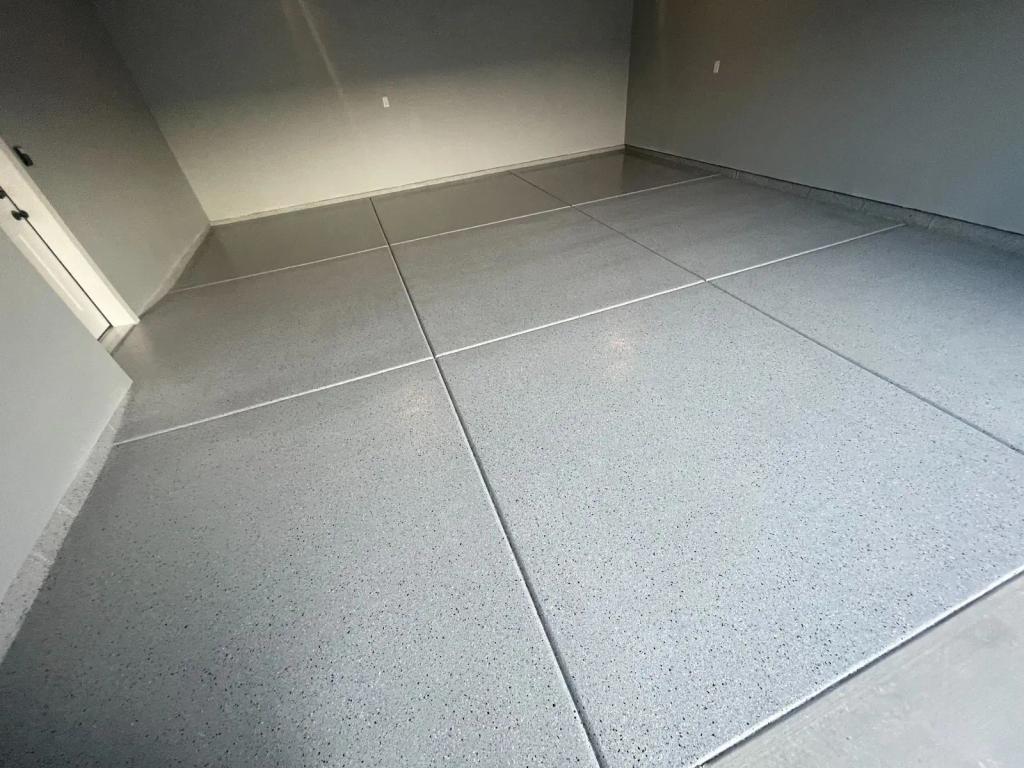
An epoxy coating is a layered system bonded to ground concrete: primer, a colour or decorative layer, and a protective topcoat. It sits on the slab and becomes the new surface.
How they look
Stain gives a natural, mottled look with movement and depth, often compared to stone or leather. No two slabs take it the same way, and the concrete's own marks remain part of the character.
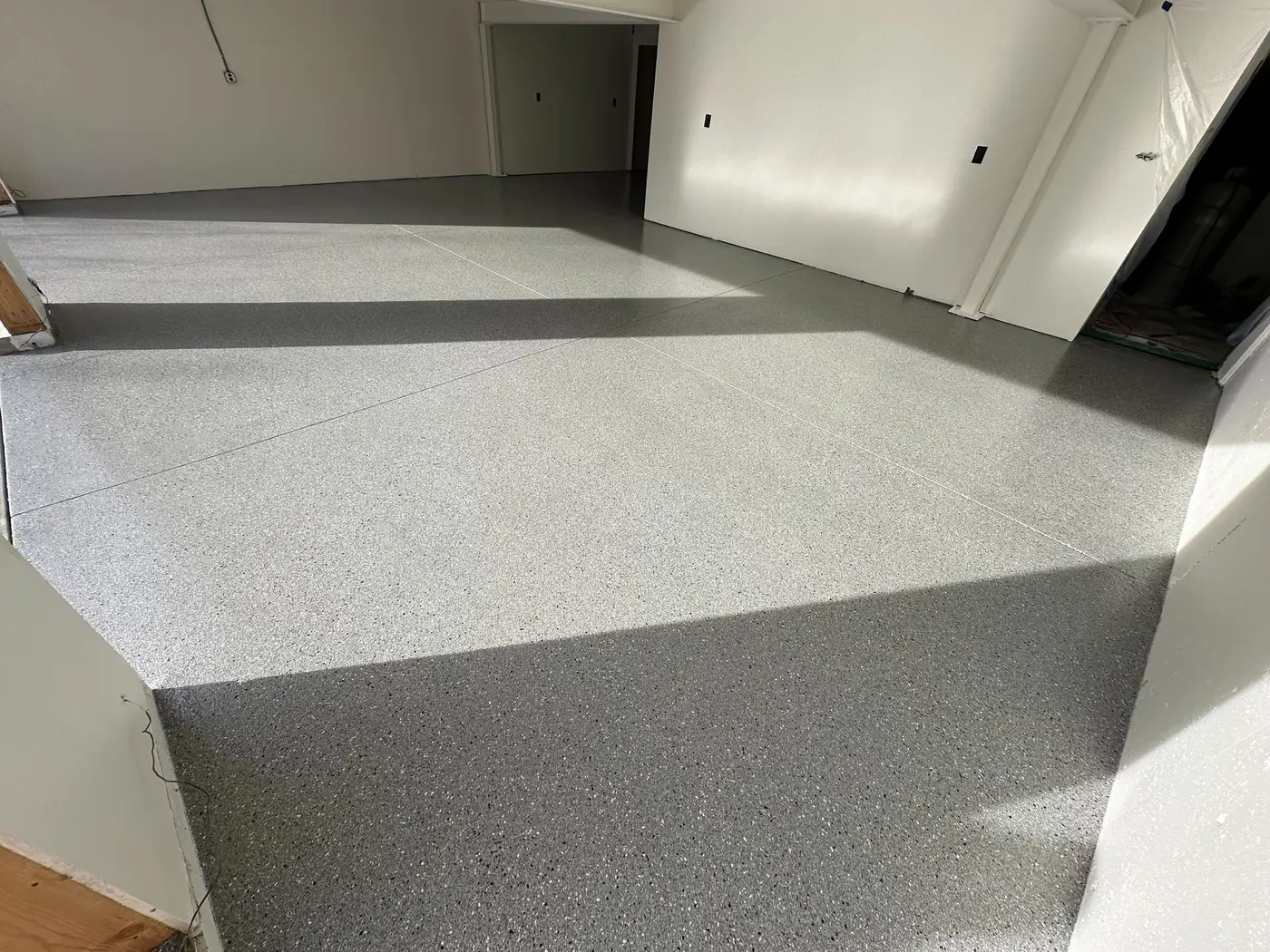
Epoxy gives a uniform, finished look: flake for a speckled texture, solid colour for a clean modern floor, or metallic for a glossy marbled effect.
Stain colour samples →Metallic colour samples →Flake colour samples →
Stain and epoxy at a glance
| Concrete stain | Epoxy coating | |
|---|---|---|
| How it works | Colours the concrete itself | Bonded layers on top of the slab |
| Look | Natural, mottled, one of a kind | Uniform flake, solid or metallic |
| Hides flaws | No, shows them | Yes, after repair |
| Protection | From the clear sealer | From the coating and topcoat |
| Upkeep | Reseal over time | Sweep and mop |
What the slab has to look like
Stain is translucent, so it shows what is already there: cracks, patches, old glue lines and stains all come through. It works best on concrete in fair, even condition.
A coating covers those flaws. Cracks and pits are repaired before it goes down, so it suits slabs that would look patchy with stain.
How they wear
Stain itself does not peel or chip, because it is in the concrete. The sealer on top is what takes the wear, and it needs reapplying as it thins.
An epoxy coating is thicker and more protective against spills, water and abrasion, and it does not need regular resealing. Its topcoat takes the wear, and in rooms with strong direct sun a UV-stable topcoat matters.
Which rooms suit which
Stain suits living areas and basements where the look of natural concrete is the goal, and covered patios or entries in fair condition. Epoxy suits rooms that take more abuse or water, and slabs that need repair.
- Basement family room on a good slab: either works
- Home gym, laundry or mudroom: epoxy
- Basement with patched or stained concrete: epoxy
- Living area where a natural concrete look is wanted: stain
- Covered patio or entry in fair condition: stain
Care and upkeep
Both are cleaned the same way day to day: dust mop or sweep, then damp mop with a pH-neutral cleaner, and avoid acidic or harsh products. Mats at entries and felt pads under furniture protect either surface.
The difference is the long-term routine. Stained concrete needs its sealer refreshed over time, while a coated floor mainly needs its topcoat kept clean and free of grit.