
On this page
The basic difference
A sealer soaks into the concrete or leaves a thin clear film. It slows down how much water, salt and oil the slab absorbs, but the surface still looks and feels like concrete.
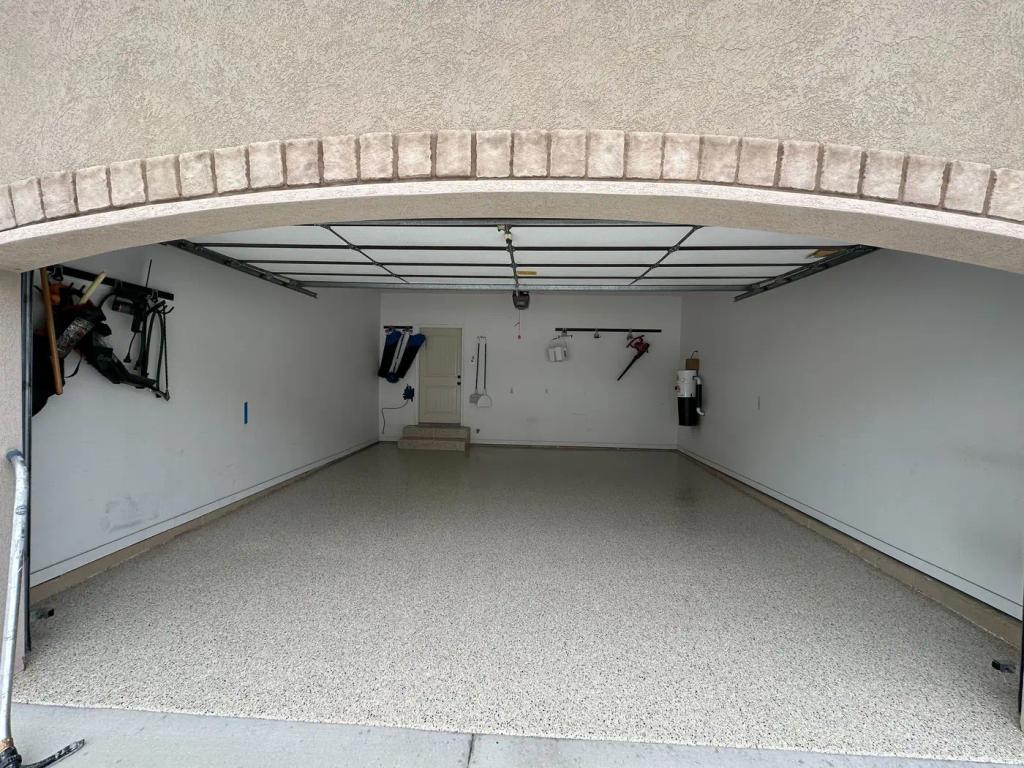
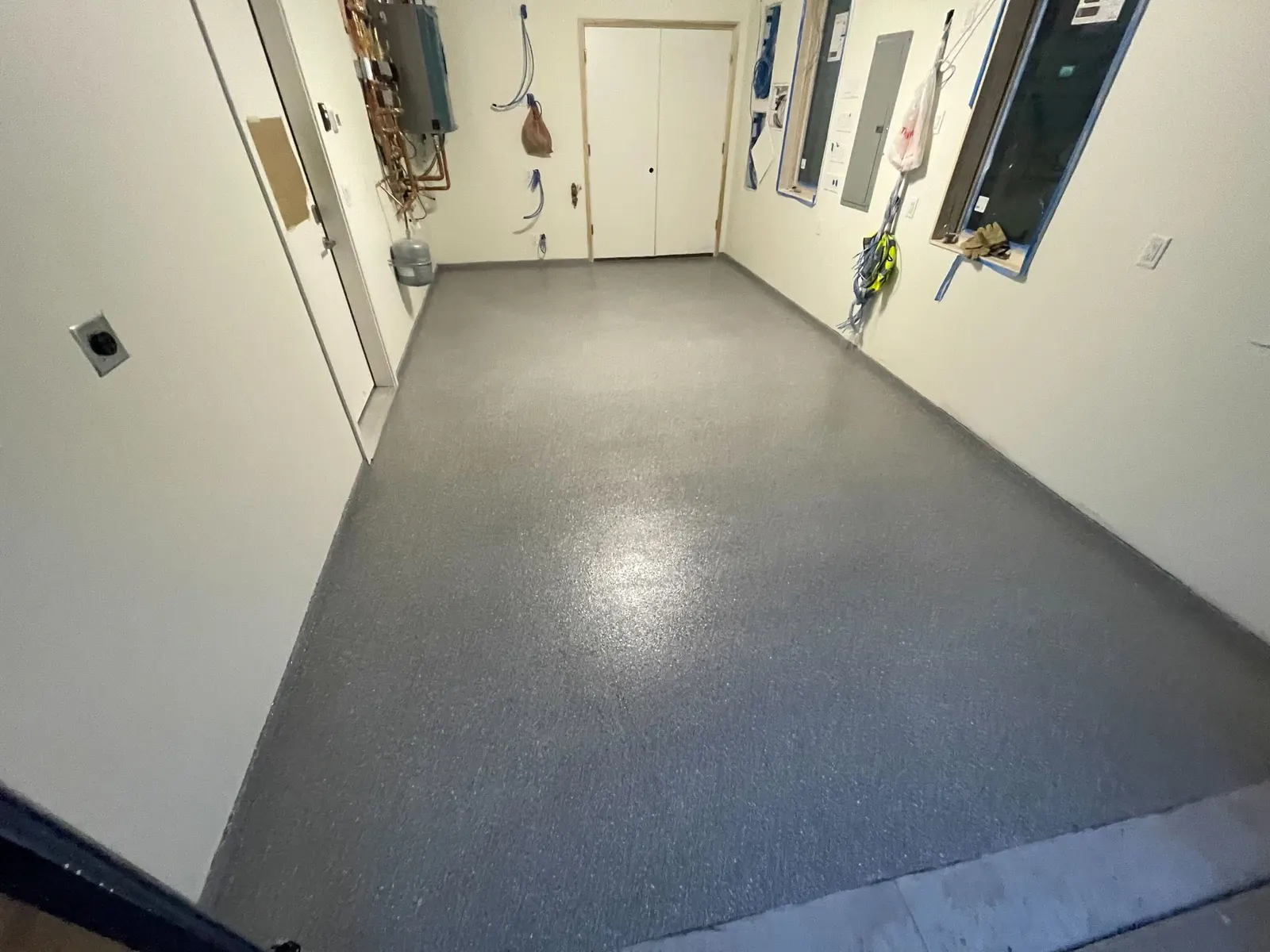
A coating is a built-up system bonded to ground concrete, with colour, texture and a protective topcoat. It replaces the surface you walk or drive on, rather than just protecting the old one.
When a sealer is the right call
Sealing makes sense for concrete that is sound and mostly unblemished, especially newer driveways and walkways that have not yet been through many winters. It is the lighter, lower-cost way to slow freeze-thaw and salt damage.
The trade-off is upkeep. Sealers wear with traffic, sun and salt and need to be reapplied over time to keep protecting the slab.
Sealer, coating and resurfacing side by side
| Sealer | Coating | Resurfacing | |
|---|---|---|---|
| What it does | Slows water, salt and oil absorption | Adds a new bonded floor surface | Rebuilds a worn outdoor surface |
| Look | Still looks like concrete | New colour, flake or finish | New uniform colour and texture |
| Repairs damage | No | Cracks and pitting repaired first | Cracks, scaling and popouts rebuilt |
| Upkeep | Reapplied over time | Sweep and mop | Rinse and sweep |
| Best for | Sound driveways and walkways | Garages, patios, basements | Damaged driveways, patios, pool decks |
When a coating is the right call
A coating fits when the goal is a different floor: a garage that sweeps clean and resists hot tires and road salt, or a patio with new colour and grip. It also suits concrete with stains, light pitting or cracks, because those are repaired before coating.
Coatings cost more up front, but they don't need regular resealing every couple of years the way bare sealed concrete does.
When the concrete is already damaged
If a driveway or patio is already scaled, pitted or covered in popouts, a sealer will not fix it; it only protects what is left. Resurfacing rebuilds the surface with a new, textured wearing layer instead.
Resurfacing sits between sealing and replacement. It repairs the top of a slab that is still structurally sound, without demolition.
A quick guide by surface
Each surface around a home takes a different kind of wear. These are typical starting points; the condition of the slab can change the answer.
- Newer driveway in good shape: seal it
- Driveway with salt scaling or pitting: resurface it
- Patio you want to update: coat or overlay it
- Pool deck that gets slick: a textured resurfacing system
- Garage floor: coat it
What Utah winters change
Freeze-thaw and road salt are the main reasons Utah concrete breaks down. Any option that keeps water and brine out of the slab helps, but the protection has to be kept up.
Sealed concrete needs resealing before it wears through. A coating or resurfacing system takes the wear on its own surface instead, which is why garages and heavily salted driveways usually get more than a sealer.