Garage floors
Salt-Damaged Garage Floor? How to Fix It in Utah
How road salt, magnesium chloride and freeze-thaw pit and spall Utah garage floors, and why the damaged concrete is repaired before it is coated.
Key takeaways
A coating is only as strong as the concrete under it.
Then the base coat, flake and a clear, UV-stable polyaspartic topcoat go down.
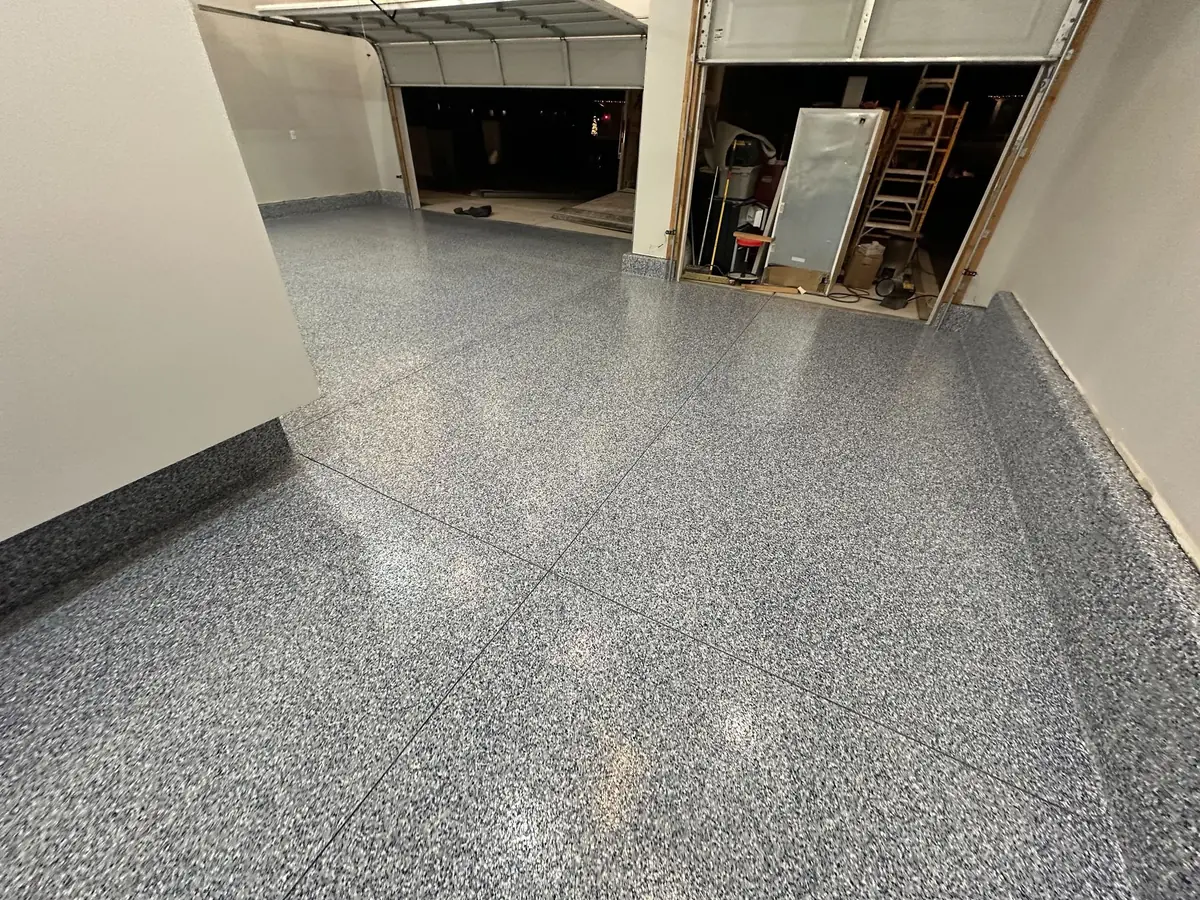
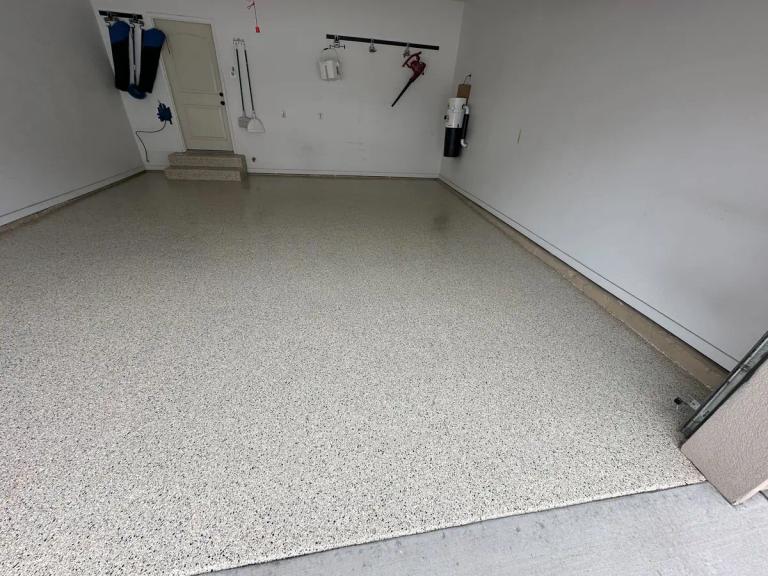
A professionally installed coating creates a seamless, non-porous surface that resists stains, moisture, road salt and everyday wear.
On this page
Every Utah winter, your car drives road salt and slush straight into the garage. On bare concrete, that's a slow recipe for damage.
If your floor is flaking, pitted or crumbling near the door, here's what's happening and how to fix it.
How Salt Damages Concrete
Concrete is porous. It soaks up water, and salty water goes in with it.
Freeze/thaw cycles. Water in the concrete's pores freezes and expands, then thaws, again and again. Each cycle stresses the surface.
De-icers. Road salt and de-icers such as magnesium chloride keep the slab wet longer and can speed up deterioration of the surface.
Where it shows up. The damage is usually worst where cars park and drip, and just inside the garage door.
Signs of Salt Damage
Scaling: the thin top layer flakes off, exposing rough concrete
Spalling: larger chips and pieces break away
Pitting: small holes and craters across the surface
White residue: salt deposits left behind as water evaporates
Cracks that widen over a few winters
Why You Can't Just Coat Over It
A coating is only as strong as the concrete under it. Loose, flaking concrete can't hold a bond, so a coating on top of it fails with it.
That's why repair comes first. If you'd like to see how a floor fails when this step is skipped, read why garage floor coatings peel.
How a Salt-Damaged Floor Is Repaired and Coated
These are the first steps of our garage floor process:
Diamond grinding and dust extraction. Industrial diamond grinders remove contaminants and create the surface profile the coating needs to bond.
Surface cleaning and final prep. A final cleaning pass removes fine dust and debris.
Crack and surface repair. We repair cracks, pitting and surface imperfections so the finished floor looks seamless, not patched.
Moisture primer. A primer penetrates the concrete and creates a strong bonding layer.
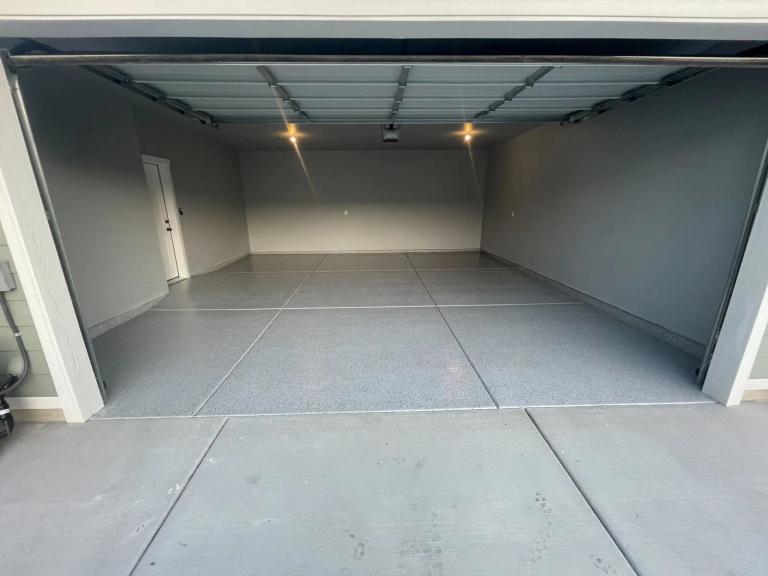
Then the base coat, flake and a clear, UV-stable polyaspartic topcoat go down. Our base layer is built to withstand hot tire pickup, road salt and daily wear common in Utah garages.
Protecting the Floor From Here
A professionally installed coating creates a seamless, non-porous surface that resists stains, moisture, road salt and everyday wear. Salty water sits on top, where you can clean it up, instead of soaking in.
A few winter habits help any floor:
Rinse or squeegee salty slush out of the garage regularly
Use a mat or tray where the car drips
Clean up white salt residue before it builds up
Our guide on cleaning and maintaining a garage floor coating covers the details.
Can It Be Done in Winter?
Yes. Our polyaspartic system installs and cures reliably in cold temperatures, so we coat garages year-round. Most garage projects are done in a single day; floors that need significant repair may run 2–3 days.
What It Costs
Repairs add prep time, so a damaged slab can cost more than a clean one. Read how much garage floor coating costs in Utah for what drives the price, or compare systems in polyaspartic vs. epoxy for garage floors.
Get Your Floor Checked
The longer salt damage goes, the more concrete there is to repair. Get a free garage floor estimate and we'll tell you what your floor needs.
FAQ
Questions we hear
Straight answers to the questions we hear most.
Why is my garage floor flaking near the door?
That's usually scaling or spalling. Snow melt carries road salt into the garage, the concrete soaks up the salty water, and freeze/thaw cycles break the surface apart. The area where cars park and drip is hit hardest.
Does magnesium chloride damage concrete?
De-icers such as magnesium chloride and road salt can speed up concrete deterioration, especially on bare concrete that soaks up water and goes through freeze/thaw cycles. Rinsing salt off and sealing or coating the slab helps protect it.
Can you coat a salt-damaged garage floor?
Yes, once the damage is repaired. The surface is diamond ground, cracks and pitting are repaired, and only then does the coating go down. Coating over loose, flaking concrete doesn't last.
Will a coating protect my floor from road salt?
A professionally installed coating creates a seamless, non-porous surface that resists stains, moisture and road salt, so salty water sits on top where you can clean it up instead of soaking into the concrete.
Need More Help?
Contact our team to get answers, pricing, or a free concrete coating quote in Utah. We’re here to help you plan your project.
Stop the damage before next winter
Tell us about your garage and we'll look at the concrete and give you a free estimate.
Related services
Floors this article covers
Service areas